CM Mohan Yadav: Rare Caracal Returns to Kuno National Park
Synopsis
On World Environment Day 2026, Madhya Pradesh CM Dr. Mohan Yadav announced the camera-trap detection of a rare Caracal at Kuno National Park — the first in many years — crediting Project Cheetah's ecosystem-wide conservation impact under PM Modi's leadership.
Key Takeaways
Madhya Pradesh CM Dr.
Mohan Yadav announced the detection of a rare Caracal at Kuno National Park via a camera-trap survey on World Environment Day, 5 June 2026 .
The Caracal's return was described as the first recorded sighting at Kuno in many years, confirmed through camera-trap monitoring.
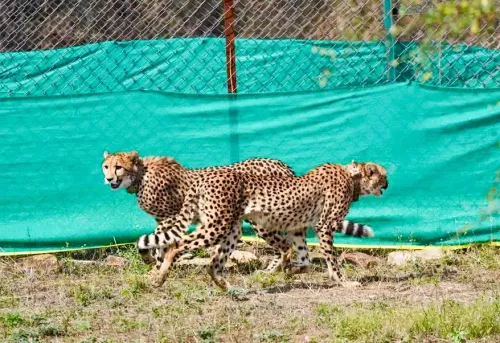
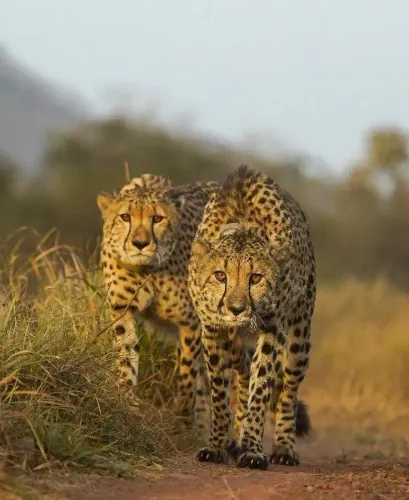
Project Cheetah , launched by PM Narendra Modi in September 2022 with the translocation of Namibian cheetahs to Kuno, is credited with improving the broader ecosystem beyond the cheetah itself.
The sighting is being presented as evidence of the 'umbrella species' effect — conservation investment in one flagship species generating measurable habitat benefits for other rare wildlife.
Kuno National Park is being positioned by the Madhya Pradesh government as a national model for integrated wildlife conservation.
Official camera-trap reports and updated cheetah population data from Kuno are expected to be released in the coming months.
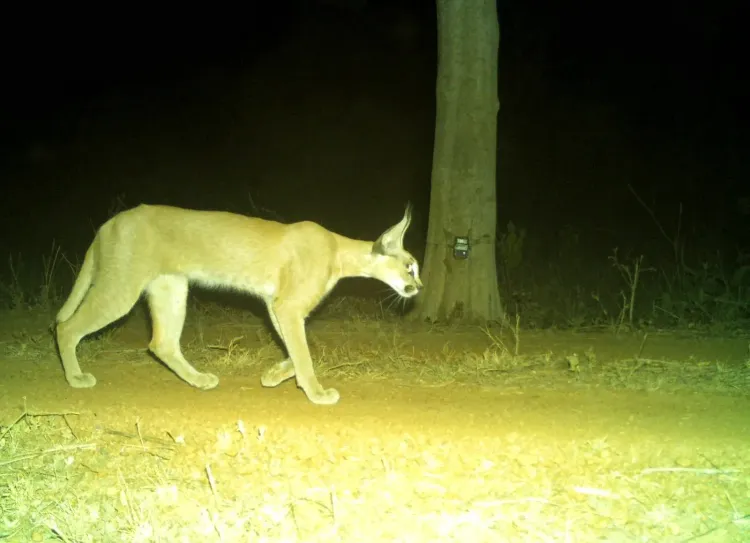
Madhya Pradesh Chief Minister Dr. Mohan Yadav on Friday, 5 June 2026 — World Environment Day — announced that a rare Caracal has been recorded inside Kuno National Park through a recent camera-trap survey, marking the elusive wild cat's return to the landscape after many years of absence.
Context
The Caracal (Caracalpcaracal), a medium-sized wild cat known for its tufted ears and elusive behaviour, is listed as a rare and threatened species in India. Its detection at Kuno National Park in Madhya Pradesh was confirmed through camera-trap monitoring — a method increasingly deployed across Indian protected areas to document wildlife presence without human intrusion. CM Yadav described the sighting as evidence that 'conservation efforts directed towards one flagship species can benefit an entire ecosystem.'
The announcement was made on World Environment Day, observed every year on 5 June, which serves as a global platform for ecological awareness and policy commitments. The timing underscores the state government's intent to frame Kuno as a conservation success story on an internationally recognised occasion.
Policy Backdrop
The broader conservation context is anchored in Project Cheetah, the Central government initiative to restore cheetahs to Indian habitats after the species' local extinction. In September 2022, Prime Minister Narendra Modi formally released the first batch of cheetahs translocated from Namibia into Kuno National Park, making it the primary site for the world's first intercontinental large-carnivore reintroduction. CM Yadav credited the Prime Minister's 'visionary leadership' for strengthening 'not only species recovery but also the broader ecosystem.'
India's approach to species recovery has evolved significantly since Project Tiger was launched in 1973. Authorities now treat flagship reintroduction programmes as tools for wider habitat improvement, with the expectation that protecting and enhancing territory for one apex or keystone species creates measurable benefits for other fauna sharing the same landscape. The Caracal detection at Kuno is being cited as a tangible, camera-verified example of this 'umbrella species' effect in practice.
Stakeholders and Impact
The Madhya Pradesh Forest Department, wildlife researchers, and local communities living in and around Kuno National Park are the immediate stakeholders. For researchers, the camera-trap record provides data on secondary ecological responses to large-carnivore reintroduction — a question that has been actively debated in conservation science. For forest staff, it validates the investment in expanded monitoring infrastructure across the park.
Local communities near Kuno stand to benefit indirectly if the park's rising conservation profile attracts eco-tourism investment and associated livelihoods. At the same time, the presence of additional large and medium-sized predators raises the importance of robust human-wildlife conflict mitigation protocols in buffer zones around the park.
What's Next
The Madhya Pradesh government and Central wildlife authorities are expected to release official camera-trap reports and updated cheetah population figures from Kuno in the coming months. Conservation planners are also watching whether the project's demonstrated ecosystem-wide benefits accelerate discussions about expanding Project Cheetah to secondary sites beyond Kuno. CM Yadav's post signals that the state government intends to keep Kuno's progress visible in national and international policy conversations, using documented wildlife recoveries — including the Caracal's return — as evidence that coordinated Central-state conservation investment produces results beyond the headline species.
Point of View
Not just a headline reintroduction. By linking a rare secondary species detection directly to PM Modi's flagship programme, the announcement serves the dual purpose of celebrating a genuine ecological milestone and burnishing the BJP government's environmental credentials ahead of continued scrutiny over cheetah mortality rates at Kuno. The 'umbrella species' framing aligns with a global conservation science consensus, lending the political message scientific credibility. If official reports corroborate the Caracal data, Kuno could genuinely shift from a contested experiment to a cited model — with significant implications for how India funds and scales future reintroduction programmes.
NationPress
21 Oct 2026
Frequently Asked Questions
What is a Caracal and why is its sighting at Kuno significant?
The Caracal is a medium-sized wild cat, rare in India, known for its distinctive tufted ears. Its camera-trap detection at Kuno National Park after many years of absence is significant because it suggests the park's ecosystem is recovering and diversifying, potentially as a secondary effect of conservation investment under Project Cheetah.
What is Project Cheetah and when did it start?
Project Cheetah is a Central government initiative to reintroduce cheetahs to India after their local extinction. It formally began in September 2022 when Prime Minister Narendra Modi released the first batch of Namibian cheetahs into Kuno National Park in Madhya Pradesh.
Where is Kuno National Park located?
Kuno National Park is located in the Sheopur district of Madhya Pradesh, central India. It was selected as the primary site for Project Cheetah due to its suitable grassland and scrub-forest habitat and low human settlement density within the core zone.
How was the Caracal detected at Kuno National Park?
The Caracal was recorded through a camera-trap survey — a non-invasive monitoring method where motion-triggered cameras placed across the forest automatically photograph passing wildlife. CM Mohan Yadav cited this survey in his World Environment Day announcement on 5 June 2026.
What does the Caracal sighting mean for Project Cheetah's success?
The Caracal sighting is being cited as evidence that Project Cheetah's habitat improvements are benefiting a wider range of species beyond cheetahs — a concept known as the 'umbrella species' effect. It supports the argument that single-species conservation investment can improve an entire ecosystem's health.