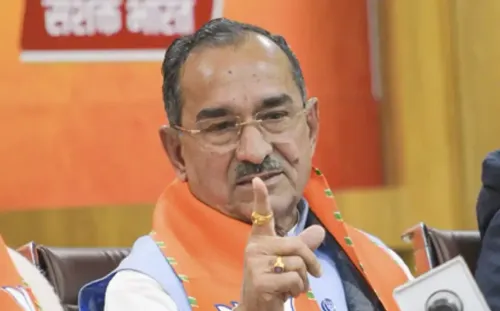
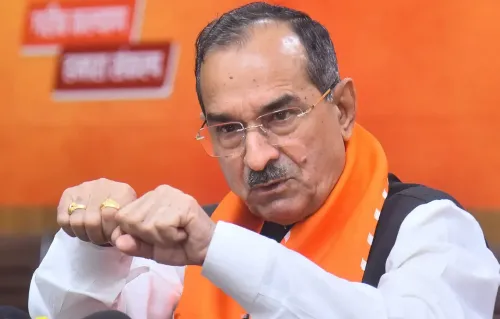
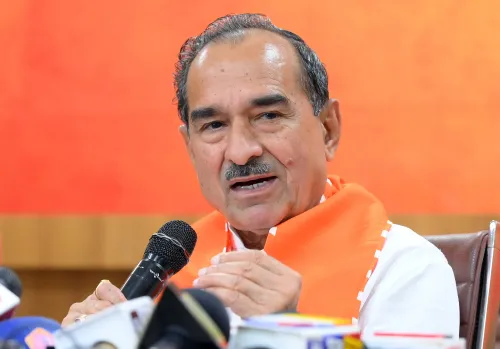
Madan Rathore slams Gehlot over 'sold' MLAs remark, demands accountability
Synopsis
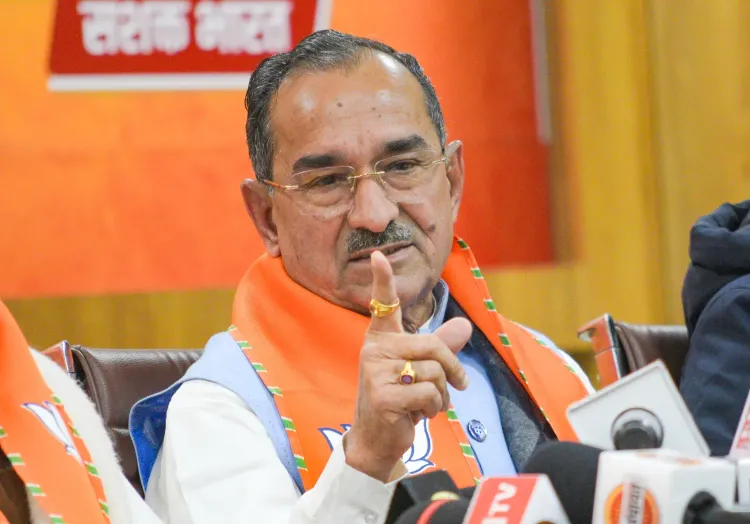
BJP Rajasthan President Madan Rathore has turned Ashok Gehlot's own 'sold legislators' remark against him, demanding to know why the former Chief Minister took no action against those very MLAs and MPs while he held power. The exchange lays bare a deepening political rivalry in Rajasthan, with the BJP framing Gehlot as a leader who served the Gandhi family rather than the state.
Key Takeaways
BJP Rajasthan President Madan Rathore on Wednesday questioned why Ashok Gehlot took no action against legislators he allegedly described as 'sold out.' Gehlot had reportedly used terms like 'horses, donkeys, buffaloes and goats' for public representatives in his remarks.
Rathore alleged Gehlot spent all three terms as Chief Minister appeasing the Gandhi family rather than focusing on Rajasthan's development.
Rathore pointed to Gehlot's home district as evidence of unmet development promises despite long years in power.
The BJP asserted that Rajasthan voters now favour development-oriented governance and will reject what it called Congress's opportunistic politics.
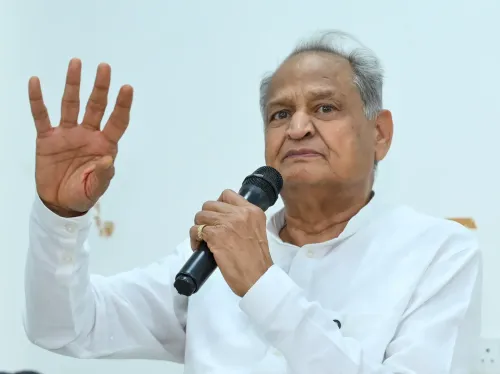
Bharatiya Janata Party (BJP) Rajasthan President Madan Rathore on Wednesday launched a sharp counter-attack against former Rajasthan Chief Minister Ashok Gehlot, questioning why Gehlot failed to act against legislators he allegedly described as having been 'sold' during his own time in power. The remarks came in response to Gehlot's recent statement in which he reportedly used terms such as 'horses, donkeys, buffaloes and goats' to characterise public representatives.
The Provocation: Gehlot's Remarks on MLAs and MPs
Gehlot had allegedly made remarks implying that several Members of the Legislative Assembly (MLAs) and Members of Parliament (MPs) were 'sold out' — a claim that drew immediate political fire from the BJP. Rathore seized on the statement, arguing that if Gehlot genuinely believed legislators were compromised, he had both the authority and the obligation to act against them during his tenure as Chief Minister.
'If those representatives were indeed sold out, why did you not take any action against them during your own tenure?' Rathore asked, according to reports.
Rathore's Broader Critique of Gehlot's Governance
Rathore went beyond the immediate controversy to mount a wider indictment of Gehlot's record in office. He alleged that Gehlot devoted the bulk of his energy to appeasing his political leadership — widely understood as a reference to the Gandhi family and the Indian National Congress (Congress) high command — and to advancing his son's political career, at the expense of public welfare and development.
Notably, Rathore pointed to Gehlot's home district as an example of unfulfilled development promises, arguing that despite multiple terms in power, the region continues to lack basic facilities. 'Had Gehlot prioritised the welfare of the state and its people instead of appeasing his political masters, his home district would not still be grappling with a lack of basic facilities,' Rathore said.
Allegations of Political Opportunism
Rathore further alleged that Gehlot's current public statements are driven not by genuine concern for Rajasthan but by a desire to remain politically relevant and earn favour with the Gandhi family. He accused the former Chief Minister of making 'irresponsible statements' as a tactic to prove his continued utility to the Congress leadership.
He alleged that across all three of his terms as Chief Minister, Gehlot prioritised pleasing the Congress high command over delivering governance outcomes for the people of Rajasthan. This is not the first time the BJP has levelled such charges — the party has consistently framed Gehlot's political conduct as subordinating state interests to internal party dynamics.
BJP's Development Narrative
Rathore concluded by asserting that the electorate in Rajasthan has grown wise to what he described as the 'opportunistic politics' of Congress leaders. He claimed that voters now back governance rooted in development, accountability, and good governance — values he associated with the BJP's current model in the state.
He predicted that the public would continue to reject such political tactics and reaffirm support for the BJP going forward. The exchange signals an early sharpening of political rhetoric ahead of future electoral cycles in Rajasthan.
Point of View
' the problem is systemic and implicates the political culture both parties have operated within. Gehlot's remark, whatever its original intent, has handed the BJP a ready-made accountability frame — one that will be difficult for Congress to deflect without directly addressing what happened during those tenures. The deeper issue, the fragility of party discipline and the transactional nature of legislative loyalty in Rajasthan, remains unaddressed by either side. Rajasthan voters deserve that conversation, not just a blame exchange.
NationPress
23 Sept 2026
Frequently Asked Questions
What did Ashok Gehlot say about MLAs and MPs being 'sold'?
Gehlot allegedly made remarks characterising certain public representatives using terms such as 'horses, donkeys, buffaloes and goats,' implying they were 'sold out.' The remarks triggered a sharp response from the BJP, which demanded he explain why he took no action against such legislators during his own tenure as Chief Minister of Rajasthan.
What is Madan Rathore's main argument against Gehlot?
Rathore argues that if Gehlot genuinely believed legislators were compromised, he had the authority to act against them while he was Chief Minister but chose not to. He also alleges that Gehlot prioritised appeasing the Congress high command and promoting his son's political career over governance and development in Rajasthan.
How many terms did Ashok Gehlot serve as Rajasthan Chief Minister?
Ashok Gehlot served three terms as Chief Minister of Rajasthan. Rathore has alleged that across all three terms, Gehlot focused on pleasing the Gandhi family rather than delivering development outcomes for the state.
What is the BJP's broader political message in this exchange?
The BJP is using this episode to reinforce a narrative that Congress leaders in Rajasthan, particularly Gehlot, are driven by internal party politics and loyalty to the Gandhi family rather than by the welfare of the state. Rathore claimed that Rajasthan voters now support development-based governance and will continue to back the BJP.
What is the political significance of this dispute?
The exchange reflects an ongoing and intensifying rivalry between the BJP and Congress in Rajasthan, with both sides positioning ahead of future electoral cycles. It also highlights the fragility of legislative loyalty as a recurring political issue in the state, one that neither party has fully addressed.