Sanjay Raut slams Sharad Pawar for meeting Eknath Shinde in MVA row
Synopsis
A single meeting inside Eknath Shinde's Vidhan Bhavan chamber has cracked open a fault line in the Maha Vikas Aghadi. Sanjay Raut's public rebuke of Sharad Pawar is not just about optics — it goes to the heart of whether the opposition alliance can hold a consistent moral line on political defections while its senior-most leader appears willing to engage the very figures they campaign against.
Key Takeaways
Sanjay Raut publicly attacked Sharad Pawar on 9 July for holding an NCP (SP) meeting inside Eknath Shinde 's chamber at the Vidhan Bhavan .
Raut accused Pawar of conferring political legitimacy on 'traitors' who brought down the previous MVA government.
He drew a parallel with Ajit Pawar 's defection, questioning why Pawar fought that split in court but appeared accommodating toward Shinde.
Raut raised unanswered questions about the outcome of the Maharashtra-Karnataka border dispute meeting held the same day.
Raut said his criticism was political, not personal, and that Shiv Sena (UBT) would never hold meetings 'under the roof of traitors.'
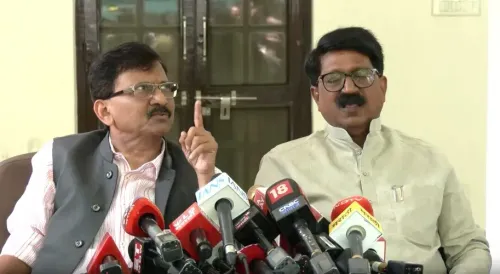
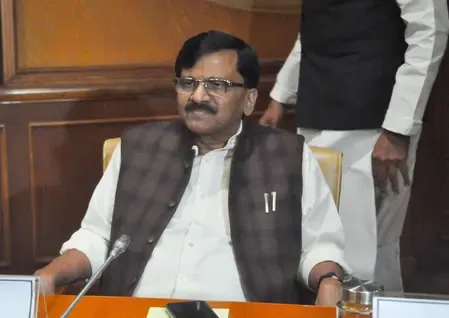
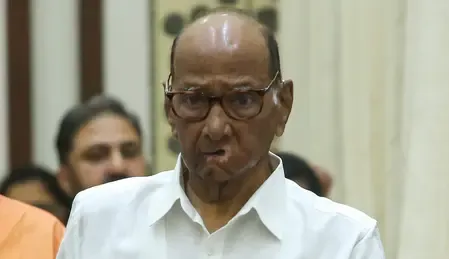
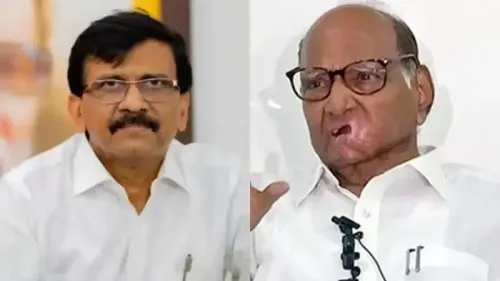
Shiv Sena (UBT) leader Sanjay Raut on 9 July launched a sharp attack on Nationalist Congress Party (SP) chief Sharad Pawar after Pawar held a party meeting inside Deputy Chief Minister Eknath Shinde's chamber at the Vidhan Bhavan in Mumbai, triggering fresh friction within the Maha Vikas Aghadi (MVA). Raut accused senior opposition leaders of conferring political legitimacy on those he called 'traitors', and warned that such gestures erode the alliance's credibility with its grassroots base.
What Triggered the Outburst
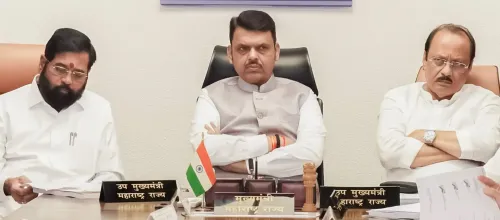
The flashpoint was a high-level meeting held at the Vidhan Bhavan, ostensibly convened to discuss the long-pending Maharashtra-Karnataka border dispute. Pawar chose to conduct a separate NCP (SP) party meeting within Shinde's official chamber — a decision Raut described as politically indefensible. 'Holding a party meeting under the roof of a traitor who brought down our government erodes and dilutes the credibility of such a stature,' Raut said at a press conference, while acknowledging Pawar's towering political standing.
Raut's Core Charge: Legitimising the Ruling Side
Raut drew a direct parallel between Eknath Shinde's 2022 rebellion against the Uddhav Thackeray-led government and Ajit Pawar's split from Sharad Pawar's NCP. He questioned why Pawar had taken Ajit Pawar to court over his defection but appeared willing to engage with Shinde on neutral or even cordial terms. 'We are relentlessly fighting against Eknath Shinde — why are you giving him legitimacy? This has struck a painful chord with us,' Raut said. He added that Shiv Sena (UBT) would 'never step into a traitor's office to hold party meetings.'
Questions Over the Border Meeting's Outcome
Raut also pressed for transparency on what the Maharashtra-Karnataka border discussion actually produced. He noted that the case has been pending for decades and that Shiv Sena (UBT) — a key participant in the border-dispute agitation — was not adequately briefed on the proceedings. 'What was discussed, and what is the date for the next meeting? These questions remain unanswered,' he said, suggesting the meeting served political optics more than substantive purpose.
Alliance Fault Lines and the Credibility Question
Raut claimed the entire MVA coalition was 'upset' over the episode and urged all constituents to 'uphold basic principles' of political decorum. He framed the controversy as a question of moral consistency: if the opposition condemns defections within its own ranks, it cannot simultaneously dignify those who engineered similar splits elsewhere. 'If you continue to bestow prestige upon traitors, you lose the moral right to speak out against the defection that took place within your own party,' he argued. Raut was careful to separate the political from the personal, stating his relationship with Pawar was 'rooted in deep affection' but that his party's stance was non-negotiable.
What Comes Next
The episode surfaces a recurring tension inside the MVA: how to maintain a united opposition front while individual leaders navigate their own political relationships with rivals. With Maharashtra's political landscape still unsettled following the 2022 splits in both Shiv Sena and NCP, any perception of accommodation toward the ruling dispensation risks demoralising the alliance's ground cadre. Whether Pawar responds to Raut's public challenge — or lets it pass — will signal how much internal discipline the MVA can sustain ahead of future electoral contests.
Point of View
But its constituent leaders have divergent political styles and different thresholds for engagement with the ruling side. Pawar's willingness to use Shinde's chamber — however pragmatic — hands the Bharatiya Janata Party (BJP) and Shinde's Sena a propaganda gift: images of the opposition's patriarch operating comfortably within the ruling establishment. Raut's consistency on the 'traitor' framing is politically coherent, but it also risks boxing the MVA into a posture that limits its room to manoeuvre on cross-party issues like the border dispute. The real question is whether Pawar sees the MVA as a permanent ideological coalition or a tactical arrangement — and whether the answer is the same as Raut's.
NationPress
7 Oct 2026
Frequently Asked Questions
Why did Sanjay Raut criticise Sharad Pawar?
Raut criticised Pawar for holding an NCP (SP) party meeting inside Deputy Chief Minister Eknath Shinde's official chamber at the Vidhan Bhavan on 9 July. He argued the move conferred political legitimacy on Shinde, whom he described as a 'traitor' responsible for toppling the previous MVA government.
What is the Maha Vikas Aghadi and why does this matter to the alliance?
The Maha Vikas Aghadi (MVA) is an opposition coalition in Maharashtra comprising Shiv Sena (UBT), NCP (SP), and the Indian National Congress, formed after the 2022 political splits. Raut's public rebuke of Pawar signals internal friction over how strictly alliance members should avoid engagement with the ruling dispensation.
What was the meeting at the Vidhan Bhavan about?
The high-level meeting at the Vidhan Bhavan on 9 July was ostensibly called to discuss the long-pending Maharashtra-Karnataka border dispute. Raut questioned what the meeting actually produced and why Shiv Sena (UBT), a key participant in the border agitation, was not briefed on the outcome.
How does Raut connect this to the Ajit Pawar defection?
Raut pointed out that Pawar had taken Ajit Pawar to court over his split from NCP, yet appeared willing to engage amicably with Eknath Shinde, who led a similar rebellion in Shiv Sena. He argued this double standard undermines the opposition's moral authority to speak against political defections.
Did Raut say his criticism of Pawar was personal?
No. Raut explicitly clarified that his remarks were purely political and not personal, stating his relationship with Pawar was 'rooted in deep affection.' He maintained, however, that Shiv Sena (UBT)'s stance on not legitimising those who engineered political defections was firm and non-negotiable.