Rijiju: Cabinet clears ₹11,000-cr CIE manufacturing scheme
Synopsis
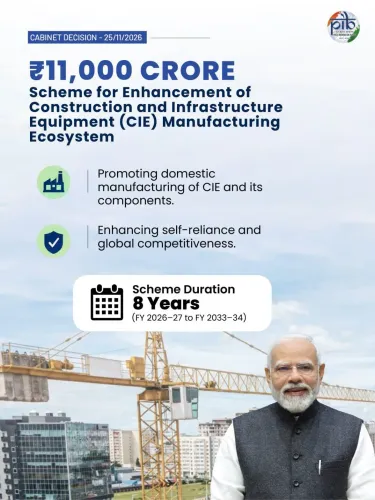
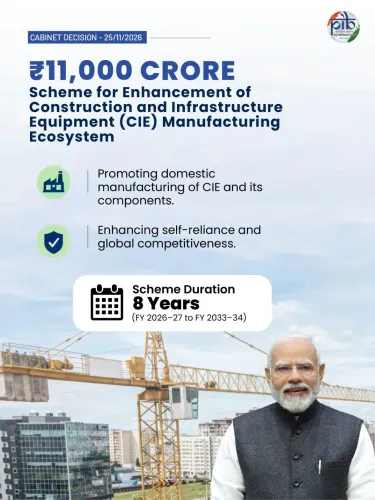
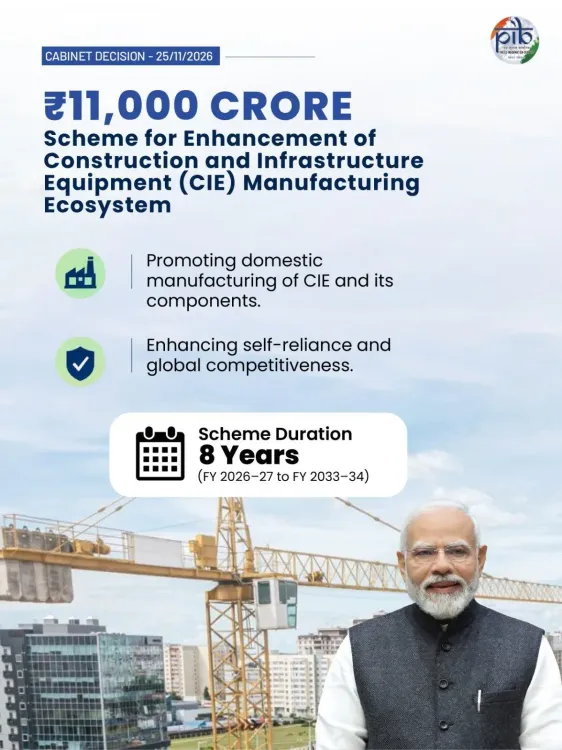
Kiren Rijiju announced Cabinet approval of the CIE Manufacturing Ecosystem scheme with a ₹11,000 crore outlay, continuing New Delhi's push to indigenise capital goods for India's infrastructure build-out.
Key Takeaways
Union Parliamentary Affairs Minister Kiren Rijiju announced the Cabinet decision on 25 November 2026 in New Delhi.
The scheme is the Scheme for Enhancement of Construction and Infrastructure Equipment (CIE) Manufacturing Ecosystem.
Rijiju cited a financial outlay of ₹11,000 crore.
He credited Prime Minister Narendra Modi and tagged the post #CabinetDecisions.
The announcement sits alongside Make in India (2014) and PLI schemes (from 2020) aimed at cutting import dependence in manufacturing.
Guidelines, anchor manufacturers and any duty or technology conditions were not spelled out in the post.
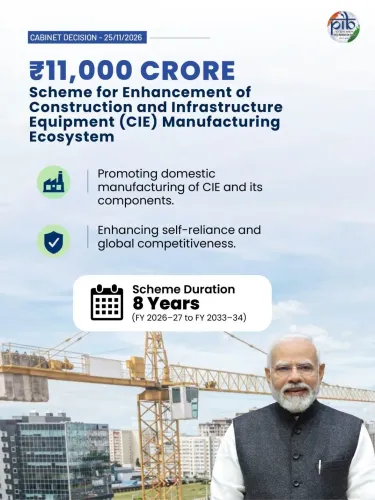
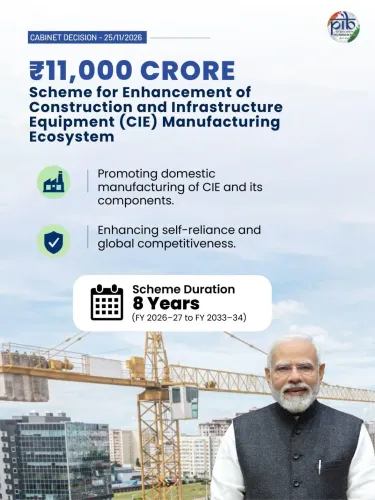
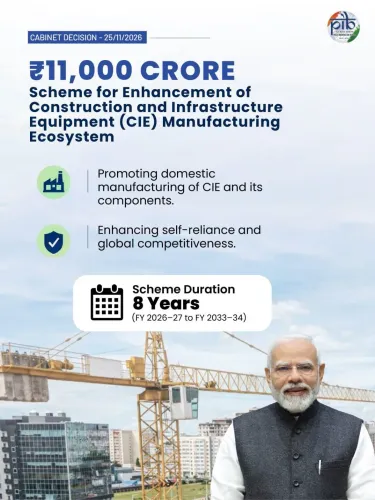
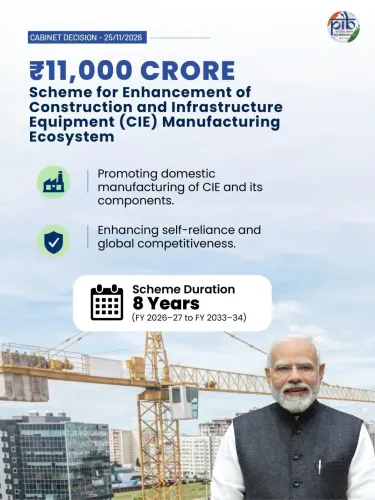
The machines that cut India's highways and raise its metros just received a named industrial policy of their own. Union Parliamentary Affairs Minister Kiren Rijiju said in New Delhi on 25 November 2026 that the Union Cabinet has approved the Scheme for Enhancement of Construction and Infrastructure Equipment (CIE) Manufacturing Ecosystem, with a financial outlay of ₹11,000 crore, under Prime Minister Narendra Modi's leadership.
Rijiju's post framed the decision as 'Strengthening India's construction and infrastructure equipment manufacturing ecosystem' and tagged it #CabinetDecisions. He did not list eligible machines, incentive slabs or a start date. The number he did lock in is the outlay: ₹11,000 crore.
A ₹11,000 crore bet on India's earthmovers
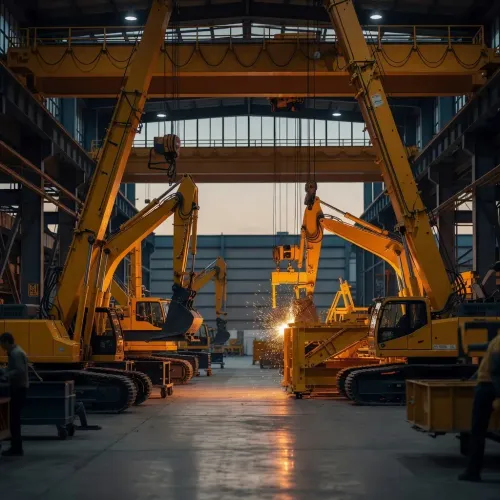
Excavators, cranes, compactors, pavers and loaders sit at a blunt intersection: public works demand them, and India has long imported a large share of them. Capital goods are unglamorous until a highway package stalls for want of a machine. That is the gap this scheme, as announced, is meant to close.
CIE manufacturers want capacity and a predictable order book. Infrastructure developers want kit that arrives on time. Both now have a Cabinet-level signal that New Delhi intends more of that kit to be built at home.
Make in India meets the capital-goods gap
The move sits on a decade-old track. Make in India, launched in 2014, set out to lift manufacturing's share of GDP and shrink import dependence. From 2020, Production Linked Incentive schemes put cash behind selected sectors. Construction equipment was always a logical candidate: it is capital-intensive, technology-heavy, and tied to the National Infrastructure Pipeline's appetite for steel, concrete and earthmoving.
Successive governments have treated indigenisation of construction machinery as a support act for that pipeline. Rijiju's announcement continues the pattern of targeted fiscal support for domestic value addition in a sector that physical infrastructure cannot expand without.
Guidelines, anchors and the factory-floor test
A Cabinet tick is not a factory. What to watch next is concrete: scheme guidelines, identification of anchor manufacturers, and any linked customs-duty or technology-transfer conditions. None of those appeared in the minister's post.
Until those papers land, the message from Raisina Hill is the cheque and the intent. The next document that matters is the one that tells a manufacturer where to put the next plant.
Point of View
Put public money behind domestic value addition, and hope private plants follow. Construction equipment is a logical next node because public capex has stayed high and import dependence in heavy machinery remains politically and fiscally visible. The real test, as with earlier schemes, will be guidelines, anchor investors and whether duty or technology conditions actually shift production rather than just relabel assembly.
NationPress
25 Nov 2026
Frequently Asked Questions
What is the CIE manufacturing scheme announced by Kiren Rijiju?
It is the Scheme for Enhancement of Construction and Infrastructure Equipment (CIE) Manufacturing Ecosystem, which Union Parliamentary Affairs Minister Kiren Rijiju said the Union Cabinet has approved. He described it as a move to strengthen India's construction and infrastructure equipment manufacturing ecosystem.
How much money has been allocated to the CIE scheme?
Kiren Rijiju cited a financial outlay of ₹11,000 crore. A year-wise split, incentive design or eligible product list was not given in his announcement.
When did Kiren Rijiju announce the CIE Cabinet decision?
He posted the announcement on 25 November 2026. He linked the approval to Prime Minister Narendra Modi's leadership and tagged it as a Cabinet decision.
How does the CIE scheme fit with Make in India and PLI?
Make in India, launched in 2014, and Production Linked Incentive schemes from 2020 onward have sought to raise domestic manufacturing and cut import dependence. The CIE announcement continues that pattern for capital goods used in infrastructure.
What should manufacturers watch after this Cabinet approval?
The next markers are scheme guidelines, identification of anchor manufacturers, and any linked customs duty or technology-transfer conditions. Rijiju's post did not spell out those operational details.