Rijiju condoles Namchi tunnel tragedy, prays for trapped workers
Synopsis
Union Parliamentary Affairs Minister Kiren Rijiju mourned lives lost at an under-construction tunnel in Namchi district, Sikkim on 21 July 2026, praying for trapped workers and the injured as rescue operations continued at the site.
Key Takeaways
Union Parliamentary Affairs Minister Kiren Rijiju expressed condolences over a fatal tunnel accident in Namchi district, Sikkim on 21 July 2026 .
The accident at the under-construction tunnel claimed lives, with additional workers reported trapped at the time of the post.
Rijiju called for 'safe rescue of those still trapped' and 'speedy recovery of the injured.' Sikkim 's mountainous terrain makes tunnel projects under SARDP-NE prone to geological hazards including rock falls, water ingress, and landslides.
Rescue operations were ongoing; a safety audit and possible compensation announcement by the executing agency are expected to follow.
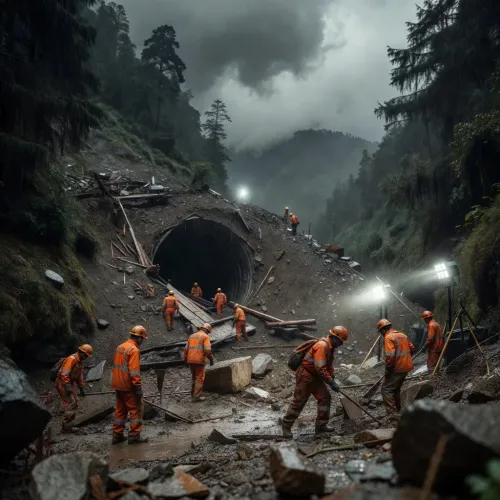
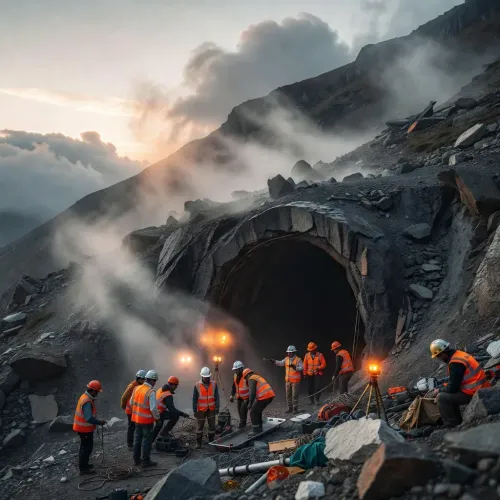
Union Parliamentary Affairs Minister Kiren Rijiju on Tuesday, 21 July 2026 expressed deep grief over a fatal accident at an under-construction tunnel in Namchi district, Sikkim, offering condolences to bereaved families and calling for the safe rescue of those still trapped inside.
Context
Rijiju stated he was 'deeply saddened by the tragic incident at the under-construction tunnel in Namchi district, Sikkim, which has claimed precious lives.' He extended his 'heartfelt condolences to the bereaved families' and prayed for 'strength and courage for those who have lost their loved ones, the safe rescue of those still trapped, and the speedy recovery of the injured.'
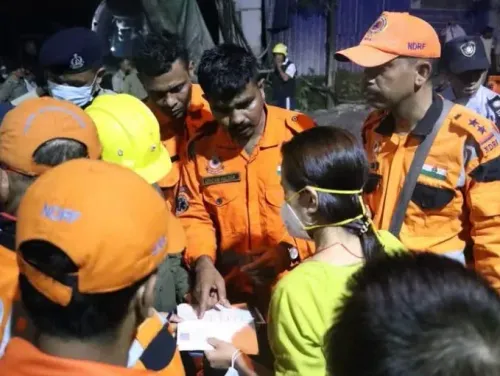
The acknowledgement of workers still trapped at the time of the post indicates that rescue operations were ongoing as the minister wrote. The Sikkim administration and central agencies are expected to be coordinating the relief effort on the ground.
Policy Backdrop
Namchi district sits in southern Sikkim, a northeastern Himalayan state that shares a sensitive border with China. The central government has channelled sustained investment into the region's transport infrastructure, partly for strategic reasons and partly to provide all-weather connectivity to remote communities.
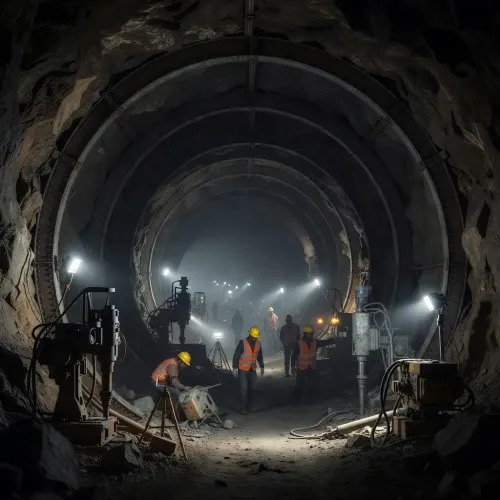
Since the mid-2000s, tunnel and road projects in Sikkim have been taken up under the Special Accelerated Road Development Programme for the North East (SARDP-NE). These projects routinely traverse geologically complex terrain prone to rock falls, water ingress, and landslides — hazards that have periodically led to accidents during construction phases.
Stakeholders and Impact
The most immediate victims are the construction workers employed at the tunnel site — both those who lost their lives and those reported to be trapped. Local residents of Namchi district and the broader Sikkim community are also affected, given the project's role in improving regional connectivity.
India's accelerating infrastructure push across Himalayan and northeastern states has brought economic opportunity to these regions but has also exposed workers to elevated geological risk. Safety protocols and geological assessments at such high-altitude construction sites remain a recurring concern among engineers and labour-rights advocates.
What's Next
Rescue teams are expected to continue operations until all trapped individuals are accounted for. Authorities will likely conduct a safety audit of the tunnel project once the immediate emergency is resolved, and the executing agency or the Ministry of Road Transport and Highways may announce compensation for the families of those killed.
The incident is likely to renew calls for stricter geological surveys and mandatory safety reviews before tunnelling work advances in ecologically sensitive, landslide-prone zones of the northeast.
Point of View
Which could accelerate both the rescue response and any subsequent accountability review. The incident fits a well-documented pattern of construction casualties in India's ambitious Himalayan infrastructure drive, where geological risk management has lagged behind project timelines. Rijiju's statement, while ceremonial in tone, implicitly puts pressure on the executing agency to demonstrate both rescue efficiency and long-term safety compliance. How the government responds in the days following — through compensation, audits, or policy revision — will test whether political sympathy translates into structural reform.
NationPress
21 Jul 2026
Frequently Asked Questions
What happened at the Namchi tunnel in Sikkim?
An accident occurred at an under-construction tunnel in Namchi district, Sikkim, claiming lives and leaving some workers trapped. Union Minister Kiren Rijiju confirmed the tragedy in a post on 21 July 2026 and called for safe rescue of those still inside.
Who is Kiren Rijiju and why did he comment on the Sikkim tunnel accident?
Kiren Rijiju is the Union Minister of Parliamentary Affairs and Minority Affairs and a senior BJP leader from Arunachal Pradesh. As a Union minister from the northeast, he regularly responds to significant incidents in the northeastern states, including Sikkim.
Where is Namchi district located?
Namchi district is in southern Sikkim, a northeastern Himalayan state of India that borders China. The district has seen road and tunnel projects aimed at improving all-weather connectivity across the state's mountainous terrain.
What is SARDP-NE and how does it relate to the Sikkim tunnel?
The Special Accelerated Road Development Programme for the North East (SARDP-NE) is a central government scheme launched in the mid-2000s to build roads and tunnels in India's northeastern states. Multiple tunnel projects in Sikkim have been taken up under this programme to overcome difficult Himalayan terrain.
Are tunnel accidents common in northeastern India?
India's accelerated infrastructure push in Himalayan and northeastern states has led to periodic accidents due to geological hazards such as rock falls, water ingress, and landslides. The Namchi incident fits this broader pattern of construction risk in ecologically sensitive border regions.