Rijiju honours Birsa Munda on Janjatiya Gaurav Diwas
Synopsis
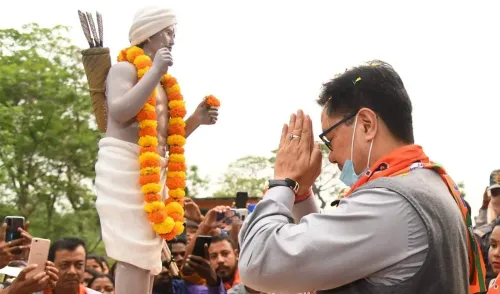
On Janjatiya Gaurav Diwas, Union Minister Kiren Rijiju paid tribute to Bhagwan Birsa Munda, calling PM Modi's leadership the force realising the tribal freedom fighter's dream of an empowered, self-reliant, and inclusive India.
Key Takeaways
Kiren Rijiju posted a tribute to Bhagwan Birsa Munda on Janjatiya Gaurav Diwas, 18 November 2026 .
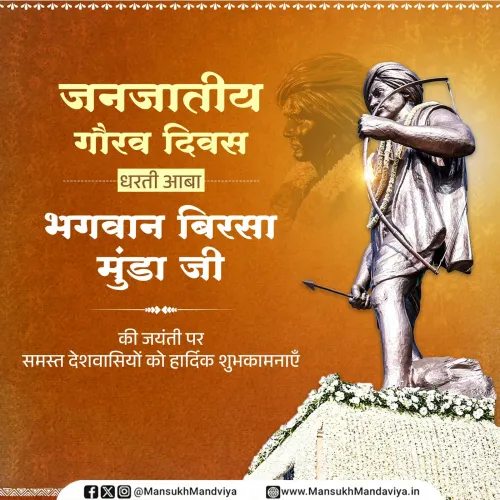
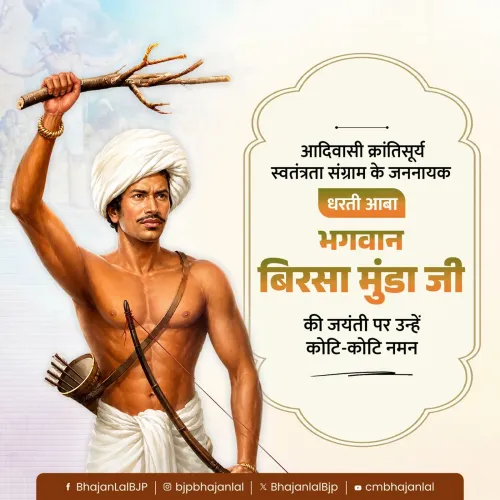
Birsa Munda , born 15 November 1875 in present-day Jharkhand , led the Ulgulan uprising against British rule and is revered as Dharti Aaba (Father of the Earth).
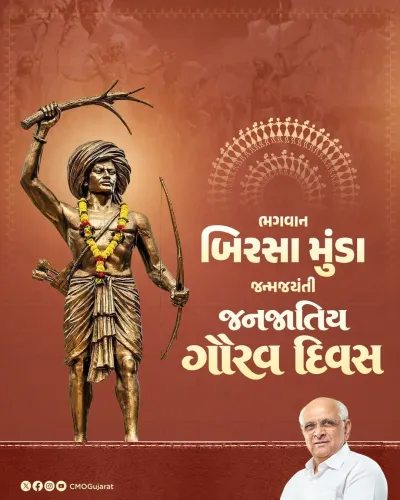
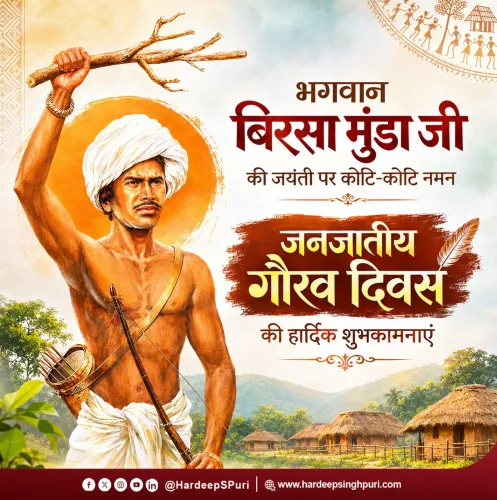
The Government of India declared 15 November as Janjatiya Gaurav Diwas in 2021 to honour Munda's birth anniversary and tribal contributions to the freedom struggle.
Rijiju framed PM Narendra Modi's tribal welfare initiatives as the fulfilment of Birsa Munda's vision of a self-reliant, inclusive India.
The tribute continues the central government's pattern since 2014 of publicly highlighting tribal heritage alongside development and aatmanirbhar (self-reliance) narratives.
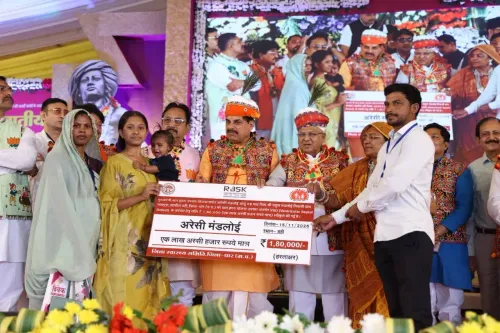
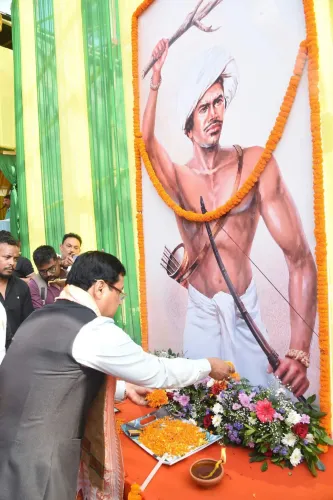
On Janjatiya Gaurav Diwas, Union Parliamentary Affairs Minister Kiren Rijiju paid tribute to Bhagwan Birsa Munda on Wednesday, 18 November 2026, invoking the 19th-century tribal icon's vision of an empowered, self-reliant India and crediting Prime Minister Narendra Modi's leadership for turning that dream into policy reality.
Rijiju's post, shared in Hindi, reads: 'Upeksha ke ateet se samman aur vikas ke naye adhyaya tak' — 'From a past of neglect to a new chapter of dignity and development.' He described Birsa Munda — revered across tribal belts as 'Dharti Aaba', meaning Father of the Earth — as the spiritual anchor for a vision of an inclusive India that the government says is now being realised.
Who was Birsa Munda — and why 15 November matters
Birsa Munda was born on 15 November 1875 in present-day Jharkhand. A leader of the Munda tribal community, he launched the Ulgulan — the Great Tumult — a fierce uprising against British colonial rule and the exploitation of tribal lands by local landlords. He died in British custody in 1900, aged just 25, but his legacy calcified into one of India's most enduring symbols of Adivasi resistance and dignity.
In 2021, the Government of India formally declared 15 November as Janjatiya Gaurav Diwas to commemorate his birth anniversary and recognise the broader contribution of tribal communities to the independence movement. The observance has since become an annual fixture in the government's cultural and political calendar.
Modi government's tribal outreach — the larger pattern
Rijiju's tribute fits squarely into a consistent pattern since 2014: publicly foregrounding tribal heritage, freedom-struggle contributions, and self-reliance as pillars of national identity. The hashtag #JanjatiyaGauravDiwas anchors the post to that broader mobilisation, connecting individual reverence for Birsa Munda to a government-wide messaging effort around Adivasi welfare and cultural pride.
The vocabulary Rijiju deploys — sashakt (empowered), aatmanirbhar (self-reliant), samaveshi (inclusive) — mirrors the central government's flagship development lexicon, threading a direct line from a 19th-century freedom fighter's aspirations to 21st-century programme delivery.
For India's tribal communities, who make up roughly 8 percent of the national population, the annual observance is both a cultural affirmation and a political signal — that their history is no longer an afterthought in the national narrative. Whether the commemorations translate into measurable welfare outcomes remains the question every Janjatiya Gaurav Diwas leaves open.
Point of View
Allowing the BJP to position tribal freedom fighters as co-architects of modern India's identity. By consistently pairing historical reverence for figures like Birsa Munda with the language of 'aatmanirbharta' and development, the government weaves a narrative that links Adivasi heritage to its own policy programme. This is a deliberate effort to deepen electoral and ideological connect with tribal communities — a demographic that is numerically significant across states like Jharkhand, Chhattisgarh, Odisha, and the Northeast. The unanswered challenge is whether commemorative energy translates into verifiable improvements in land rights, forest access, and economic mobility for Adivasi populations.
NationPress
18 Nov 2026
Frequently Asked Questions
What is Janjatiya Gaurav Diwas and when is it celebrated?
Janjatiya Gaurav Diwas is an annual observance on 15 November , declared by the Government of India in 2021 to mark the birth anniversary of tribal freedom fighter Bhagwan Birsa Munda and honour the contributions of tribal communities to India's independence movement.
Who was Bhagwan Birsa Munda?
Bhagwan Birsa Munda was a Munda tribal leader born on 15 November 1875 in present-day Jharkhand . He led the Ulgulan (Great Tumult) uprising against British colonial rule and exploitation of tribal lands, and is revered as Dharti Aaba — Father of the Earth.
Why did Kiren Rijiju post about Birsa Munda?
Kiren Rijiju , Union Minister of Parliamentary Affairs and Minority Affairs, shared the tribute on Janjatiya Gaurav Diwas to honour Birsa Munda's legacy and frame PM Modi's tribal welfare programmes as a realisation of the freedom fighter's vision for an empowered, self-reliant India.
What is the significance of calling Birsa Munda 'Dharti Aaba'?
Dharti Aaba means 'Father of the Earth' in the Munda tradition. The title reflects the reverence tribal communities hold for Birsa Munda as a spiritual and political protector who fought for tribal land rights and dignity against British colonialism.
When was Janjatiya Gaurav Diwas first declared?
The Government of India officially declared 15 November as Janjatiya Gaurav Diwas in 2021 under Prime Minister Narendra Modi's administration, coinciding with the birth anniversary of Bhagwan Birsa Munda.