Rijiju defends NCPI invite at all-party meet: 'How can we deprive 20 MPs?'
Synopsis
The INDIA bloc's walkout over the NCPI's presence at the Centre's all-party meeting has exposed a live constitutional grey zone: can 20 MPs who have petitioned the Lok Sabha Speaker for recognition be excluded from pre-session deliberations? Rijiju says no — and that answer has set the stage for a politically charged Monsoon Session before it has even begun.
Key Takeaways
Kiren Rijiju defended the Centre's decision to invite the Nationalist Citizens Party of India (NCPI) to the all-party meeting on 19 July , ahead of the Monsoon Session.
The INDIA bloc staged a walkout, protesting the NCPI's inclusion; Rijiju called the boycott 'formal' and brief.
20 NCPI Lok Sabha MPs have formally petitioned the Lok Sabha Speaker for party recognition and separate seating — a request currently under consideration.
Floor leaders from 40 political parties attended the meeting; Defence Minister Rajnath Singh urged cooperation given West Asia tensions.
Details of eight Bills for the Monsoon Session have been shared; any additional legislation will go through the Business Advisory Committee (BAC) first.
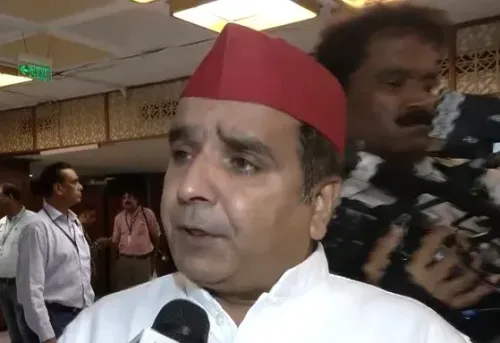
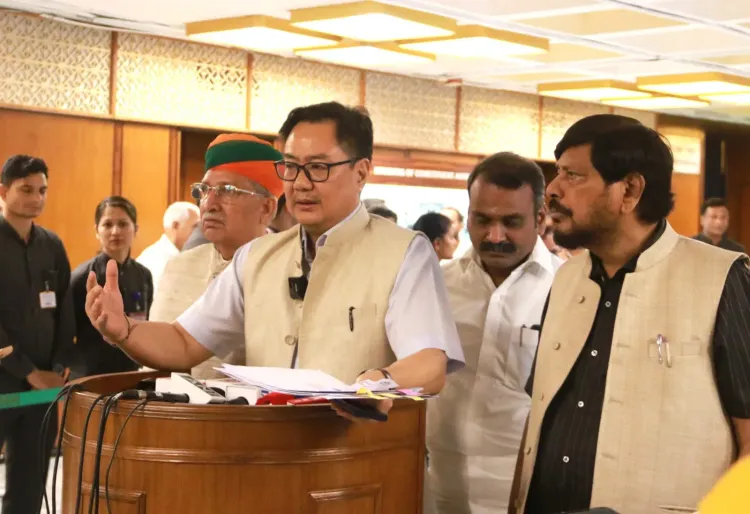
Union Parliamentary Affairs Minister Kiren Rijiju on Sunday, 19 July defended the Centre's decision to include members of the Nationalist Citizens Party of India (NCPI) in the all-party meeting convened ahead of the Monsoon Session of Parliament, arguing that excluding 20 elected Lok Sabha members from the deliberations would have been constitutionally untenable. The remarks came hours after the INDIA bloc staged a walkout from the meeting in protest over the NCPI's presence.
Why the INDIA Bloc Walked Out
The INDIA bloc objected to the Centre inviting the NCPI, a rebel faction that broke away from the All India Trinamool Congress (TMC). Opposition parties contend that the NCPI has not yet received formal recognition and that its inclusion amounted to a political provocation. The walkout, however, was described by Rijiju as brief and formal in nature.
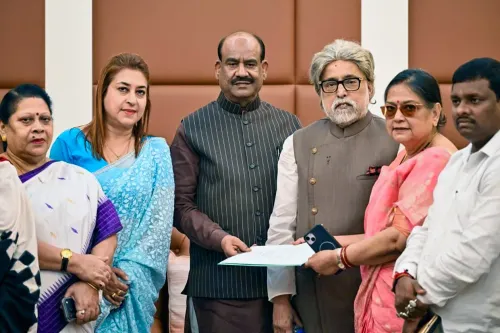
'That boycott was for some time; it was formal. I don't think it's bad; they have the right to express their opinion,' Rijiju told reporters. He noted that 20 NCPI Lok Sabha MPs had formally petitioned the Lok Sabha Speaker to register their new party and be seated separately in Parliament — a request currently under the Speaker's consideration.
Rijiju's Core Argument: The Lok Sabha Belongs to Everyone
'When it is under the Speaker's consideration, and there are 20 MPs, how can we deprive them? The Lok Sabha belongs to everyone. So, we will not call 20 MPs; how can this happen? Recognising (them) or not recognising (them) is a process. Whatever happens from the Lok Sabha Speaker's secretariat, I am not making any comment on that right now,' the Minister said.
Rijiju was emphatic that the government had not extended any special or separate invitation to the NCPI. 'Since their members are there, and they have demands, we are not calling anyone separately on our part; they are Lok Sabha members, 20 people, so they have to be called,' he added. This framing positions the invite as procedural rather than political — a distinction the Opposition has so far rejected.
What Happened at the All-Party Meeting
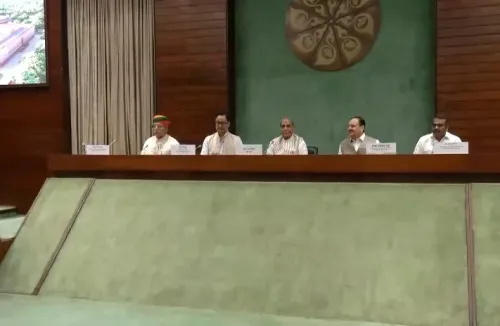
Despite the walkout, the meeting was attended by floor leaders from 40 political parties, who placed their views on issues expected to dominate the Monsoon Session. Defence Minister Rajnath Singh appealed to all parties to prioritise national interest, particularly in light of the ongoing conflict in West Asia and the resulting global uncertainties.
Rijiju noted that several smaller parties had specifically requested more speaking time during parliamentary proceedings — a signal that the session's agenda is likely to be contested and crowded.
Bills on the Table and a Warning on Disruptions
The Parliamentary Affairs Minister confirmed that details of eight Bills proposed for the Monsoon Session have already been shared through an official bulletin issued by the Lok Sabha and Rajya Sabha Secretariats. Should the government choose to introduce additional legislation, Rijiju said it would first be taken up in the Business Advisory Committee (BAC), with all Opposition parties informed in advance.
Rijiju also issued a pointed reminder about the political cost of parliamentary disruptions. 'Any political party, if they stay away from discussion and do ruckus, they do not get political benefit from it. This has been proven,' he said, adding that a smoothly run session would allow all members to speak, while disorder would ultimately silence those who created it. 'The people of the country want the Parliament to function, and if Parliament does not function, then it is not good for democracy,' he said.
With the Monsoon Session set to begin shortly and the NCPI's recognition still pending before the Speaker, the standoff over seating and representation is likely to shape the session's early proceedings.
Point of View
Described by Rijiju himself as 'formal', risks looking performative if it does not translate into sustained pressure on the recognition question. The real accountability gap here is the Speaker's timeline: as long as the NCPI petition remains 'under consideration', the government can keep invoking procedural cover. Opposition parties would be better served demanding a deadline on that ruling than walking out of rooms where the session's agenda is being shaped.
NationPress
18 Oct 2026
Frequently Asked Questions
Why did the INDIA bloc walk out of the all-party meeting on 19 July?
The INDIA bloc walked out to protest the Centre's decision to invite members of the Nationalist Citizens Party of India (NCPI), a rebel faction of the Trinamool Congress, to the all-party meeting ahead of the Monsoon Session of Parliament. Opposition parties objected to the NCPI's inclusion, arguing the group has not yet received formal recognition.
What is the Nationalist Citizens Party of India (NCPI)?
The NCPI is a rebel political faction that broke away from the All India Trinamool Congress (TMC). Its 20 Lok Sabha MPs have formally petitioned the Lok Sabha Speaker to register the new party and be granted separate seating in Parliament — a request that is currently under the Speaker's consideration.
Why did Kiren Rijiju say the NCPI had to be invited?
Rijiju argued that since 20 elected Lok Sabha members belong to the NCPI and have petitioned the Speaker for recognition, excluding them from the all-party meeting would be constitutionally inappropriate. He stressed that the government had not issued any special invitation to the NCPI but was obligated to include all sitting MPs.
How many parties attended the all-party meeting despite the walkout?
Floor leaders from 40 political parties attended the all-party meeting and presented their views on issues expected to be discussed during the Monsoon Session, even as the INDIA bloc staged its walkout.
What legislation is planned for the Monsoon Session of Parliament?
The government has shared details of eight Bills proposed for the Monsoon Session through an official bulletin from the Lok Sabha and Rajya Sabha Secretariats. Any additional legislation will first be discussed in the Business Advisory Committee (BAC), with all Opposition parties informed in advance.