Opposition walkout at all-party meet over NCPI invite: 'Unconstitutional'
Synopsis
Opposition parties walked out of a government all-party meeting after the unrecognised NCPI — a TMC rebel faction — was invited to attend, even as the Lok Sabha Speaker's ruling on their disqualification petition remains pending. With AAP raising an identical grievance over seven of its own Rajya Sabha MPs, this walkout signals a widening constitutional flashpoint over defections that could reshape the parliamentary session.
Key Takeaways
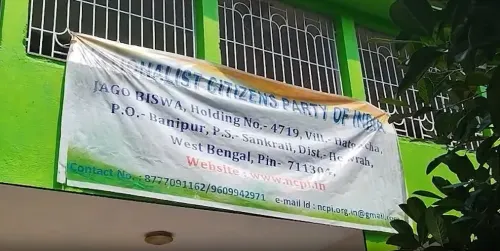
Opposition parties staged a walkout from a government all-party meeting on 19 July in New Delhi , protesting the inclusion of the Nationalist Citizens Party of India (NCPI) .
The NCPI is a breakaway group of 20 TMC MPs ; the Table Office's own list recognises TMC as holding 28 seats .
The Lok Sabha Speaker has not yet ruled on the disqualification petition filed against the breakaway MPs.
Gupta said 7 of AAP's 10 Rajya Sabha MPs face a similarly unresolved petition, yet have been allotted separate seats.
Opposition leaders — including from SP, CPI, Congress, JMM, and AAP — described the move as 'unconstitutional' and 'murder of democracy.' Neither Speaker Om Birla nor Parliamentary Affairs Minister Kiren Rijiju had responded formally at the time of reporting.
Opposition parties staged a walkout from a government-convened all-party meeting on Sunday, 19 July in New Delhi, protesting the inclusion of the Nationalist Citizens Party of India (NCPI) — described by the Opposition as an unrecognised rebel faction of the Trinamool Congress (TMC) — in the proceedings. Opposition leaders uniformly condemned the move as 'unconstitutional' and a 'murder of democracy.'
What Triggered the Walkout
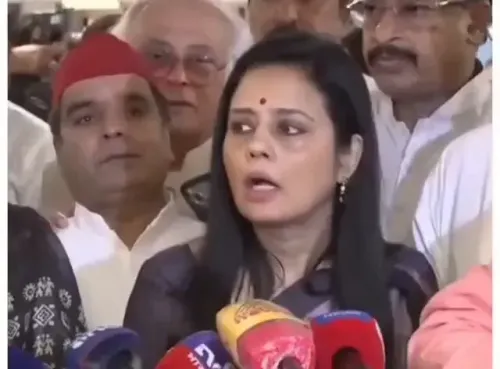
Trinamool Congress MP Saugata Roy said the core objection was straightforward: 'The concern is that an unrecognised party has been called to this meeting... there is no scope for a separate bloc, why have they been invited by the Parliamentary Affairs Minister?' According to Roy, the NCPI's presence at a formal all-party meeting lent it a legitimacy it has not earned through any constitutional or parliamentary process.
Samajwadi Party MP Dharmendra Yadav elaborated, noting that the Table Office's own circulated list of MPs recognises TMC as holding 28 seats in Parliament. Despite this, a breakaway group of 20 MPs — whose petition for recognition remains undecided before the Lok Sabha Speaker — was invited to the meeting. 'I believe this entire process being followed by the government is undemocratic and unconstitutional,' Yadav said.
Opposition Voices Unite Against the Move
Communist Party of India (CPI) MP P. Sandosh Kumar directed his criticism at both Lok Sabha Speaker Om Birla and Parliamentary Affairs Minister Kiren Rijiju, calling the walkout 'a protest against the undemocratic approach' of both officials. 'The ruling party is engineering defections in political parties, which is not good for a healthy democracy,' he said.
Congress MP Pramod Tiwari questioned the procedural basis for the invitation: 'The case regarding the split in the Trinamool Congress is still pending. No decision has been taken yet, so how was a notification issued? How was a separate bloc recognised? How were they invited?' Tiwari called the proceedings 'an unconstitutional act.'
Jharkhand Mukti Morcha (JMM) MP Mahua Maji framed the issue in broader terms, describing what is happening across the country as 'the systematic breaking of political parties by luring away MPs through every possible means.'
Aam Aadmi Party (AAP) MP N. D. Gupta pointed to his own party's situation as a parallel case: 'In our case, out of the 10 MPs of the Rajya Sabha, seven have been hijacked, and our petition to decide whether this is valid or not is pending. In spite of this fact, they have been allotted independent separate seats in the Rajya Sabha... this is a mere hijack and murder of democracy.'
The Defection Debate and Its Constitutional Stakes
At the heart of the controversy is the Tenth Schedule of the Constitution — the anti-defection law — which bars elected members from voting against their party's direction or voluntarily giving up party membership without losing their seat. The Speaker's office has yet to rule on the disqualification petitions filed against the breakaway TMC and AAP MPs. Inviting these members to an official all-party meeting before any such ruling, critics argue, prejudges the outcome and gives the breakaway groups a de facto legitimacy they do not yet hold.
Notably, this is not the first time the government has faced accusations of facilitating intra-party splits. Opposition parties have repeatedly alleged that the ruling Bharatiya Janata Party (BJP) has used institutional mechanisms to weaken rival formations — a charge the government has consistently denied.
Government's Position and What Comes Next
Neither Speaker Om Birla nor Parliamentary Affairs Minister Kiren Rijiju had issued a formal response to the walkout at the time of reporting. Dharmendra Yadav said the entire Opposition remained united: 'No matter how much the government tries to engineer defections or create divisions, it has not been able to create any differences among the opposition parties.'
The Speaker's pending rulings on the disqualification petitions — covering both the TMC and AAP breakaway groups — are now expected to face intensified political scrutiny. How those decisions land will likely determine whether this walkout marks the beginning of a broader parliamentary confrontation.
Point of View
Yet its enforcement rests with the very Speaker being accused of bias here. What makes this moment distinct is that two parties — TMC and AAP — are raising the same grievance simultaneously, suggesting a pattern rather than an isolated incident. If the Speaker's forthcoming rulings do not address both petitions transparently, the credibility of the Tenth Schedule as a check on defection engineering will take a serious hit.
NationPress
18 Oct 2026
Frequently Asked Questions
Why did the Opposition walk out of the all-party meeting on 19 July?
The Opposition walked out to protest the government's decision to invite the Nationalist Citizens Party of India (NCPI) — a breakaway faction of the Trinamool Congress — to the all-party meeting, even though the Lok Sabha Speaker has not yet ruled on the disqualification petition against those MPs. Leaders called the move 'unconstitutional' and said it prejudged a pending legal process.
What is the Nationalist Citizens Party of India (NCPI)?
The NCPI is a rebel faction comprising approximately 20 MPs who broke away from the Trinamool Congress. The Opposition describes it as an 'unrecognised political party' since the Lok Sabha Speaker has not yet adjudicated the disqualification petitions filed against its members under the anti-defection law.
Who is responsible for recognising a breakaway parliamentary group?
Under parliamentary rules, the Lok Sabha Speaker has the authority to recognise breakaway groups and rule on disqualification petitions filed under the Tenth Schedule (anti-defection law). In this case, the Speaker had not issued any ruling at the time the NCPI members were invited to the all-party meeting.
Which opposition parties participated in the walkout?
MPs from the Trinamool Congress, Samajwadi Party, Communist Party of India, Indian National Congress, Jharkhand Mukti Morcha, and Aam Aadmi Party all participated in or voiced support for the walkout, presenting a united front against the government's decision.
What is the AAP's separate grievance mentioned at the meeting?
AAP MP N. D. Gupta stated that 7 of AAP's 10 Rajya Sabha MPs had broken away and been allotted separate seats in the Upper House, despite a petition challenging this split remaining unresolved. He called the situation a 'hijack and murder of democracy,' drawing a direct parallel to the TMC case.