Rijiju, Shivraj Visit Flood-Hit Dhemaji in Assam
Synopsis
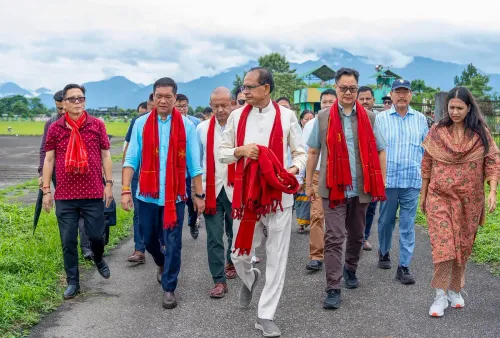
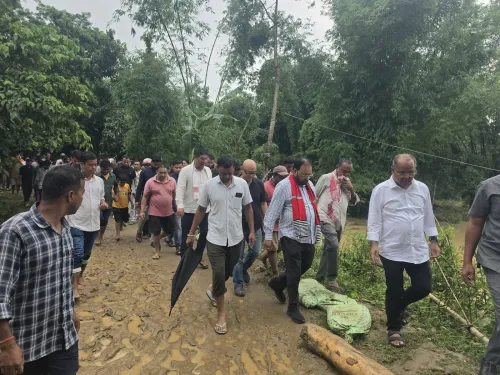
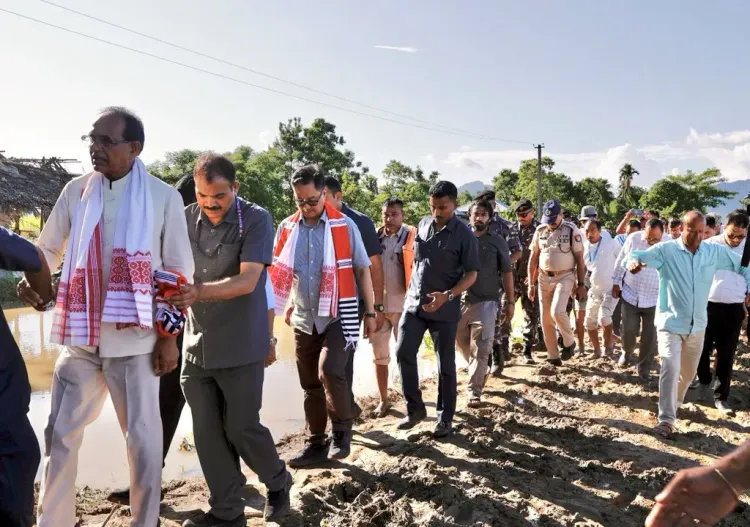
Union Ministers Kiren Rijiju and Shivraj Singh Chouhan visited flood-hit Dhemaji District in Assam on 1 July 2026, accompanied by state ministers, local legislators, and the head of the Mising Autonomous Council, to assess monsoon flooding along the Brahmaputra river system.
Key Takeaways
Kiren Rijiju and Shivraj Singh Chouhan jointly visited Dhemaji District, Assam , on 1 July 2026 to assess flood damage.
The delegation included Assam ministers Atul Bora and Dr.
Ranoj Pegu , along with the Lakhimpur MP and MLAs from Jonai and Sissibargaon .
Paramananda Chayengia , Chief Executive Member of the Mising Autonomous Council , was part of the visiting group, highlighting the tribal communities' flood vulnerability.
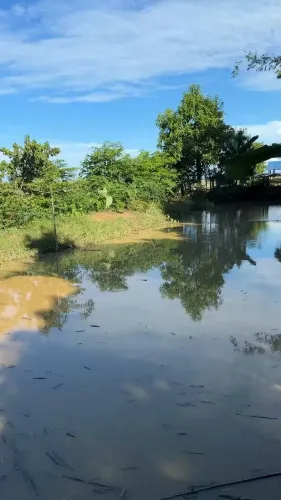
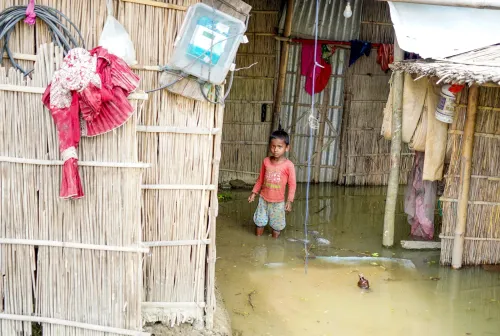
Dhemaji is one of Assam's most flood-prone districts, lying along the Brahmaputra and its northern tributaries.
Central assistance under the National Disaster Response Fund has been extended to Assam after major flood seasons in 2012 , 2017 , and 2020 .
The visit may precede formal damage assessments and potential central relief package announcements for the 2026 monsoon season.
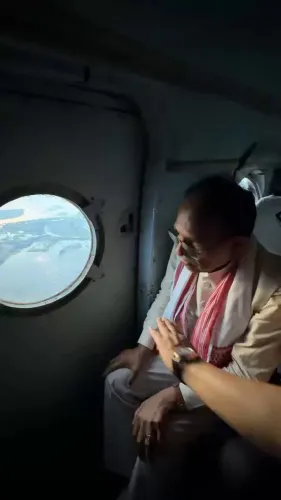
Union Parliamentary Affairs Minister Kiren Rijiju visited flood-affected areas in Dhemaji District, Assam, on 1 July 2026, alongside Union Minister Shivraj Singh Chouhan, to assess the damage wrought by the current monsoon season. The joint central-level visit signals the government's engagement with one of Assam's most flood-vulnerable districts, situated along the Brahmaputra river system.
Context
Rijiju shared details of the visit on social media, noting that he was joined by Atul Bora, Assam's Minister for Panchayat and Rural Development, Excise and Border Protection, who also serves as Guardian Minister of Dhemaji district. Also present were Dr. Ranoj Pegu, Assam's Minister for Education and Tribal Affairs; Pradan Baruah, Member of Parliament from Lakhimpur; Bhubon Pegu, MLA from Jonai; Jiban Gogoi, MLA from Sissibargaon; and Paramananda Chayengia, Chief Executive Member of the Mising Autonomous Council.
The delegation's composition — combining central ministers, state cabinet members, local legislators and a tribal autonomous body's head — reflects the multi-tier coordination that large-scale flood events in Assam typically demand.
Policy Backdrop
Dhemaji is among Assam's most chronically flood-prone districts, lying at the confluence of the Brahmaputra and its northern tributaries. The Brahmaputra Board, constituted in 1980, is the nodal body for coordinating flood control and river management across the Northeast, though embankment maintenance and immediate relief remain primarily state responsibilities supplemented by central funds.
Assam has received central assistance under the National Disaster Response Fund following severe flood seasons in 2012, 2017, and 2020, among others. Visits by Union ministers during active flood situations typically precede formal assessments that feed into supplementary grant requests and relief package announcements.
Stakeholders and Impact
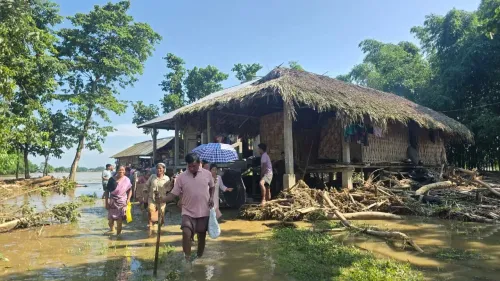
The Mising tribal community, one of Assam's largest indigenous groups, is disproportionately affected by Brahmaputra floods, with settlements concentrated on low-lying riverine islands and banks in Dhemaji and neighbouring districts. The presence of Paramananda Chayengia of the Mising Autonomous Council underlines the tribal dimension of flood vulnerability in this region.
Flood-affected residents depend on timely central-state coordination for evacuation support, temporary shelter, food relief, and eventual compensation for crop and property losses. Elected representatives from Lakhimpur, Jonai, and Sissibargaon constituencies joining the tour indicates that ground-level concerns from multiple administrative units were being channelled to the visiting central ministers.
What's Next
Field visits of this nature by senior Union ministers typically lead to formal damage-assessment reports submitted to the central government, which can trigger releases from the National Disaster Response Fund or special central packages. Parliamentary questions and supplementary demands for grants related to Assam's flood mitigation infrastructure — including embankment strengthening and dredging under the Brahmaputra Board — are expected to feature in the upcoming monsoon session of Parliament.
Progress on long-term structural interventions, including river bank protection works and improved early-warning systems for communities in Dhemaji and surrounding upper-Assam districts, will be closely watched as the 2026 monsoon season advances.
Point of View
Particularly ahead of a monsoon session of Parliament where opposition parties are likely to press the government on disaster relief. Shivraj Singh Chouhan's presence is notable given his agriculture and rural development portfolio, suggesting the visit's scope extends beyond immediate relief to longer-term rural recovery. For the BJP, which governs both at the Centre and in Assam, such coordinated tours serve the dual purpose of governance and political messaging in a state where flood management is a perennial electoral concern. The inclusion of the Mising Autonomous Council chief points to a deliberate effort to address tribal grievances, a constituency that has historically felt under-served by mainstream flood-relief mechanisms.
NationPress
1 Jul 2026
Frequently Asked Questions
Why did Kiren Rijiju visit Dhemaji in Assam?
Kiren Rijiju visited Dhemaji District on 1 July 2026 to assess flood damage caused by the ongoing monsoon season, joining Union Minister Shivraj Singh Chouhan and a delegation of Assam state ministers and local legislators.
Which ministers accompanied Kiren Rijiju to Dhemaji?
Union Minister Shivraj Singh Chouhan joined Rijiju, along with Assam ministers Atul Bora and Dr. Ranoj Pegu, MP Pradan Baruah, MLAs Bhubon Pegu and Jiban Gogoi, and Mising Autonomous Council chief Paramananda Chayengia.
Why is Dhemaji District so flood-prone?
Dhemaji lies along the Brahmaputra river and its northern tributaries in upper Assam, making it one of the state's most chronically inundated districts during the annual monsoon season.
What is the Mising Autonomous Council?
The Mising Autonomous Council is a statutory body representing the Mising tribal community in parts of Dhemaji and neighbouring districts of Assam; the community is among the most vulnerable to Brahmaputra flooding due to its riverine settlements.
What central funds are available for Assam flood relief?
The National Disaster Response Fund is the primary central mechanism for flood relief assistance; Assam has received special packages under this fund after major flood seasons in 2012, 2017, and 2020, among others.