CM Rio Thanks Assam's Himanta as Nagaland-Assam Pact Takes Shape
Synopsis
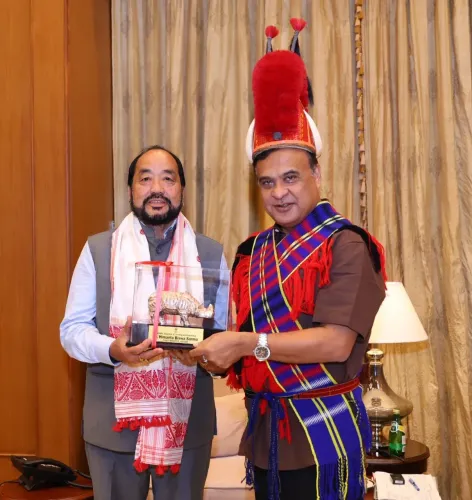
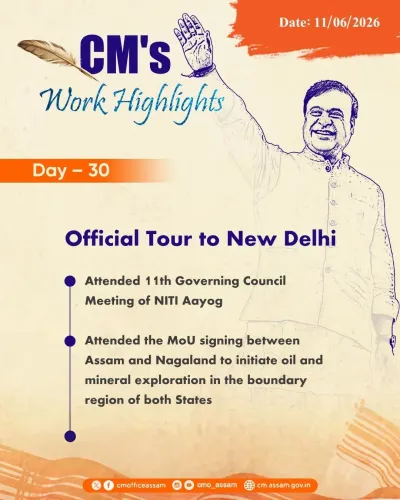
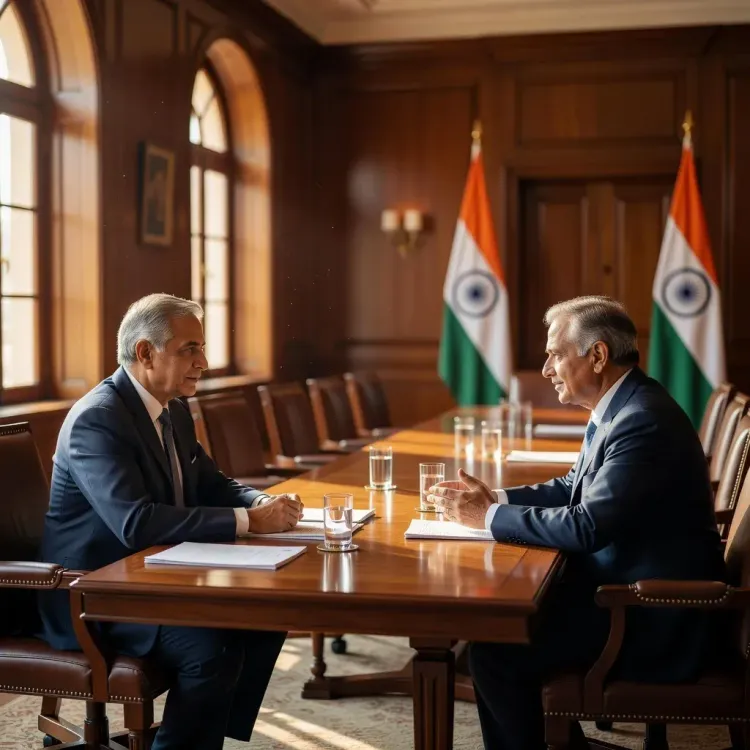
Nagaland Chief Minister Neiphiu Rio on June 11, 2026, publicly thanked Assam CM Himanta Biswa Sarma as the two states formalised a bilateral understanding aimed at peace, stability, and development along their long-disputed shared border in the Northeast.
Key Takeaways
CM Neiphiu Rio acknowledged Assam CM Himanta Biswa Sarma on June 11, 2026 , for formalising a bilateral understanding between Nagaland and Assam .
Rio described the understanding as reflecting 'the maturity of our relationship and shared commitment to fostering peace, stability, and development in the region.' The Nagaland-Assam border dispute has colonial-era roots and has periodically led to localised violence affecting border communities.
Assam under CM Himanta Biswa Sarma has previously formalised similar inter-state agreements, including with Meghalaya in 2022 .
The exact terms and scope of the June 2026 understanding have not been officially disclosed by either state government.
Joint committees or implementation mechanisms are expected to follow, with progress likely reviewed at Northeast CMs' meetings and NITI Aayog forums.
Nagaland Chief Minister Neiphiu Rio on Thursday, June 11, 2026, publicly acknowledged Assam Chief Minister Himanta Biswa Sarma and the Government of Assam for what he described as a formal understanding between the two states, calling it a reflection of their shared commitment to peace, stability, and development in the Northeast.
Context
CM Rio responded directly to CM Himanta Biswa Sarma on X, stating: 'I thank the CM of Assam Shri Himanta Biswa Ji, and the Govt. of Assam for their goodwill and partnership. The understanding that we are formalising today reflects the maturity of our relationship and shared commitment to fostering peace, stability, and development in the region.' The exchange signals that both states have moved toward codifying what appears to be a bilateral understanding, though the precise terms of the agreement have not been made public.
Nagaland and Assam share a long-contested border whose origins lie in colonial-era demarcations. Periodic flare-ups between border communities of the two states have historically complicated development and infrastructure projects in the region.
Policy Backdrop
The broader peace architecture in Nagaland was significantly shaped by the 2015 Framework Agreement between the Government of India and the NSCN-IM, which laid the groundwork for wider reconciliation efforts involving neighbouring states. Inter-state dialogue has since become an incremental but consistent feature of Northeast governance.
CM Himanta Biswa Sarma, who has been Assam's Chief Minister since 2021, has pursued active border-management diplomacy with multiple Northeast states, including a notable agreement with Meghalaya in 2022. The current understanding with Nagaland appears to follow that template of formalising dialogue into documented commitments.
Central government schemes targeting Northeast infrastructure and connectivity have added urgency to resolving inter-state disputes, as unresolved border tensions can delay project clearances and land acquisition in affected districts.
Stakeholders and Impact
The communities most directly affected by any such understanding are the Naga and Assamese border villages, where land-use disputes and occasional violence have disrupted livelihoods for decades. A formalised arrangement, if it includes joint monitoring or administrative coordination, could provide these communities with greater security and access to state services.
Naga tribes with traditional land claims straddling the administrative boundary stand to benefit from any clarity on jurisdiction and resource rights. Civil society groups in both states have long called for a durable, people-centred resolution rather than top-down agreements that bypass local stakeholders.
What's Next
Observers will watch for the rollout of any joint committees or implementation mechanisms that translate the understanding into on-ground action. Upcoming Northeast Chief Ministers' meetings and NITI Aayog forums are likely platforms where progress on such bilateral compacts is reviewed at the national level.
The language used by CM Rio — 'formalising today' — suggests a document or memorandum may have been signed, though official details are yet to be confirmed by either state government. Any formal disclosure will clarify the scope, timelines, and enforcement provisions of the understanding.
Point of View
Building political momentum ahead of implementation. Himanta Biswa Sarma's record of border compacts with neighbouring states positions him as the region's most active inter-state negotiator, and Rio's effusive acknowledgement suggests Nagaland views this as a significant political win. For both Chief Ministers, the optics of cooperation serve domestic audiences wary of prolonged border instability. The durability of the understanding will ultimately depend on whether joint mechanisms are established and whether border communities perceive tangible benefits.
NationPress
19 Sept 2026
Frequently Asked Questions
What is the Nagaland-Assam understanding signed in June 2026?
It is a bilateral understanding formalised on June 11, 2026 , between Nagaland CM Neiphiu Rio and Assam CM Himanta Biswa Sarma aimed at fostering peace, stability, and development in the region. The exact terms have not yet been officially disclosed.
Why do Nagaland and Assam have a border dispute?
The Nagaland-Assam border dispute stems from colonial-era administrative demarcations that left land and resource rights ambiguous. Periodic clashes between border communities have complicated governance and development in the area for decades.
What has Himanta Biswa Sarma done for Northeast border peace?
CM Himanta Biswa Sarma has pursued active border diplomacy since taking office in 2021 , including a notable inter-state agreement with Meghalaya in 2022 . The June 2026 understanding with Nagaland is the latest in this series of bilateral compacts.
How does the 2015 Naga Framework Agreement relate to this?
The 2015 Framework Agreement between the Government of India and NSCN-IM established a broader peace architecture for Nagaland , encouraging inter-state dialogue as part of wider reconciliation. The current Nagaland-Assam understanding builds on that foundation.
Who are the main communities affected by the Nagaland-Assam border issue?
Naga tribes and Assamese border communities living in districts along the shared boundary are most directly affected. They face uncertainties over land rights, administrative jurisdiction, and access to state services due to the unresolved boundary.