What Happened During the Trial of Bihar's Rohtasgarh Ropeway?

Synopsis
A major mishap during the Rohtasgarh Ropeway's trial run in Bihar raises alarming questions about safety and construction integrity. With no injuries reported, concerns grow as the project was set for a New Year's inauguration. Local disappointment echoes as hopes for tourism and accessibility are dashed.
Key Takeaways
Major incident during the Rohtasgarh Ropeway's trial run raises safety concerns.
Collapse occurred just days before planned inauguration.
No injuries reported as cabin was empty.
Questions arise about construction quality and accountability .
Local disappointment as project aimed to boost tourism.
Patna, Dec 26 (NationPress) A significant event unfolded on Friday during the testing phase of the Rohtasgarh Ropeway Project in Bihar's Rohtas district, raising substantial concerns regarding the quality of construction and safety protocols.
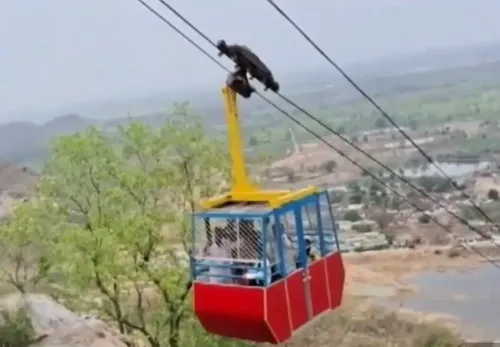
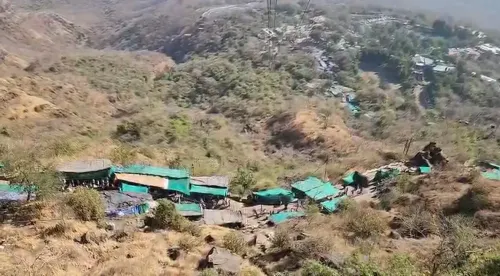
The ropeway, designed to enhance accessibility to the historic Rohtasgarh Fort and Rohiteshwar Dham Temple, suffered a collapse during its second trial run, occurring just days prior to its intended inauguration.
Reports indicate that the project was nearing completion, with an initial trial having been successful.
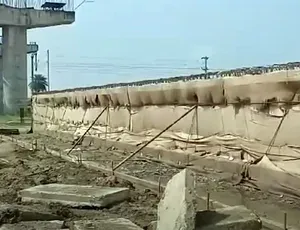
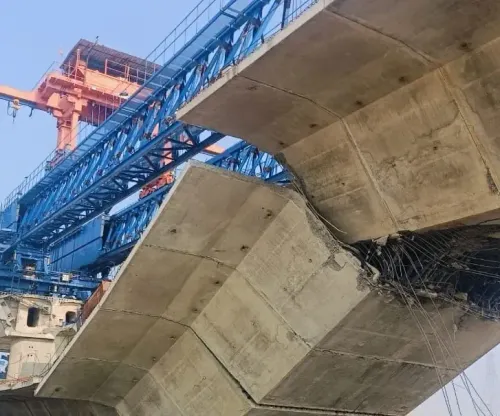
However, during the subsequent trial on Friday, several support pillars gave way, resulting in the ropeway cabin plummeting down the slope.
Fortunately, there were no individuals inside the cabin at that moment, averting a potential catastrophe.
The trial was overseen by engineers and technical specialists.
As the empty cabin was dispatched from Akbarpur toward Rohtasgarh Fort, a supporting pillar collapsed shortly thereafter.
This initiated a chain reaction, causing multiple pillars to fail.
Within moments, the entire ropeway system, along with its machinery and cabin, collapsed.
The incident has sparked serious concerns about construction standards.
Accusations of corruption related to the project have also emerged, as the collapse occurred before the trial phase was fully completed.
The ropeway was set for inauguration on New Year's Day.
Construction had been ongoing for almost six years, with an overall project budget of Rs 13.65 crore.
Chief Minister Nitish Kumar laid the foundation stone in 2019, making this collapse particularly embarrassing for the government.
Local residents have expressed profound disappointment, viewing the project as a visionary initiative that would significantly enhance tourism and facilitate travel for worshippers.
The ropeway was anticipated to reduce a seven-kilometer journey to mere minutes, offering easy access to the mountain fort and temple.
This trial was conducted by a firm based in Kolkata.
Numerous agencies were involved in various construction aspects, including cable installation, station building, ticket counters, and electrical systems, all of which are now subject to examination.
The ropeway spans nearly 1,324 meters and comprises five towers, including two support towers.
The segment between the third and fourth towers features a steep incline of about 40 degrees, anticipated to be a major tourist attraction.
Construction commenced on February 12, 2020.
The empty trolley capacity is 250 kg, while the loaded capacity is 570 kg.
Initially, 12 trolleys were installed for testing, with plans to add more as needed.
Authorities have yet to assign blame for the collapse, but an investigation is forthcoming.
In the meantime, this incident has ignited widespread discourse regarding safety, accountability, and transparency in governmental infrastructure endeavors.
Point of View
I recognize the gravity of the incident at the Rohtasgarh Ropeway Project. It underscores the urgent need for rigorous safety standards and accountability in public infrastructure projects. The local community's aspirations for improved access to cultural landmarks must not be overshadowed by negligence. We must advocate for transparency and thorough investigations to restore public trust.
NationPress
30 Sept 2026
Frequently Asked Questions
What caused the ropeway collapse in Bihar?
The ropeway collapsed during its second trial run due to the failure of multiple supporting pillars.
Were there any injuries reported during the incident?
Fortunately, there were no passengers inside the cabin at the time of the collapse, so no injuries were reported.
What was the budget for the Rohtasgarh Ropeway Project?
The total cost of the Rohtasgarh Ropeway Project was Rs 13.65 crore.
When was the ropeway scheduled to open?
The ropeway was scheduled for inauguration on New Year's Day.
Who was responsible for the construction of the ropeway?
The ropeway project involved multiple agencies, with a firm based in Kolkata overseeing the trial.