RRU Gandhinagar to host BRICS anti-money laundering training from Sep 7
Synopsis
Days before India hosts the 18th BRICS Leaders' Summit, Rashtriya Raksha University in Gandhinagar is convening a five-day financial crime training for BRICS nations — covering money laundering, terror financing, and FATF frameworks. It is a signal that India's BRICS chairship is using technical diplomacy, not just summitry, to build lasting multilateral security architecture.
Key Takeaways
Rashtriya Raksha University (RRU) , Gandhinagar, will host a five-day BRICS training on AML and CFT from 7 to 11 September 2026 .
The programme, titled 'Emerging Risks, FATF Methodologies & BRICS Best Practices' , is co-organised with the FATF Cell of the Ministry of Finance.
It is part of India's BRICS Chairship 2026 and precedes the 18th BRICS Leaders' Summit in New Delhi on 11–13 September .
RRU has previously trained more than 2,000 participants from 85 countries across 61 specialised programmes .
Finance Minister Nirmala Sitharaman has described RRU as filling a 'critical niche' in security and economic training.
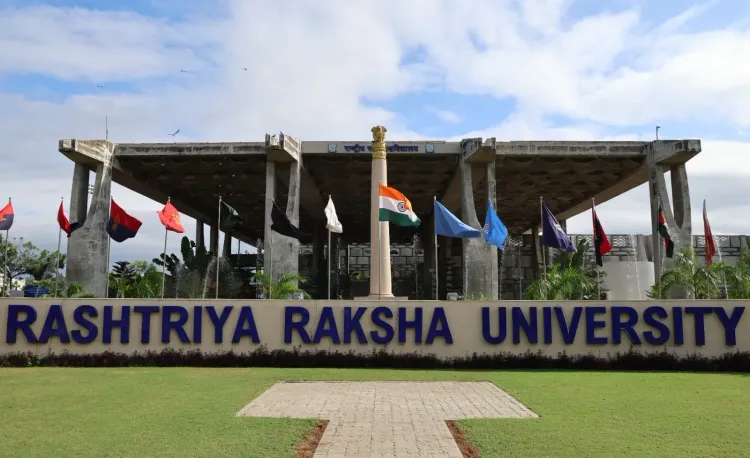
Rashtriya Raksha University (RRU) in Gandhinagar will host a five-day BRICS capacity-building programme on combating money laundering and terrorist financing from 7 to 11 September, bringing together policymakers, financial intelligence units, supervisory authorities, law-enforcement agencies, and prosecution bodies from BRICS member states. The programme forms a key plank of India's BRICS Chairship 2026.
Programme Overview
Titled 'Emerging Risks, FATF Methodologies & BRICS Best Practices', the training is being co-organised by RRU — an Institution of National Importance under the Ministry of Home Affairs — and the FATF Cell of the Department of Revenue under the Ministry of Finance. The inaugural session is scheduled for 9:30 am on 7 September at the RRU campus in Gandhinagar.
Sessions will cover anti-money laundering (AML) and countering the financing of terrorism (CFT), with a focus on emerging financial crime risks, evolving international standards, and institutional responses. Participants will also examine challenges posed by the growing use of technology, increasingly complex financial networks, and the cross-border nature of illicit financial flows.
Key Developments and Format
The five-day programme will feature expert-led sessions, country presentations, and interactive discussions centred on FATF methodologies and practical approaches to strengthening national AML/CFT frameworks. A significant emphasis will be placed on peer learning, operational knowledge-sharing, and building professional networks among institutions across BRICS nations.
RRU stated that the initiative is designed to strengthen institutional cooperation and technical capacity to prevent, detect, and investigate financial crime — particularly as illicit financial flows increasingly operate across multiple jurisdictions.
Broader BRICS Context
The training programme arrives just days before India hosts the 18th BRICS Leaders' Summit in New Delhi from 11 to 13 September. India's 2026 BRICS chairship has prioritised practical cooperation across areas including innovation, resilient supply chains, and development-oriented priorities, with financial crime a central security dimension.
Notably, this programme is part of a wider pattern of technical diplomacy under India's chairship, using multilateral training platforms to reinforce institutional linkages ahead of the Leaders' Summit.
RRU's International Training Track Record
RRU has steadily expanded its role as a hub for international security capacity-building. The university has organised 61 specialised training programmes involving more than 2,000 participants from 85 countries, covering financial crime, cybersecurity, policing, forensics, and related security fields. Several of these programmes have been conducted under the Indian Technical and Economic Cooperation (ITEC) framework.
In August 2026, RRU launched the second cohort of its Master's in Financial and Economic Security programme, developed in collaboration with the Indian Institute of Corporate Affairs under the Ministry of Corporate Affairs. The programme is aimed at building professional capabilities to address sophisticated financial and economic crimes.
Union Finance Minister Nirmala Sitharaman, speaking at RRU's fourth convocation, described the institution as one that 'fills a critical niche by professionally training and certifying stakeholders across internal security, national security, and economic security through domain experts.'
What Comes Next
With the BRICS Leaders' Summit immediately following the training programme's conclusion on 11 September, the outcomes and networks forged during the five-day session are expected to feed directly into broader multilateral discussions on financial crime governance. The programme's close alignment with India's chairship agenda signals that AML and CFT cooperation will remain a priority in the BRICS framework going forward.
Point of View
Not merely a summit host. RRU's growing international training footprint (85 countries, 61 programmes) gives India a soft-power lever that formal diplomacy alone cannot replicate. The harder question is whether BRICS-level AML/CFT coordination can produce enforceable outcomes, given that member states operate under divergent financial regulatory regimes and some face their own FATF scrutiny. Training programmes build networks; they do not by themselves close jurisdictional gaps in illicit finance.
NationPress
4 Sept 2026
Frequently Asked Questions
What is the BRICS training programme being hosted by RRU in Gandhinagar?
It is a five-day capacity-building programme titled 'Emerging Risks, FATF Methodologies & BRICS Best Practices', running from 7 to 11 September 2026 at Rashtriya Raksha University in Gandhinagar. The programme brings together policymakers, financial intelligence units, law-enforcement, and prosecution agencies from BRICS member states to strengthen anti-money laundering and counter-terror financing frameworks.
Why is this programme being held now?
The training is part of India's BRICS Chairship 2026 and is timed to precede the 18th BRICS Leaders' Summit in New Delhi, scheduled for 11 to 13 September 2026. It reflects India's broader chairship focus on practical technical cooperation alongside high-level summitry.
Who is organising the BRICS financial crime training?
The programme is co-organised by Rashtriya Raksha University — an Institution of National Importance under the Ministry of Home Affairs — and the FATF Cell of the Department of Revenue under the Ministry of Finance.
What topics will the training cover?
Sessions will address anti-money laundering (AML) and countering the financing of terrorism (CFT), including emerging financial crime risks, FATF methodologies, the impact of technology on illicit financial flows, and cross-border enforcement challenges. The format includes expert-led sessions, country presentations, and interactive discussions.
What is RRU's track record in international security training?
RRU has organised 61 specialised training programmes with more than 2,000 participants from 85 countries, covering financial crime, cybersecurity, policing, and forensics. Several programmes have been conducted under the Indian Technical and Economic Cooperation (ITEC) framework.