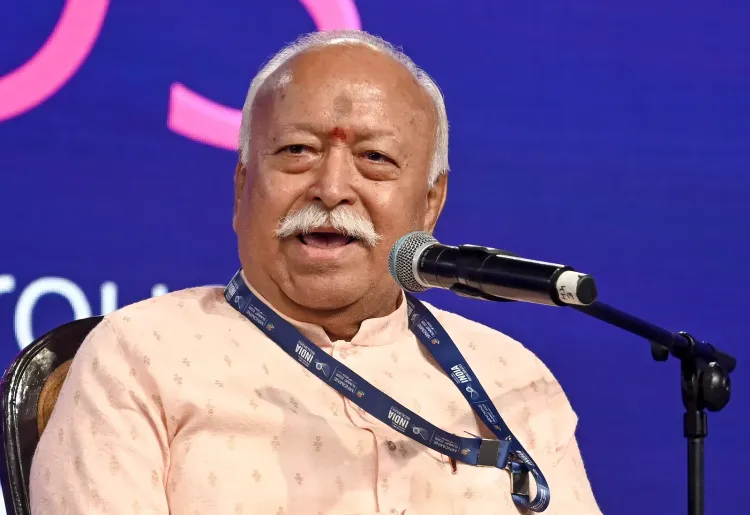
RSS chief Bhagwat shares Kar Seva stories, says devotion transforms lives
Synopsis
Speaking at a national education conference in Bengaluru, RSS chief Mohan Bhagwat told the story of a pickpocket who abandoned his trade after witnessing Kar Sevaks' devotion at Ayodhya — arguing that collective moral atmosphere, not lectures, is the most powerful agent of human transformation.
Key Takeaways
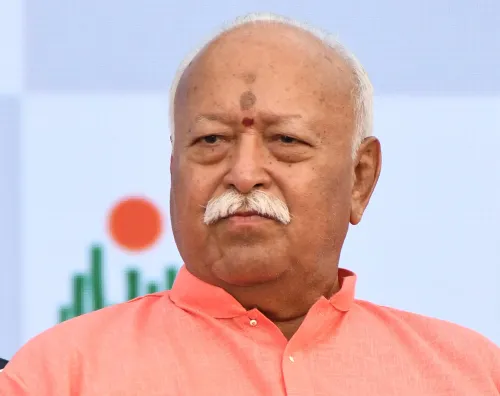
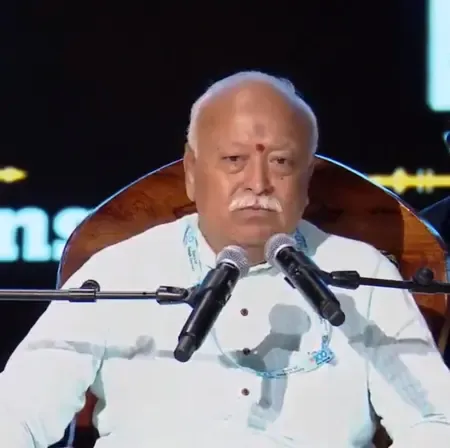
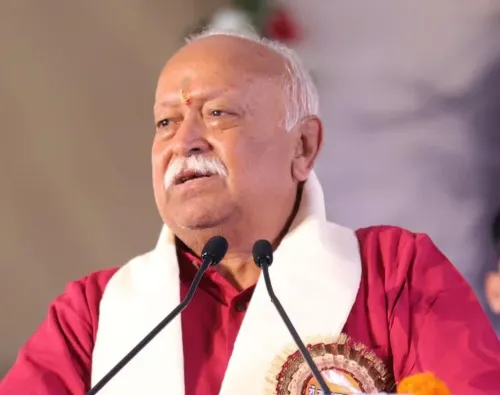
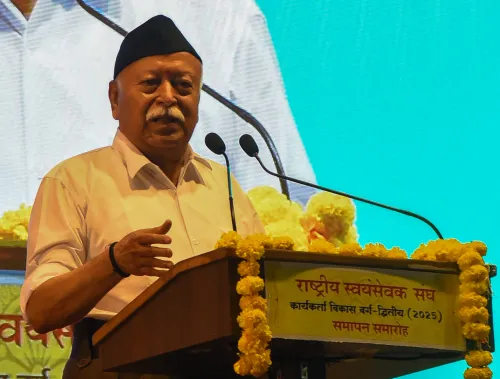
RSS chief Mohan Bhagwat addressed the concluding session of a three-day NEP 2020 conference in Bengaluru on 29 June .
He recalled how a pickpocket who boarded a Kar Sevak train to steal immersed his tools in the Saryu River and gave up crime after visiting Ayodhya .
A second anecdote described an RSS volunteer who symbolically surrendered personal career ambitions at the Triveni Sangam in Allahabad .
Bhagwat said both transformations occurred without formal instruction, attributing them to the 'atmosphere' created by collective devotion and sacrifice.
He cited the Ram Temple , removal of the Emergency , and abrogation of Article 370 as examples of goals once considered impossible that were ultimately achieved.
Rashtriya Swayamsevak Sangh (RSS) chief Mohan Bhagwat on 29 June recalled a set of personal anecdotes from the period following the first Kar Seva in Ayodhya, saying the 'atmosphere of devotion, sacrifice and collective commitment had the power to transform individuals' without any formal instruction or ideological persuasion.
Bhagwat was addressing the concluding session of a three-day National Conference on 'Operationalising NEP 2020: Integrating Indian Knowledge Systems', organised by the Bharatiya Shikshan Mandal at the Art of Living International Centre in Bengaluru.
The Pickpocket Who Found Purpose at Ayodhya
Bhagwat narrated how a man who had boarded a train with Kar Sevaks intending to pick their pockets underwent a complete change of heart after reaching Ayodhya. Speaking in the first person about his own recollection, Bhagwat said he was serving as a Pracharak for a district at the time and visited a tehsil to meet local workers after the first Kar Seva concluded.
'After the first Kar Seva, I was a Pracharak for a district and visited a location in a tehsil. While I was enquiring about everyone's experiences, the activists suggested I meet someone. They took me to a puncture repairman sitting by the roadside outside a temple,' Bhagwat said.
The activists explained that the man had once been a pickpocket who had spotted the large gathering of Kar Sevaks on the train as a professional opportunity and had boarded it with his tools. 'But after reaching there, he immersed those tools in the Saryu River, took a holy dip, and returned,' Bhagwat recounted, quoting the man as saying: 'I was a pickpocket and went there to pick pockets, but after having darshan of Ram Lalla, I decided I would not commit this sin anymore. Please help me find some small job so I can earn a living.'
Bhagwat emphasised that no one had lectured the man or formally introduced him to any ideology. 'He witnessed the Kar Sevaks, devotees who had walked up to 150 kilometres, risked their lives in the struggle, and even made the ultimate sacrifice — and the atmosphere deeply affected him, bringing about a change,' he said.
An RSS Worker Who Let Go of Personal Ambition
Bhagwat also shared a second account involving an RSS worker who had initially believed in building a personal career before committing to national service. The volunteer had been sent to Allahabad to manage organisational arrangements and, about a month later, told Bhagwat he had symbolically immersed his personal ambitions at the Triveni Sangam.
'He explained: I immersed the desire I had harboured — the urge to build my career first. I let go of that ambition there. Now, I will do the work first, and build my own life only when I have the time. He has continued to live by that principle ever since,' Bhagwat said, adding that the transformation was a product of the collective atmosphere rather than any individual counsel.
On Determination and Goals Once Thought Impossible
Broadening his address to the theme of the conference — integrating Indian knowledge systems with modern education — Bhagwat drew on recent historical examples to argue that seemingly impossible goals can be achieved through sustained commitment.
'Even unachievable things can be achieved. No one thought Ram Temple would be built, but it was built; when the Emergency was imposed, most people thought that democracy had ended and dictatorship would prevail in the country, but it was removed; no one thought that Article 370 would be removed, but it was,' he said.
He concluded by urging participants to adopt an unconditional resolve toward their goals: 'People should think — We have to do it, no matter what, that is my life goal.'
Context: NEP 2020 and the Bharatiya Shikshan Mandal Conference
The three-day national conference was convened to discuss practical pathways for embedding Indian knowledge traditions into the framework of the National Education Policy (NEP) 2020. Bhagwat's address at the concluding session underscored the RSS's longstanding emphasis on value-based education as a vehicle for social transformation — a theme that ran through both the personal anecdotes he shared and his broader remarks on determination.
Point of View
Not taught. That framing aligns with the RSS's long-running push to reshape educational philosophy from within institutions rather than through overt political channels. The invocation of Article 370 and the Ram Temple alongside the Emergency in a single breath is also telling — it positions all three as proof points of a singular, continuous ideological project. What the speech does not address is the institutional scaffolding needed to scale such 'atmospheric' transformation into a national education policy.
NationPress
29 Jun 2026
Frequently Asked Questions
What did RSS chief Mohan Bhagwat say at the Bengaluru conference?
Bhagwat recalled personal anecdotes from the period after the first Kar Seva in Ayodhya to argue that an atmosphere of collective devotion and sacrifice can transform individuals without formal instruction. He spoke at the concluding session of a three-day national conference on NEP 2020 organised by the Bharatiya Shikshan Mandal in Bengaluru on 29 June.
What is the story of the pickpocket Bhagwat narrated?
Bhagwat recounted how a man who had joined Kar Sevaks on a train intending to pick their pockets was so moved by the devotion he witnessed at Ayodhya that he immersed his tools in the Saryu River, took a holy dip, and permanently gave up theft. The man later became a roadside puncture repairman and sought help finding honest work.
What was the second anecdote Bhagwat shared?
Bhagwat described an RSS volunteer who had prioritised personal career-building over organisational service. After being sent to Allahabad, the volunteer symbolically immersed his career ambitions at the Triveni Sangam and committed to putting the cause first — a principle he reportedly continued to live by.
What conference was Bhagwat addressing in Bengaluru?
He addressed the concluding session of a three-day National Conference on 'Operationalising NEP 2020: Integrating Indian Knowledge Systems', organised by the Bharatiya Shikshan Mandal at the Art of Living International Centre in Bengaluru.
What examples did Bhagwat cite to illustrate achieving seemingly impossible goals?
Bhagwat cited the construction of the Ram Temple in Ayodhya, the lifting of the Emergency, and the abrogation of Article 370 as instances where goals that appeared unachievable were ultimately realised through sustained determination and collective commitment.