Rudranath Temple opens for 2025 season amid Vedic rituals in Chamoli
Synopsis
Rudranath Temple — the only Panch Kedar shrine where Lord Shiva is worshipped in his facial form — opened its gates for the 2025 season on 18 May amid Vedic chants in the Chamoli Himalayas. The opening coincides with a record Char Dham Yatra, which has already drawn 12.62 lakh pilgrims, with daily footfall touching 80,000.
Key Takeaways
Rudranath Temple in Chamoli, Uttarakhand opened for the 2025 pilgrimage season on 18 May .
The temple is revered as the Fourth Kedar and is the only Panch Kedar shrine where Lord Shiva is worshipped in his Ekanan Swaroop (facial manifestation).
The shrine will remain open for the next six months , with thousands of pilgrims expected from India and abroad.
Char Dham Yatra 2025 has recorded 12.62 lakh pilgrims through 14 May , with single-day footfall peaking at 80,405 .
More than five lakh pilgrims visited Kedarnath ; over 1.21 lakh vehicles have entered the Char Dham circuit.
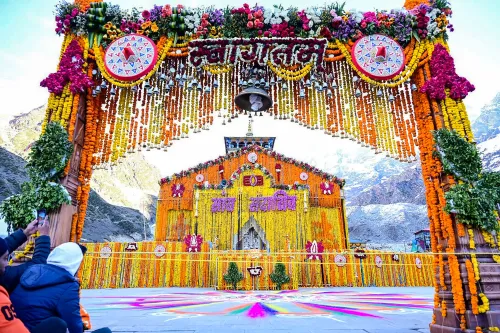
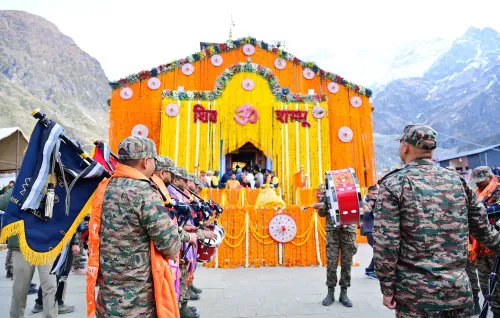
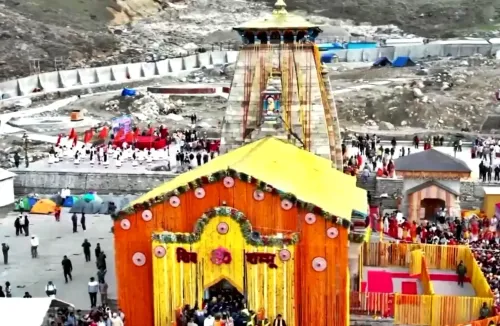
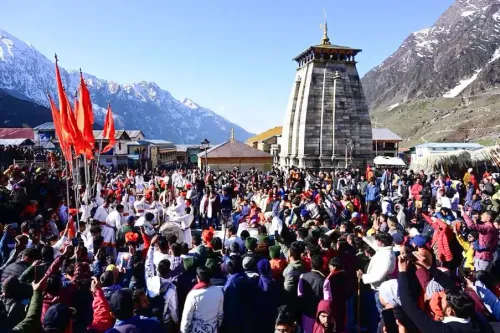
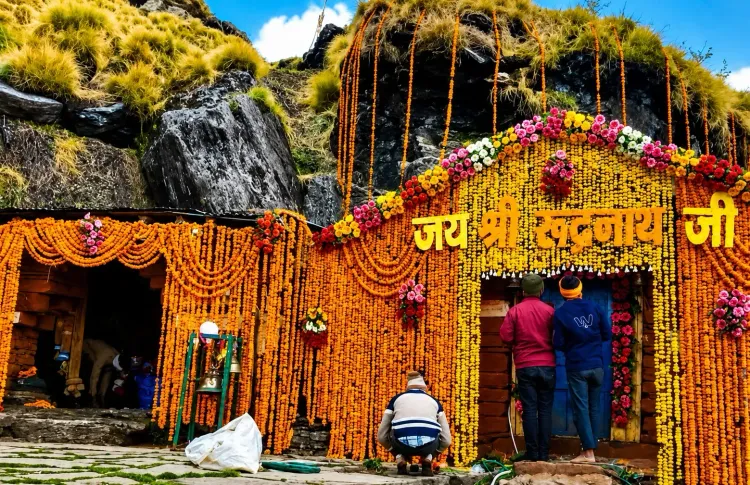
The gates of Rudranath Temple in Chamoli district, Uttarakhand — revered as the Fourth Kedar among the Panch Kedar shrines — were ceremonially opened on Monday, 18 May for the six-month pilgrimage season, marking the commencement of this year's annual Rudranath Yatra. Elaborate Vedic rituals, mantra chanting, and traditional religious ceremonies accompanied the opening, as the Himalayan valley resonated with chants of 'Har Har Mahadev' and 'Jai Baba Rudranath'.
The Opening Ceremony
A large gathering of devotees, saints, and local residents assembled to witness the spiritual occasion. The ceremonial rituals followed centuries-old traditions, with priests performing Vedic rites before the temple doors were formally unsealed. The atmosphere, according to those present, was charged with devotion and spiritual fervour, with the surrounding Himalayan peaks providing a dramatic backdrop to the proceedings.
Significance of Rudranath Temple
Rudranath Temple occupies a singular place in Hindu religious geography. It is the only shrine among the Panch Kedar where Lord Shiva is worshipped in his Ekanan Swaroop — the facial manifestation of the divine. According to Hindu mythology, the Panch Kedar temples were established by the Pandava brothers as acts of penance and redemption following the Kurukshetra war. The five shrines — Kedarnath (hump), Tungnath (arms), Rudranath (face), Madhyamaheshwar (navel), and Kalpeshwar (matted hair) — together represent the scattered form of Lord Shiva across the Garhwal Himalayas. With regular prayers and rituals now underway, the temple will remain open for the next six months.
The Trekking Pilgrimage
The Rudranath pilgrimage is notably demanding. The trekking route winds through rugged mountain trails and dense alpine terrain, making it as much a test of physical endurance as an act of devotion. The journey is widely regarded as offering a rare combination of spirituality, adventure, and Himalayan natural beauty. Thousands of pilgrims from across India and abroad are expected to undertake the trek during the open season.
Char Dham Yatra Sees Record Footfall
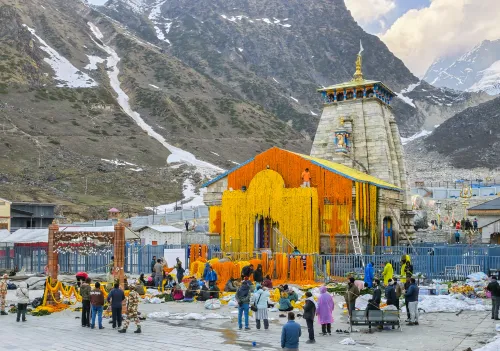
The opening of Rudranath comes amid a broader surge in Uttarakhand's pilgrimage season. The Char Dham Yatra — covering Badrinath, Kedarnath, Gangotri, and Yamunotri — has recorded 12.62 lakh pilgrims through 14 May, according to the pilgrimage committee. Daily footfall has been hovering between 70,000 and 80,000, with a single-day peak of 80,405 pilgrims recorded on 13 May. Vehicle entries have crossed 1.21 lakh, reflecting the scale of private travel to the shrines. Of the total pilgrims, more than five lakh visited Kedarnath, over three lakh reached Badrinath, and more than two lakh each visited Yamunotri and Gangotri. The portals of Gangotri and Yamunotri were opened on 19 April, while Kedarnath and Badrinath followed on 22 April and 23 April respectively. With Rudranath now open, pilgrimage activity across the Garhwal Himalayas is at full pace for the season.
Point of View
000 pilgrims raise legitimate questions about crowd management, trail safety on routes like Rudranath, and ecological stress on fragile Himalayan ecosystems. The state benefits enormously from pilgrimage revenue, but the absence of hard visitor caps at high-altitude shrines remains a governance gap that a single bad weather event could expose catastrophically.
NationPress
6 Oct 2026
Frequently Asked Questions
When did Rudranath Temple open in 2025?
Rudranath Temple opened for the 2025 pilgrimage season on 18 May, following elaborate Vedic rituals and traditional ceremonies. The shrine will remain open for approximately six months.
Why is Rudranath Temple called the Fourth Kedar?
Rudranath is the fourth shrine in the Panch Kedar group of five Lord Shiva temples in the Garhwal Himalayas. It is specifically revered as the site where Lord Shiva's face (Ekanan Swaroop) is worshipped, distinguishing it from the other four shrines, each of which represents a different part of the divine bull form.
What are the five Panch Kedar temples?
The Panch Kedar comprises Kedarnath (hump), Tungnath (arms), Rudranath (face), Madhyamaheshwar (navel), and Kalpeshwar (matted hair). All five are located in the Garhwal Himalayas of Uttarakhand and are, according to Hindu mythology, associated with the Pandava brothers.
How many pilgrims have visited Char Dham in 2025 so far?
The Char Dham pilgrimage committee recorded 12.62 lakh pilgrims through 14 May 2025, with daily footfall ranging between 70,000 and 80,000. On 13 May alone, a cumulative 80,405 devotees visited the four shrines.
How difficult is the Rudranath Temple trek?
The Rudranath pilgrimage is considered one of the more challenging treks among the Panch Kedar, passing through rugged mountain trails and dense alpine terrain. It is valued for combining spiritual significance with physical adventure and scenic Himalayan landscapes.