How is the PM Surya Ghar Scheme Transforming Samastipur?

Synopsis
Discover how the Pradhan Mantri Surya Ghar Muft Bijli Yojana is revolutionizing energy access in Samastipur, Bihar. With 550 households enjoying free electricity, this initiative stands as a significant step toward a sustainable future. Learn about the subsidies, environmental impacts, and how this scheme is set to empower millions in the region.
Key Takeaways
550 households in Samastipur are enjoying free electricity.
The initiative encourages the adoption of renewable energy .
A Solar Fair will help residents explore solar options.
Subsidies range from Rs 30,000 to Rs 78,000 depending on system size.
Targeting one crore households by March 2027.
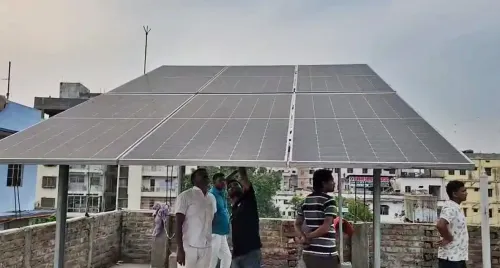
Samastipur (Bihar), Feb 17 (NationPress) Residents in Samastipur, Bihar, are swiftly adopting clean energy through the Pradhan Mantri Surya Ghar Muft Bijli Yojana, leading to many enjoying zero electricity bills. This initiative marks a crucial advancement towards affordable and sustainable energy in the region.
So far, there have been 3,970 applications in Samastipur. Solar panels have been installed in the homes of 550 beneficiaries, while 511 individuals have availed of subsidy payments, as stated by Anand Kumar, Executive Engineer of the Bihar State Electricity Board. He added, “Our objective is to ensure that every household can benefit from renewable energy.”
To promote broader involvement, a Solar Fair is set to take place at Patel Maidan, allowing citizens to explore solar panel options, interact with vendors, and secure bank financing for installations. The subsidy structure of the scheme offers Rs 30,000 for a 1 kW system, Rs 60,000 for a 2 kW system, and up to Rs 78,000 for systems of 3 kW or more.
Officials emphasize that installing a 3-kW solar system is akin to planting 100 trees in terms of environmental advantages. With a lifespan of 25 to 30 years, solar panels provide long-term savings and contribute to sustainable energy goals.
Launched on February 13, 2024, the initiative aims to supply free electricity to households by facilitating the installation of rooftop solar panels.
With a total budget of Rs 75,021 crore, the program offers significant subsidies, making solar power more accessible while promoting the adoption of renewable energy.
By combining financial assistance with environmental incentives, the PM Surya Ghar Electricity Scheme is empowering residents to lower electricity costs, adopt clean energy, and positively impact the environment—a beneficial outcome for both households and the planet.
The PM Surya Ghar: Muft Bijli Yojana is recognized as the world’s largest domestic rooftop solar initiative, targeting the provision of solar power to one crore households by March 2027.
This program aims to benefit one crore households, potentially saving the government Rs 75,000 crore annually in electricity costs. It represents a significant move towards clean energy adoption, enabling millions to transition to renewable sources while bolstering India’s commitment to sustainable development and energy innovation.
Point of View
It's clear that this initiative is more than just about energy savings. It represents a crucial move towards sustainable development in India, showcasing the government's commitment to renewable energy. The focus on empowering households with clean energy is indeed a significant step towards a greener future.
NationPress
16 Sept 2026
Frequently Asked Questions
What is the PM Surya Ghar Muft Bijli Yojana?
The PM Surya Ghar Muft Bijli Yojana is an initiative aimed at providing free electricity to households through the installation of rooftop solar panels.
How much subsidy can beneficiaries receive?
Beneficiaries can receive subsidies ranging from Rs 30,000 for a 1 kW system to up to Rs 78,000 for systems of 3 kW or more.
What are the environmental benefits of installing solar panels?
Installing a 3-kW solar system is equivalent to planting 100 trees, contributing significantly to environmental sustainability.