Historic Moment: Samrat Choudhary Sworn in as Bihar's First BJP Chief Minister
Synopsis
In a groundbreaking political shift, Samrat Choudhary has taken oath as Bihar's first BJP Chief Minister, marking a new era in the state's governance. With notable JD(U) leaders as his deputies, the new administration is poised to tackle significant challenges ahead.
Key Takeaways
Samrat Choudhary is Bihar's first BJP Chief Minister.
The oath-taking ceremony was officiated by Governor Syed Ata Hasnain.
Vijay Kumar Chaudhary and Vijendra Prasad Yadav serve as Deputy Chief Ministers.
This marks a significant political shift for the state.
Choudhary's political career spans over three decades.
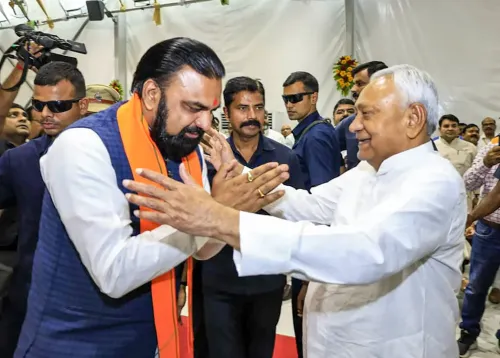
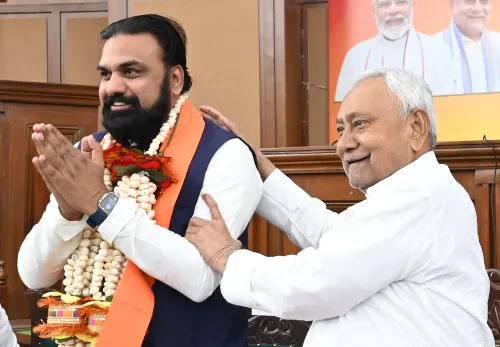
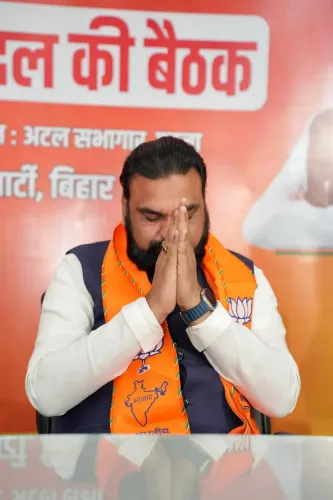
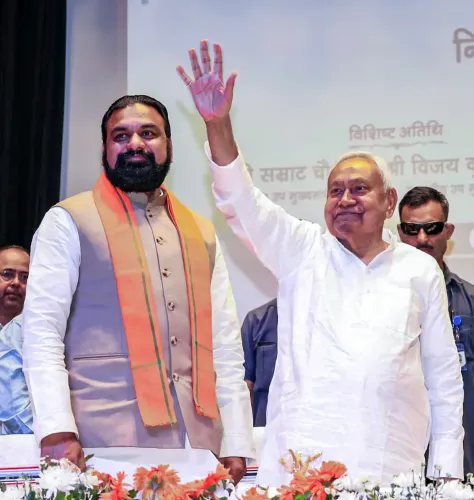
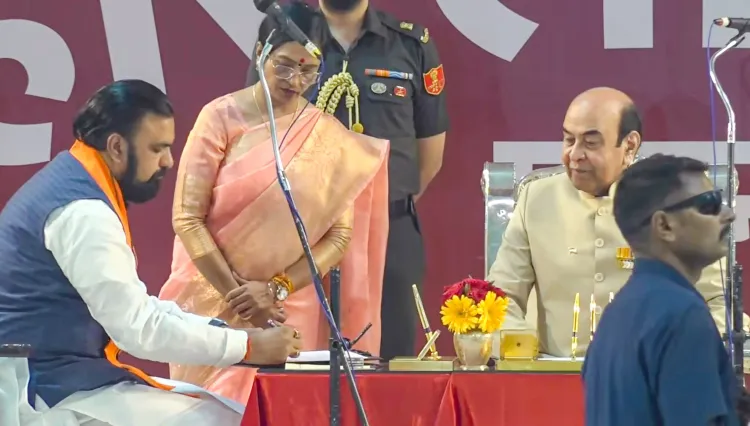
Patna, April 15 (NationPress) In a momentous political development, Samrat Choudhary has been sworn in as Bihar's 24th Chief Minister, representing the first BJP-led administration in the state. The oath-taking ceremony took place at Lok Bhawan, with Governor Syed Ata Hasnain formally administering the oath of office.
Following this, prominent JD(U) figures Vijay Kumar Chaudhary and Vijendra Prasad Yadav were sworn in as Deputy Chief Ministers, reinforcing the alliance.
Prior to the ceremony, Choudhary visited a Hanuman temple in Rajvanshi Nagar to seek divine blessings, symbolizing both his personal beliefs and the significance of this new political journey.
This shift in governance comes after the resignation of former Chief Minister Nitish Kumar, who transitioned to the Rajya Sabha, allowing for a BJP-led leadership in Bihar.
With this development, Bihar enters a new phase of governance with the BJP at the forefront for the first time.
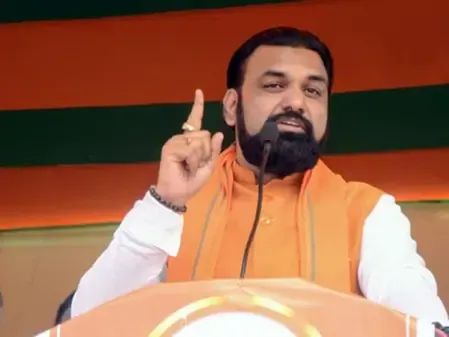
Samrat Choudhary's political journey began in 1990, and he served as the Agriculture Minister in Bihar in 1999.
He contested and won the Parbatta Assembly constituency in both 2000 and 2010.
In 2010, he was appointed the Chief Whip of the opposition in the Bihar Legislative Assembly.
Since 2018, he has risen as a significant leader within the BJP.
In 2019, under the guidance of Nityanand Rai, he became the BJP State Vice President, establishing himself as a prominent figure in Bihar's political landscape.
Choudhary gained notable recognition when Nitish Kumar severed ties with the BJP to form a Mahagathbandhan government.
During that time, Choudhary, serving as the Leader of Opposition in the Legislative Council, made a symbolic vow—not to remove his 'Muraittha' (traditional turban) until Nitish Kumar was ousted as Chief Minister.
This commitment became a crucial aspect of his political persona.
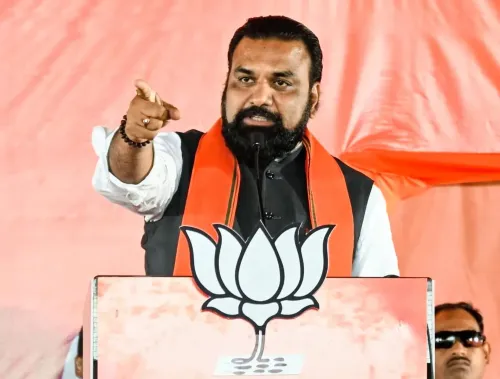
In 2023, he ascended to the role of BJP State President, further cementing his leadership position.
When Kumar later rejoined the NDA, Choudhary took on the role of Deputy Chief Minister, also overseeing the Home Department for the first time.
Vijay Kumar Chaudhary, born on January 8, 1957, in Samastipur, hails from a notable political background.
His father, Jagdish Prasad Chaudhary, was a significant political figure, which influenced his early involvement in public service.
Holding a postgraduate degree in History from Patna University, he initially worked at the State Bank of India before fully committing to politics.
He began his political career in the Dalsinghsarai Assembly constituency, securing three consecutive terms as MLA.
Although he started with the Congress, his transition to JD(U) in 2005 was pivotal.
Over the years, he has held numerous important roles, including party spokesperson and State President.
Recognized for his integrity and administrative skills, he has been a trusted ally of Nitish Kumar.
His role as Deputy Chief Minister enhances his influence in Bihar's political arena.
Vijendra Prasad Yadav, a prominent figure in Bihar politics and often dubbed the “Chanakya” of the Kosi region, continues to be a powerful influence at the age of 79.
A consistent electoral victor since 1990, he has established a robust support base, especially in the Supaul Assembly constituency.
A longtime collaborator of Nitish Kumar, Yadav has served as a key strategist and administrator.
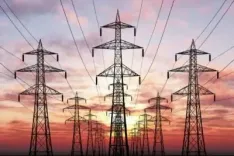
In the Kosi region, he is well-regarded as a progressive leader, having significantly contributed to improving the power infrastructure in districts such as Supaul, Saharsa, and Madhepura.
Under his guidance, the enhancement of grid networks and the establishment of new power substations have transformed a previously power-deficient region into one with better electricity access.
This political transition signifies a pivotal chapter in Bihar’s history.
With Samrat Choudhary leading the way and seasoned leaders like Vijay Kumar Chaudhary and Vijendra Prasad Yadav as his deputies, the new government faces the essential challenge of maintaining developmental progress while addressing the expectations accompanying this unprecedented change in leadership.
Point of View
Samrat Choudhary's ascension as Bihar's first BJP Chief Minister marks a significant turning point in the state's political journey. This transition, accompanied by key JD(U) leaders, highlights a potential shift in governance dynamics, reflecting changing alliances and the evolving political landscape in Bihar.
NationPress
19 Sept 2026
Frequently Asked Questions
Who is Samrat Choudhary?
Samrat Choudhary is the newly sworn-in Chief Minister of Bihar and the first to lead a BJP government in the state.
What significance does this political shift hold?
This shift represents a historic moment for Bihar, as it transitions to BJP leadership for the first time, indicating potential changes in governance and policy direction.
Who are the Deputy Chief Ministers?
The Deputy Chief Ministers are Vijay Kumar Chaudhary and Vijendra Prasad Yadav, both from the JD(U).
What is Samrat Choudhary's political background?
Samrat Choudhary entered politics in 1990 and has held various significant roles, including Agriculture Minister and Deputy Chief Minister.
What challenges does the new government face?
The new administration must maintain developmental momentum while addressing the expectations that come with this leadership change.