Sasaram Sadar Hospital floods after one hour of rain, exposing Bihar's drainage crisis
Synopsis
Bihar's first monsoon spell took less than an hour to expose what years of neglect have built: Sasaram Sadar Hospital, the largest government facility in Rohtas district, was reduced to a wading pool, with patients struggling to reach the OPD and trauma centre through knee-deep water. Locals say it happens every year. Management says they'll inform the department. Nothing changes.
Key Takeaways
Sasaram Sadar Hospital in Rohtas district, Bihar was flooded on 13 June after approximately one hour of heavy rainfall.
Inundated areas included the trauma centre road , OPD building , TB centre , general ward , blood bank , and Civil Surgeon's office complex .
Patients and attendants were forced to wade through knee-deep water to access treatment.
Residents allege the waterlogging is a recurring monsoon problem caused by the absence of an effective drainage system.
Hospital manager Ajay Kumar Gupta said the concerned department would be informed for preventive action — a response locals say has been repeated without result in previous years.
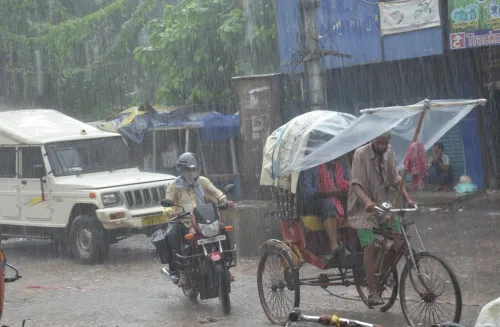
Sasaram Sadar Hospital in Rohtas district, Bihar, was submerged under knee-deep water on Saturday, 13 June after barely an hour of heavy rainfall — the season's first major monsoon spell — crippling services at the district's largest government healthcare facility and triggering sharp criticism over chronic infrastructure neglect.
What Was Flooded
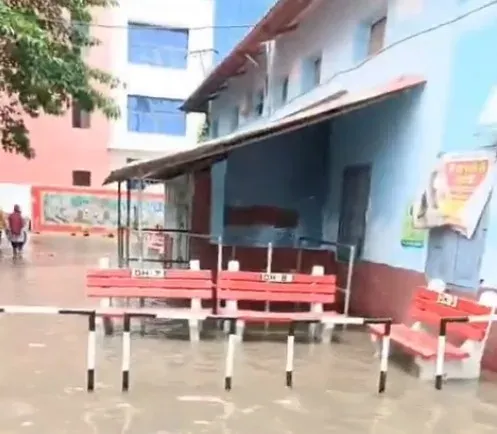
Large sections of the hospital campus were inundated, including the main road leading to the trauma centre, the OPD building, the TB centre, the general ward, the blood bank, and the Civil Surgeon's office complex. Locals described the premises as resembling a 'pond,' with accumulated rainwater rendering corridors and pathways impassable.
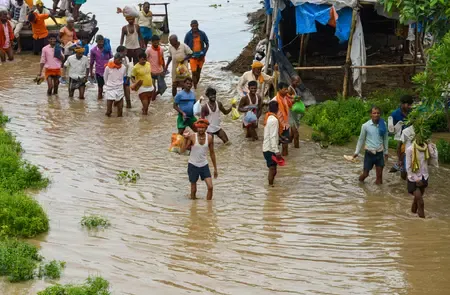
Patients and their attendants were seen wading through the floodwater to reach treatment facilities, struggling to keep their belongings dry. Healthcare workers and doctors reportedly faced significant difficulties commuting between departments amid the flooding.
A Recurring Monsoon Failure
Residents were quick to point out that this was not an isolated incident. Severe waterlogging at Sasaram Sadar Hospital has reportedly become a recurring feature every monsoon season, with locals alleging that the absence of an effective drainage system causes rainwater to accumulate across the campus even after moderate rainfall — not just during extreme downpours.
Local resident Raju Kumar said the hospital serves lakhs of people across the district and that patients are forced to suffer the same crisis year after year. He urged the administration to implement a permanent drainage solution rather than reactive measures.
What Hospital Management Said
Hospital manager Ajay Kumar Gupta attributed the flooding to the sudden intensity of the rainfall and confirmed that efforts were underway to drain the accumulated water. He added that the concerned department would be informed so that preventive steps could be taken ahead of future rainfall events.
Critics, however, argue that such assurances have been offered in previous monsoon seasons without resulting in structural improvements to the drainage infrastructure.
The Wider Concern
The flooding at Sasaram Sadar Hospital has reignited debate over infrastructure management at critical public healthcare institutions in Bihar. This comes amid broader concerns about the state of government hospitals in rural and semi-urban districts, where drainage, sanitation, and building maintenance often lag behind patient load. The incident underscores the urgent need for long-term capital investment in hospital infrastructure — not just in Rohtas, but across Bihar's district-level health network.
With parts of the hospital premises still waterlogged as of the evening of 13 June, patients and medical staff continued to face disruption, raising questions about accountability and preparedness ahead of a full monsoon season.
Point of View
Diffuse in accountability, and consequence-free. Bihar's district hospitals serve populations that have no private-sector alternative; when Sasaram Sadar floods, the poorest patients bear the cost. The question is not whether drainage infrastructure is needed — it plainly is — but why repeated public complaints and visible annual failures have not triggered a capital works response from the state health department.
NationPress
25 Sept 2026
Frequently Asked Questions
Which areas of Sasaram Sadar Hospital were flooded?
The flooding on 13 June inundated the main road to the trauma centre, the OPD building, the TB centre, the general ward, the blood bank, and the Civil Surgeon's office complex. Large parts of the hospital campus were submerged under knee-deep water after roughly one hour of heavy rain.
Is waterlogging at Sasaram Sadar Hospital a new problem?
No — local residents say severe waterlogging at the hospital recurs every monsoon season. They allege that the absence of an effective drainage system causes water to accumulate even after moderate rainfall, not just during heavy downpours.
What did hospital management say about the flooding?
Hospital manager Ajay Kumar Gupta attributed the flooding to the sudden intensity of the rainfall and said efforts were underway to drain the water. He added that the concerned department would be informed so that preventive measures could be taken before future rain events.
How did the flooding affect patients and staff?
Patients and attendants were seen wading through knee-deep water to reach treatment facilities, struggling to keep belongings dry. Healthcare workers and doctors also reportedly faced difficulties moving between departments during the flooding.
What has the local community demanded?
Local resident Raju Kumar, citing that the hospital serves lakhs of people in Rohtas district, urged the administration to implement a permanent drainage solution rather than temporary fixes that have failed to prevent the annual recurrence of the problem.