CM Sawant marks final span of Porvorim Elevated Corridor

Synopsis
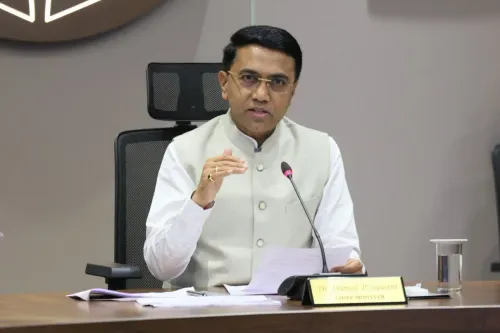
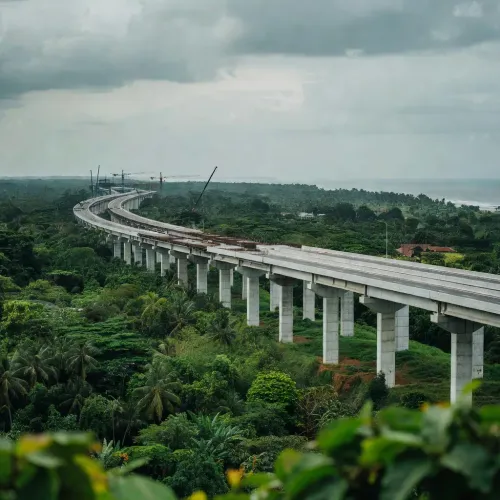
Goa Chief Minister Pramod Sawant on 5 July 2026 announced the installation of the final span of the Porvorim Elevated Corridor, a key urban mobility project linking Porvorim and Panaji in North Goa. The milestone brings the state closer to inaugurating a corridor designed to ease chronic traffic congestion and boost connectivity under the Viksit Goa vision.
Key Takeaways
The final span of the Porvorim Elevated Corridor was installed as of 5 July 2026 , marking the last major civil-engineering milestone of the project.
The corridor is designed to ease traffic between Porvorim and the state capital Panaji in North Goa .
Goa state budgets from 2022 onward allocated funds for multiple elevated corridors as part of urban mobility upgrades.
The project aligns with the central government's PM Gati Shakti framework and the national Viksit Bharat 2047 vision.
The formal inauguration and public opening of the corridor are the next milestones to watch, pending finishing works and safety audits by the Goa Public Works Department .
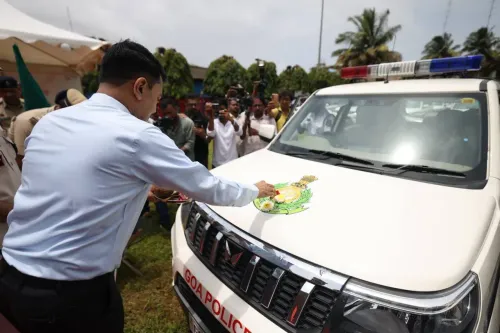
Goa Chief Minister Pramod Sawant on Sunday, 5 July 2026 announced the installation of the final span of the Porvorim Elevated Corridor, calling it a major leap in the state's infrastructure journey and signalling that the project is nearing completion.
Context
The Porvorim Elevated Corridor is an elevated road project in North Goa designed to ease chronic traffic congestion on the arterial stretch linking Porvorim with the state capital Panaji. The corridor has been one of the flagship urban mobility initiatives of the Sawant government, with state budgets from 2022 onward earmarking funds for elevated corridors and bypasses across the state. Sawant described the milestone as bringing Goa 'closer to faster connectivity, smoother travel, and a #ViksitGoa' — a vision of a developed Goa.
The installation of the final span is typically the last major civil-engineering milestone before finishing works, surfacing, and systems integration begin. The development is being watched closely by North Goa commuters and Porvorim residents who have long endured bottlenecks on one of the state's busiest corridors.
Policy Backdrop
The project fits within a broader national push to decongest arterial roads near state capitals and tourist hubs, an effort that accelerated sharply after 2019. Several Indian states have pursued elevated corridors and grade separators as part of the central government's PM Gati Shakti framework, which seeks to integrate state roads with national highways and multimodal logistics networks.
The #ViksitGoa hashtag used by Sawant directly echoes the national Viksit Bharat 2047 vision, which frames infrastructure-led growth as central to India's development goals over the next two decades. By anchoring a state project to this national narrative, the BJP-led Goa government is positioning the corridor as part of a larger, ideologically coherent development story ahead of future electoral cycles.
Stakeholders and Impact
North Goa commuters stand to benefit most directly, with the elevated corridor expected to cut travel times on one of the region's most congested stretches. Porvorim, a rapidly urbanising township that serves as a residential and commercial hub for workers commuting to Panaji, has seen vehicle volumes grow steadily alongside population and tourism pressure.
Beyond daily commuters, the corridor is expected to ease movement for the tourism sector — a critical pillar of Goa's economy — by improving last-mile connectivity between the national highway network and the capital. Smoother freight and passenger flow could also reduce logistics costs for businesses operating in the Porvorim-Panaji belt.
What's Next
With the final span now in place, attention turns to the formal inauguration of the completed corridor and the timeline for opening it to public traffic. The Goa Public Works Department is expected to carry out finishing works, road surfacing, and safety audits before the corridor is commissioned. Any traffic-volume or travel-time data released post-opening will be closely watched as a measure of the project's real-world impact.
A successful and timely inauguration would hand Chief Minister Sawant a visible infrastructure win, reinforcing the government's narrative of accelerated development in a state that has historically relied on tourism rather than large-scale public works as its economic engine.
Point of View
Who has staked much of his second-term narrative on visible infrastructure delivery. By tying the project to the #ViksitGoa and Viksit Bharat 2047 lexicon, the BJP government in Panaji is consciously embedding a state-level project into the ruling party's national development brand. The corridor also reflects a wider pattern in which smaller states with high tourist footfall are leveraging central framework schemes to fast-track urban mobility projects that would otherwise languish in budget queues. How quickly the completed corridor is inaugurated — and whether it delivers measurable travel-time relief — will determine whether this milestone translates into lasting political capital or remains a photo opportunity.
NationPress
5 Oct 2026
Frequently Asked Questions
What is the Porvorim Elevated Corridor in Goa?
The Porvorim Elevated Corridor is an elevated road project in North Goa that aims to ease traffic congestion on the busy stretch connecting Porvorim, a rapidly urbanising township, with the state capital Panaji.
When was the final span of the Porvorim Elevated Corridor installed?
Goa Chief Minister Pramod Sawant announced the installation of the final span on 5 July 2026, signalling that the project's major civil construction phase is complete.
What is the Viksit Goa vision mentioned by CM Sawant?
'Viksit Goa' is the Goa government's development vision, which mirrors the national Viksit Bharat 2047 framework that positions infrastructure-led growth as central to India's long-term progress.
Who will benefit from the Porvorim Elevated Corridor?
North Goa commuters, Porvorim residents, and the tourism sector are the primary beneficiaries, as the corridor is expected to cut travel times and ease freight and passenger movement between Porvorim and Panaji.
When will the Porvorim Elevated Corridor open to the public?
A formal inauguration date has not been announced. The Goa Public Works Department is expected to complete finishing works, road surfacing, and safety audits before the corridor is opened to traffic.