SC urges High Courts to form Bar-Bench grievance panels after AP incident
Synopsis
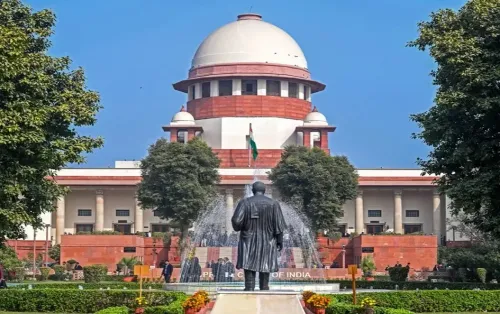
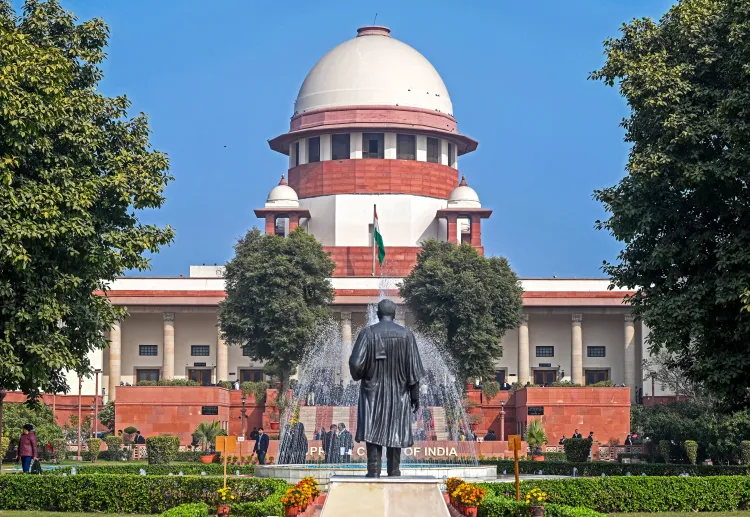
The Supreme Court, taking up a suo motu case over an Andhra Pradesh High Court courtroom incident, has called on all High Courts to set up formal Bar-Bench grievance panels — a rare institutional push that signals the judiciary's intent to prevent localised disputes from escalating into national controversies.
Key Takeaways
The Supreme Court on 11 May 2025 urged all High Courts to constitute Grievance Redressal Committees (GRCs) at High Court, district, and taluka levels.
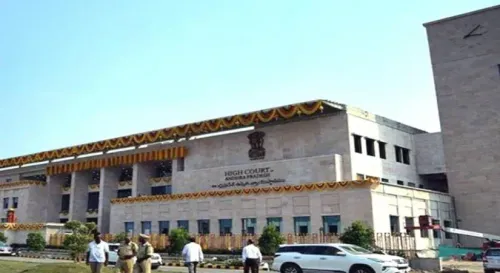
The directive arose from two suo motu writ petitions linked to an incident involving Justice Tarlada Rajasekhar Rao and a young lawyer at the Andhra Pradesh High Court .
The apex court found no further action was needed as the issue had been resolved through the intervention of the Andhra Pradesh High Court Chief Justice and the AP High Court Advocates' Association .
The Supreme Court Bar Association (SCBA) President Vikas Singh called for an institutional mechanism to prevent recurrence and protect younger lawyers.
The court cautioned the media against circulating decontextualised courtroom video clips , warning of unwarranted prejudice to the administration of justice.
A five-judge committee has already been constituted by the Andhra Pradesh High Court to maintain cordial Bar-Bench relations.
The Supreme Court on Monday, 11 May 2025, urged High Courts across India to constitute Grievance Redressal Committees (GRCs) at the High Court, district, and taluka levels to address disputes between members of the Bar and the Bench and ensure their amicable resolution at the earliest stage. The directive came as the apex court dealt with two suo motu writ petitions arising from a recent courtroom incident at the Andhra Pradesh High Court.
What the Supreme Court Directed
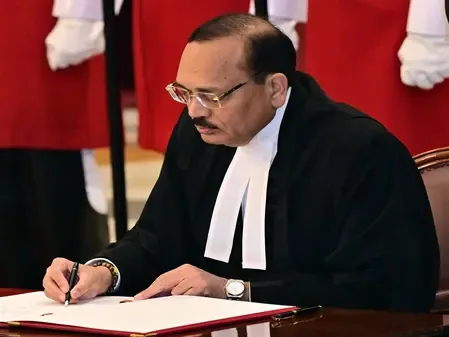
A Bench comprising Chief Justice of India (CJI) Surya Kant and Justice Joymalya Bagchi observed that institutional mechanisms involving members of Bar Councils and Bar Associations would help foster cordial relations between lawyers and judges and prevent unnecessary escalation of disputes.
Point of View
And the AP incident simply made it impossible to ignore. Whether High Courts will implement GRCs with genuine teeth or treat them as procedural box-ticking depends on how seriously the CJI's office monitors follow-through. The media caution, while valid, also deserves scrutiny — courtroom transparency and accountability are served by footage, not just by responsible framing of it.
NationPress
24 Sept 2026
Frequently Asked Questions
Why did the Supreme Court issue directions on Bar-Bench grievance panels?
The Supreme Court issued these directions while hearing two suo motu writ petitions triggered by a courtroom incident at the Andhra Pradesh High Court involving Justice Tarlada Rajasekhar Rao and a young lawyer. The court used the occasion to push for a systemic institutional mechanism to prevent such disputes from escalating across all High Courts.
What are Grievance Redressal Committees (GRCs) and how will they work?
GRCs are proposed institutional panels that will include members of Bar Councils and Bar Associations and will be set up at the High Court, district, and taluka levels. Their purpose is to resolve disputes between lawyers and judges amicably and at the earliest possible stage, without requiring escalation to higher courts.
What happened in the Andhra Pradesh High Court incident?
A viral video clip showed an incident during court proceedings involving Justice Tarlada Rajasekhar Rao and a young advocate, which the Supreme Court Bar Association described as involving a reported detention direction against the lawyer. The Supreme Court later noted the video lacked context, that a file had slipped and fallen without any intent, and that the matter had been resolved through mediation.
What did the Supreme Court say about the media and courtroom videos?
The court cautioned the media against disseminating decontextualised courtroom video clips, warning that such content could cause unwarranted prejudice and hamper the administration of justice. It simultaneously acknowledged that legal journalists who responsibly report court proceedings render great public service.
What action has the Andhra Pradesh High Court already taken?
The Andhra Pradesh High Court has constituted a five-judge committee to maintain cordial relations between the Bar and the Bench. The issue was also resolved to the satisfaction of the AP High Court Advocates' Association through the timely intervention of the High Court's Chief Justice.