Did the SC Just Challenge Anti-Conversion Laws Across States?
Synopsis
The Supreme Court's recent notice on anti-conversion laws ignites debate on constitutional rights. The petition challenges the validity of various state laws, seeking to protect individual autonomy in religious matters. With significant implications for freedom of religion, this case could reshape legal landscapes across India.
Key Takeaways
Supreme Court issued notice on anti-conversion laws.
Petition challenges laws from multiple states.
Impacts fundamental rights outlined in the Constitution.
Calls for a review of state intervention in religious matters.
Potential implications for individual autonomy and freedoms.
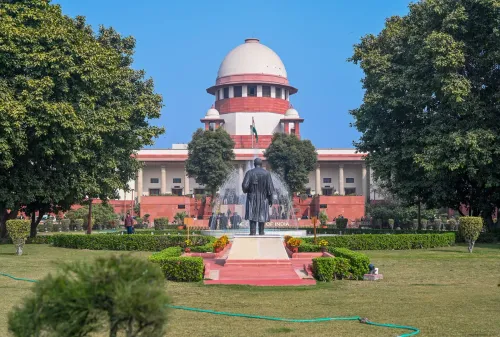
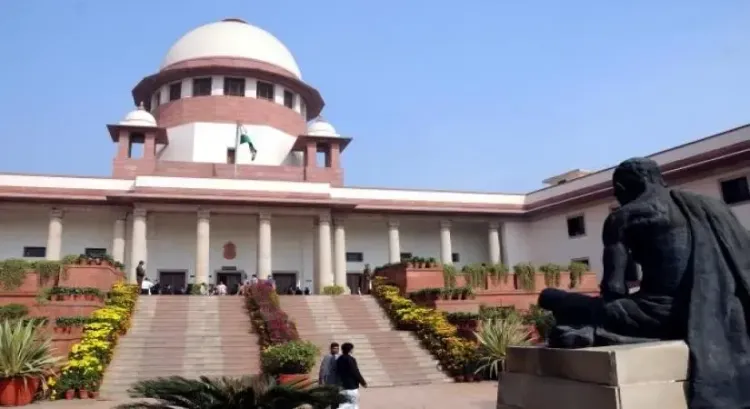
New Delhi, Feb 2 (NationPress) – On Monday, the Supreme Court issued a notice regarding a petition that questions the constitutional validity of anti-conversion laws established by various states.
A bench led by Chief Justice of India (CJI) Surya Kant and Justice Joymalya Bagchi requested responses from the Union government and the involved states within four weeks. They indicated that these petitions would be addressed alongside other similar petitions already pending before the court.
The petition, initiated by the National Council of Churches in India (NCCI), challenges the Freedom of Religion Acts created by states including Rajasthan, Uttar Pradesh, Haryana, Uttarakhand, Madhya Pradesh, Gujarat, Himachal Pradesh, Karnataka, Jharkhand, Chhattisgarh, Arunachal Pradesh, and Odisha.
The CJI noted that this issue holds constitutional significance and will be examined by a three-judge bench.
Filed through attorney Niharika Ahluwalia, the petition argues that the challenged laws infringe upon fundamental rights as outlined in Articles 14, 15, 19, 21, 25, 26, and 30 of the Constitution, thereby seeking a declaration that these statutes are unconstitutional.
As a preliminary measure, the petition requests the apex court to prevent state police forces from engaging in coercive actions under the disputed laws. It asserts that the contested Acts are based on an unconstitutional assumption that religious conversions involving adults are automatically coercive or fraudulent, thus mandating prior government approval for deeply personal decisions of conscience.
The petition argues that requirements for prior notification, inquiry, and permission from district authorities distort the relationship between citizens and the state, compromising individual autonomy and violating privacy, dignity, and religious freedom.
Furthermore, it claims that the legal definitions of terms such as “conversion”, “allurement”, “inducement”, and “undue influence” are ambiguous and excessively broad, allowing unchecked discretion to authorities and resulting in discriminatory practices.
Additionally, the petition highlights the widening scope of complainants to include unrelated third parties, which has empowered vigilante groups to misuse criminal law without any complaint from the alleged victim, leading to unwarranted arrests, extended detentions, denial of bail, and social ostracism.
Referring to provisions that alter the burden of proof, the petition contends that these laws undermine essential tenets of criminal law, including the presumption of innocence and the right to a fair process. Some provisions are criticized for being based on “paternalistic” and “gendered assumptions”, particularly regarding women who are viewed as inherently susceptible to unlawful conversion.
Moreover, the petition cites international human rights commitments, asserting that state interference in religious conversion contradicts India’s obligations under the International Covenant on Civil and Political Rights. The parties involved in this case include the Centre and the twelve states that have implemented the contested laws.
Point of View
The ongoing legal scrutiny of anti-conversion laws presents a momentous opportunity to reflect on the intersection of personal freedoms and state intervention. It is crucial to balance societal norms with individual rights, ensuring that the constitutional mandates are upheld while fostering an environment of tolerance and respect for all beliefs.
NationPress
20 Sept 2026
Frequently Asked Questions
What are anti-conversion laws?
Anti-conversion laws are legal provisions enacted by various states in India that regulate and restrict religious conversions, often requiring prior approval from authorities.
Why are these laws being challenged in court?
These laws are being challenged because they are believed to infringe upon fundamental rights guaranteed by the Constitution, including the right to freedom of religion.
Who filed the petition against these laws?
The petition was filed by the National Council of Churches in India (NCCI).
What are the implications of this case?
The outcome of this case could significantly affect the legal landscape regarding religious freedoms and individual rights in India.
How does this relate to international human rights?
The petition argues that state control over religious conversion contradicts India’s international obligations under the International Covenant on Civil and Political Rights.