Supreme Court Condemns Attack on Judicial Officers in West Bengal
Synopsis
In a serious rebuke, the Supreme Court of India has condemned an attack on judicial officers in West Bengal, highlighting the incident as a direct challenge to judicial authority and calling for urgent measures to ensure the safety of the judiciary.
Key Takeaways
Supreme Court condemns attack on judicial officers.
Incident deemed a blatant challenge to judicial authority.
Measures ordered to ensure officer safety.
Criticism of local authorities for inaction.
Independent investigation mandated.
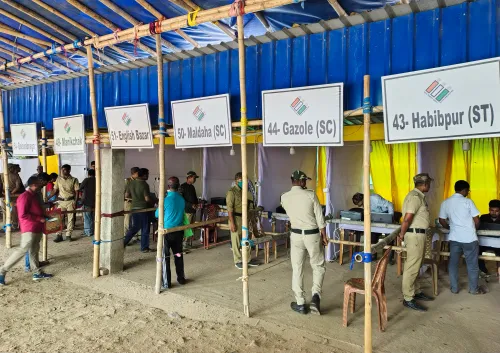
New Delhi, April 2 (NationPress) The Supreme Court of India expressed grave concern on Thursday regarding an alarming incident in West Bengal's Malda district. Judicial officers assigned to oversee the Special Intensive Revision (SIR) of electoral rolls were reportedly gheraoed and assaulted, which the court described as a “blatant attempt” to intimidate the judiciary and a direct affront to the apex court's authority.
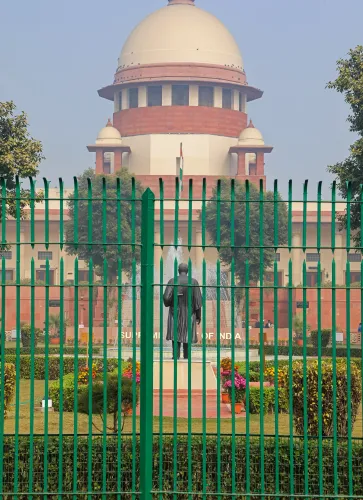
A Bench consisting of Chief Justice of India (CJI) Surya Kant, along with Justices Joymalya Bagchi and Vipul M. Pancholi, was addressing a suo motu writ petition titled In Re: Safety and Security of Judicial Officers Assigned for the SIR of Electoral Rolls in West Bengal and Related Concerns. They issued multiple directives to safeguard judicial officers and ensure the uninterrupted progress of the ongoing SIR procedure within the state.
Upon reviewing a correspondence from the Chief Justice of the Calcutta High Court that detailed the incident, the apex court noted that seven judicial officers, including three women, were surrounded by anti-social individuals at a BDO office in the Kaliachowk region from around 3:30 p.m. and were not released until after midnight.
The Bench noted, “We have been informed that the conditions were so severe that even food and water were denied to the judicial officers.”
The Supreme Court further remarked that despite being alerted, the response from the civil and police authorities was characterized by a “notable inaction,” with no substantial intervention for many hours.
“Eventually, the judicial officers were freed post-midnight. Alarmingly, as they returned to their residences, their vehicles were attacked with stones, bamboo sticks, and bricks,” the order highlighted.
“In our considered opinion… the incident that transpired yesterday constitutes a blatant attempt to intimidate judicial officers, and it also challenges this Court's authority,” the CJI Kant-led Bench stated, emphasizing that the event appeared to be a “calculated and deliberate act aimed at demoralizing judicial officers.”
Expressing deep concern over the actions of the state machinery, the apex court remarked that the civil and police administration's response indicated a “complete failure” in upholding law and order.
“It is disheartening to note that the Chief Secretary, the Home Secretary, the Director General of Police, the Collector, and the Superintendent of Police have acted in a manner that is highly regrettable,” the CJI Kant-led Bench stated, instructing them to clarify why no effective measures were taken despite being informed of the situation earlier in the day.
“They must provide an explanation to this Court regarding the lack of effective steps taken to ensure the safe evacuation of judicial officers after being informed of their gherao at around 3:30 p.m.,” the Supreme Court stated, ordering them to justify why actions should not be initiated against them.
“We will not allow any individual to take the law into their own hands to instill a sense of psychological fear among judicial officers,” it asserted, noting that such actions would constitute criminal contempt under the Contempt of Courts Act, 1971.
To avert any future incidents and to ensure the safety of judicial officers, the Supreme Court mandated the Election Commission of India (ECI) to mobilize and position adequate central forces at all sites where such officers are stationed.
Additionally, the court ordered that thorough security measures be implemented at all locations and accommodation of the officers and their families, and directed authorities to assess and mitigate any perceived threats.
In a significant move, the top court mandated that no more than five individuals be permitted to enter premises where grievances under the SIR process are being addressed at any time, and that stringent crowd control measures be enforced.
The CJI Kant-led Bench also instructed the ECI to assign the investigation of the incident to an independent agency, such as the CBI or NIA, and requested a preliminary inquiry report to be submitted directly to the court.
Moreover, the court has called for compliance reports from the Chief Secretary, Director General of Police, and Chief Electoral Officer of West Bengal. The apex court directed that all relevant officials be present virtually on the ensuing hearing date of April 6.
Point of View
It is vital to recognize the implications of the Supreme Court's condemnation of violence against judicial officers. Such incidents not only undermine the judicial system but also pose a significant threat to the rule of law. Maintaining the independence and safety of the judiciary is paramount for a functioning democracy.
NationPress
7 Oct 2026
Frequently Asked Questions
What incident prompted the Supreme Court's intervention?
Judicial officers in West Bengal were gheraoed and attacked while performing duties related to the Special Intensive Revision of electoral rolls.
What measures did the Supreme Court direct?
The Supreme Court ordered the Election Commission to ensure adequate security for judicial officers and to investigate the incident through an independent agency.
What was the Supreme Court's stance on the response of local authorities?
The court criticized local authorities for their inaction and ordered them to explain their failure to act promptly during the incident.
How did the Supreme Court perceive the attack?
The Supreme Court viewed the attack as a blatant attempt to intimidate judicial officers and a challenge to the authority of the court.
What is the significance of this incident?
This incident highlights the vulnerabilities faced by the judiciary and the need for robust security measures to protect judicial officers in the line of duty.