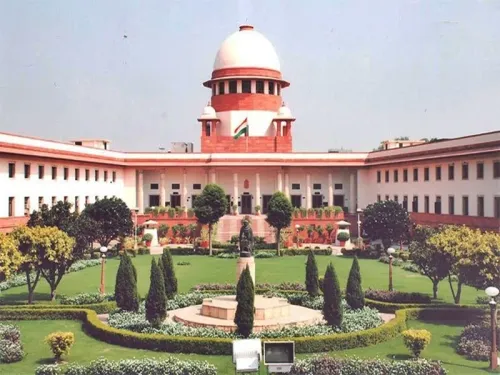
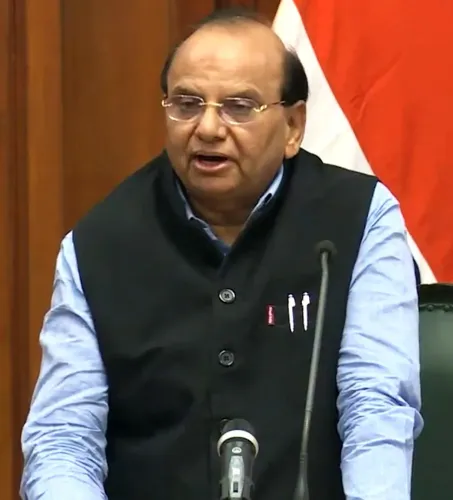
Supreme Court halts CAG audit of Delhi power discoms, next hearing July 15
Synopsis
The Supreme Court has frozen the CAG audit of Delhi's private power distributors — and blocked an alternative chartered accountant appointment — until at least 15 July. At the heart of the dispute is a question the court's own August 2025 ruling left unanswered: who exactly has the authority to audit regulatory asset accumulation by Delhi's discoms?
Key Takeaways
The Supreme Court on 3 July ordered status quo in the dispute over auditing Delhi 's private electricity discoms.
The court stayed the APTEL direction for the DERC to appoint an independent chartered accountant for the audit.
The CAG has been directed not to proceed further with the audit until further orders.
The dispute stems from a Supreme Court judgment of August 2025 that ordered a 'strict and intensive' audit of regulatory asset accumulation but did not name the auditing authority.
The Delhi Lieutenant Governor had approved a CAG audit in March 2026 , which was then overturned by APTEL .
The matter is next listed for hearing on 15 July and will be assigned to an appropriate bench by the Chief Justice of India .
The Supreme Court on Friday, 3 July ordered a status quo in the dispute over the audit of Delhi's private electricity distribution companies (discoms), staying further proceedings related to the proposed audit by the Comptroller and Auditor General (CAG) as well as a direction to appoint an independent chartered accountant. The interim order holds until at least 15 July, when the matter is next listed for hearing.
What the Court Ordered
A bench of Justice K.V. Viswanathan and Justice Shree Chandrashekhar passed the interim order while hearing appeals filed by the Delhi Electricity Regulatory Commission (DERC) challenging orders of the Appellate Tribunal for Electricity (APTEL). The court issued notice in the matter, observing that the controversy raises an important legal question requiring careful consideration.
Specifically, the Supreme Court stayed that portion of APTEL's judgment which directed the DERC to appoint an independent chartered accountant to conduct the audit. It also directed that the CAG will not proceed further with the audit in the interim period.
Background: How the Dispute Arose
The dispute traces its origins to a batch of matters concerning tariff orders issued by the DERC between 2011 and 2014. In its August 2025 judgment, the Supreme Court had expressed concern over the accumulation of regulatory assets by electricity distribution companies and directed electricity regulatory commissions to undertake a 'strict and intensive' audit into how such assets had accumulated. Notably, that judgment did not specify which authority should conduct the audit.
Following the ruling, Delhi Lieutenant Governor approved a proposal in March 2026 for the audit to be conducted by the CAG. The discoms challenged this before the APTEL, which held that the DERC could not assign the audit to the CAG under the existing statutory framework, directing instead that an independent chartered accountant be appointed. The DERC's review petitions were subsequently dismissed, leading to the current appeals before the apex court.
Arguments on Both Sides
Solicitor General Tushar Mehta, appearing for the DERC, submitted that the audit contemplated in the Supreme Court's August 2025 judgment was an integral part of the mechanism for addressing regulatory assets and had to be completed before any recovery from consumers could proceed.
Senior Advocate Abhishek Manu Singhvi, appearing for the discoms, countered that the present controversy was confined solely to the question of who should conduct the audit, arguing that the issues of audit and recovery of regulatory assets were legally distinct matters.
What Happens Next
The Supreme Court observed that the rival submissions required an interpretation of its own August 2025 judgment and directed that the matter be placed before the Chief Justice of India (CJI) — as master of the roster — for assignment to an appropriate bench. The case will be heard next on 15 July, with the status quo on both the CAG audit and the chartered accountant appointment maintained until then. The outcome will have direct implications for electricity tariff determinations and potential consumer-level cost recovery in Delhi.
Point of View
From APTEL to the apex court itself, delaying accountability on regulatory asset accumulation that ultimately hits consumers through tariffs. The CAG-versus-independent-CA question is not merely procedural: it carries significant implications for regulatory independence and the scope of constitutional audit authority over private utilities. How the court interprets its own prior order will set a precedent for electricity regulators across other states grappling with similar discom oversight disputes.
NationPress
3 Jul 2026
Frequently Asked Questions
Why has the Supreme Court halted the CAG audit of Delhi discoms?
The Supreme Court stayed the CAG audit on 3 July because the case raises an important legal question about which authority — the CAG or an independent chartered accountant — is empowered to conduct the audit under the existing statutory framework. The court has maintained status quo until 15 July while the matter is assigned to an appropriate bench.
What is the dispute about?
The dispute centres on who should audit the regulatory assets accumulated by Delhi's private electricity distribution companies. The Delhi Lieutenant Governor approved a CAG audit in March 2026, but APTEL overturned this, directing the DERC to appoint an independent chartered accountant instead. The DERC has challenged that APTEL ruling before the Supreme Court.
What are regulatory assets in the context of Delhi discoms?
Regulatory assets refer to costs incurred by electricity distribution companies that are deferred — rather than immediately passed on to consumers — by the regulator. The Supreme Court's August 2025 judgment expressed concern over how these assets had accumulated and ordered a strict audit before any consumer-level recovery could proceed.
Who is arguing what before the Supreme Court?
Solicitor General Tushar Mehta, appearing for the DERC, argues the audit must be completed before any consumer recovery. Senior Advocate Abhishek Manu Singhvi, appearing for the discoms, contends the dispute is only about the auditor's identity and that audit and recovery are separate legal issues.
What happens after 15 July?
On 15 July, the Supreme Court will take up the matter again. The Chief Justice of India will assign the case to an appropriate bench for a full hearing on how the court's August 2025 judgment should be interpreted. Until then, neither the CAG audit nor the independent chartered accountant appointment can proceed.