SC flags Delhi HC urgent hearing on Jantar Mantar protest restrictions, 57 Metro closures
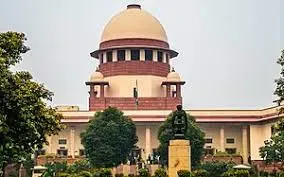
Synopsis
The Supreme Court stepped in on Friday as sweeping pre-emptive curbs — 57 Metro closures and mass train cancellations — ahead of a Jantar Mantar protest drew sharp courtroom pushback. The bench's pointed question about 'calibrating' the government's response, rather than accepting blanket restrictions, sets up a significant proportionality test for how authorities manage political demonstrations in the capital.
Key Takeaways
The Supreme Court on 9 October 2026 indicated it would ask the Delhi High Court to urgently hear a plea against protest-related restrictions in Delhi .
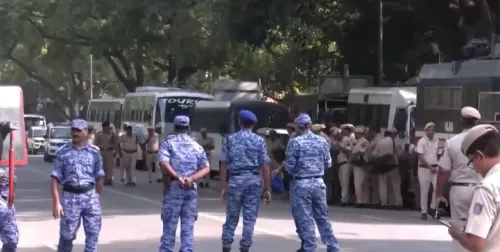
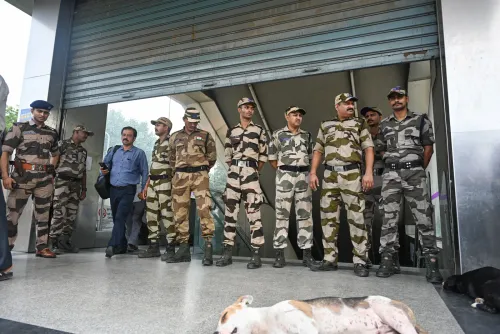
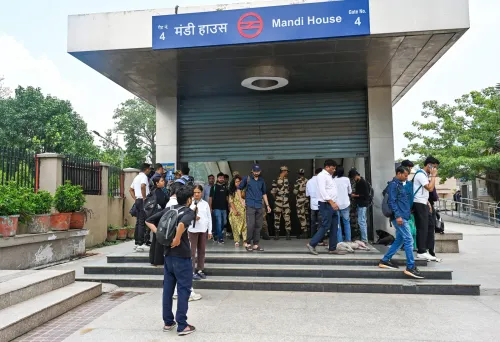
Restrictions include the proposed closure of 57 Metro stations and cancellation or rescheduling of trains to New Delhi and Hazrat Nizamuddin stations on 10 October .
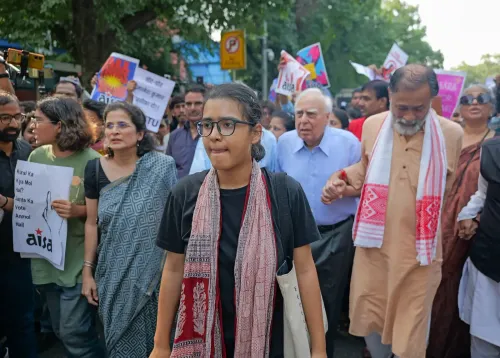
The protest is planned by the Cockroach Janta Party (CJP) at Jantar Mantar , demanding accountability from Chief Election Commissioner Gyanesh Kumar .
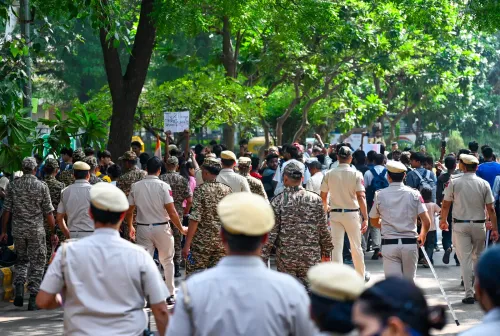
Delhi Police denied permission for the demonstration, citing non-compliance by organisers and invoked Section 163 BNSS in the New Delhi area.
The Delhi High Court declined to urgently hear a separate Indian Youth Congress (IYC) plea; that matter is deferred to 12 October .
Justice Bagchi called for calibrated rather than 'broad-spectrum' government responses to protests.
The Supreme Court on Friday, 9 October 2026, indicated it would direct the Delhi High Court to urgently hear a plea challenging sweeping restrictions imposed ahead of a proposed protest at Jantar Mantar on Saturday — including the planned closure of 57 Metro stations and the cancellation or rescheduling of trains arriving at the national capital. The bench took note of arguments that the preventive measures were disproportionate and were disrupting the movement of millions of ordinary commuters across Delhi and the National Capital Region (NCR).
What Was Argued Before the Supreme Court
The matter was mentioned before a bench comprising Chief Justice of India (CJI) Surya Kant and Justices Joymalya Bagchi and V. Mohana by senior advocates Kapil Sibal, Abhishek Manu Singhvi, and Gopal Sankaranarayanan. Sibal submitted that trains to New Delhi and Hazrat Nizamuddin railway stations scheduled for 10 October had been cancelled or rescheduled, while the Metro closures would affect millions of daily commuters.
'All trains are cancelled, metro stations are closed. You cannot move anywhere. What is happening to my country? This is a peaceful protest,' Sibal submitted before the bench.
Sankaranarayanan argued that a peaceful demonstration could not be grounds for effectively shutting down an entire city, contending that the scale of the preventive action was disproportionate to the stated concerns.
The Court's Line of Questioning
The Supreme Court stressed the need to balance the right of citizens to protest against the rights of others to access essential services and public transport. Justice Bagchi pointed out that the apex court could not pass orders without first hearing the organisers of the proposed demonstration, and sought details about the expected number of participants.
'If we know who the organisers are, we may ask them what number of people they expect to assemble. Then we can regulate that and call upon the government to calibrate its response, rather than taking broad-spectrum measures,' Justice Bagchi observed.
The court also sought clarification on whether permission for the protest had been formally granted or denied. Sibal indicated he would return with a representative of the organisers when the matter was scheduled to resume at 2 pm.
Background: The Jantar Mantar Protest and Police Response
The proposed protest is being organised by the Cockroach Janta Party (CJP) at Jantar Mantar, seeking accountability from Chief Election Commissioner (CEC) Gyanesh Kumar. The Delhi Police on Friday formally denied permission for the demonstration, citing the organisers' alleged failure to comply with legal directions and undertakings given during an earlier protest, as well as law-and-order concerns and traffic regulation requirements.
Police also confirmed that Section 163 of the Bharatiya Nagarik Suraksha Sanhita (BNSS) had been invoked in the New Delhi area, granting authorities additional powers to restrict public assembly.
Delhi HC Declines Urgent Hearing for Youth Congress Plea
In a related development, the Delhi High Court on Friday declined to urgently hear a separate plea filed by the Indian Youth Congress (IYC), which also challenged the denial of permission to protest against the Chief Election Commissioner. That matter has been deferred to Monday, 12 October.
The Supreme Court's intervention signals that questions around the proportionality of pre-emptive security measures ahead of political protests may receive judicial scrutiny in the coming days.
Point of View
Mass train cancellations — reveals a widening gap between security logic and constitutional proportionality. Justice Bagchi's call to 'calibrate' the state's response, rather than accept broad-spectrum measures, is significant: it places the burden back on the administration to justify the scale of disruption, not merely its intent. The fact that even the Delhi High Court declined urgency in a related petition suggests the judiciary is still feeling its way on how aggressively to police protest restrictions. With Section 163 BNSS invoked and permission formally denied, the stage is set for a sharper ruling on where preventive policing ends and the right to assemble begins.
NationPress
9 Oct 2026
Frequently Asked Questions
Why did the Supreme Court intervene ahead of the Jantar Mantar protest?
The Supreme Court intervened on 9 October 2026 after senior advocates argued that pre-emptive restrictions — including the closure of 57 Metro stations and cancellation of trains — were disproportionate and were disrupting millions of ordinary commuters across Delhi and the NCR. The bench indicated it would ask the Delhi High Court to hear the challenge on an urgent basis.
Which protest is at the centre of the Jantar Mantar restrictions?
The proposed protest is organised by the Cockroach Janta Party (CJP) at Jantar Mantar on 10 October 2026, demanding accountability from Chief Election Commissioner Gyanesh Kumar. Delhi Police denied permission for the demonstration, citing non-compliance and law-and-order concerns.
What restrictions have been imposed ahead of the October 10 protest?
Authorities planned to close 57 Metro stations and cancel or reschedule trains arriving at New Delhi and Hazrat Nizamuddin railway stations on 10 October. Delhi Police also invoked Section 163 of the Bharatiya Nagarik Suraksha Sanhita (BNSS) in the New Delhi area, granting powers to restrict public assembly.
What did the Supreme Court say about the right to protest?
The Supreme Court stressed the need to balance citizens' right to protest with the rights of others to access essential services and public transport. Justice Bagchi specifically called for a calibrated government response rather than 'broad-spectrum measures', and said the court needed to hear protest organisers before passing any order.
What happened to the Indian Youth Congress plea in the Delhi High Court?
The Delhi High Court on Friday declined to urgently hear the Indian Youth Congress (IYC) plea challenging the denial of permission for their protest against the Chief Election Commissioner. The matter has been deferred to Monday, 12 October 2026.