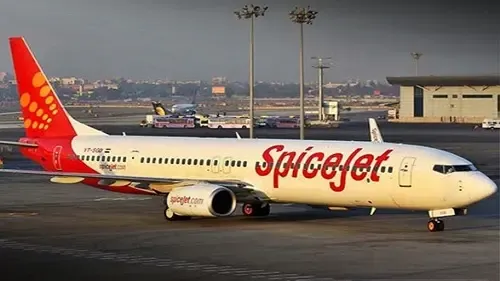
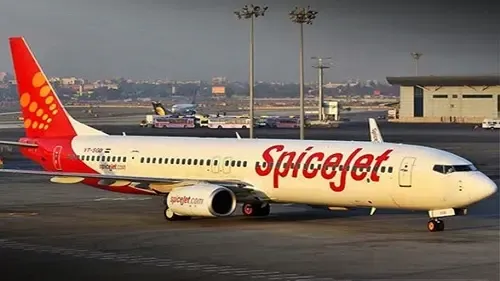
SpiceJet gets SC nod to approach Delhi HC over ₹144.51 crore deposit order

Synopsis
The Supreme Court gave SpiceJet a second shot at Delhi High Court — but not the relief it wanted. The airline, citing a 35% revenue drop from the West Asia crisis and a new government credit scheme, must now convince the High Court to swap a ₹144.51 crore cash deposit order for immovable property security. With ₹729 crore already paid and operations under strain, the next hearing could prove pivotal for the airline's survival.
Key Takeaways
The Supreme Court on 19 May disposed of SpiceJet 's SLP, permitting the airline to approach the Delhi High Court afresh over a ₹144.51 crore cash deposit direction.
The bench of Justices P.S.
Narasimha and Alok Aradhe granted no direct relief and made no comment on the merits of the case.
SpiceJet cited a 35% drop in operational revenue due to the West Asia crisis and pointed to the Centre's ECLGS 5.0 , approved on 5 May 2026 , as changed circumstances.
The airline has already paid ₹729 crore — ₹579 crore principal and ₹150 crore interest — to respondents Kalanithi Maran and Kal Airways .
Earlier bids to substitute the cash deposit with immovable property were dismissed by the Delhi High Court on 18 March and again on 4 May after review petitions failed.
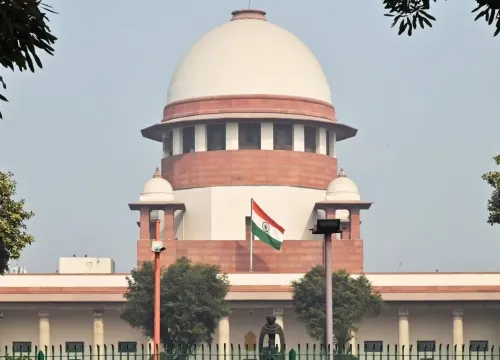
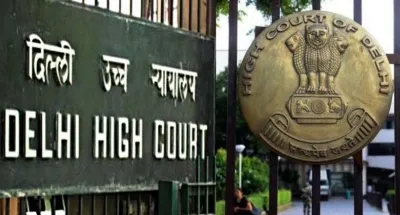
The Supreme Court on Tuesday, 19 May permitted cash-strapped airline SpiceJet and its Chairman Ajay Singh to approach the Delhi High Court seeking modification of an order directing a cash deposit of ₹144.51 crore, arising from a long-running arbitration dispute with media baron Kalanithi Maran and Kal Airways Private Limited. The apex court, however, stopped short of granting any direct relief, disposing of the special leave petition (SLP) without commenting on the merits of the underlying case.
What the Supreme Court Decided
A bench of Justices P.S. Narasimha and Alok Aradhe disposed of the SLP filed by SpiceJet and Ajay Singh, granting them liberty to move the Delhi High Court afresh. The court cited two changed circumstances as justification: the ongoing West Asia crisis and the Union government's newly approved Emergency Credit Line Guarantee Scheme (ECLGS) 5.0. The bench explicitly clarified that it was expressing no opinion on the merits of the dispute pending before the Delhi High Court under Section 34 of the Arbitration and Conciliation Act.
SpiceJet's Arguments Before the Court
Senior advocate Mukul Rohatgi, appearing for SpiceJet, told the Justice Narasimha-led bench that the airline sector had been severely impacted by the West Asia crisis — including rising fuel prices, closure and restriction of Middle East airspace, longer flying routes, and higher insurance costs. According to the SLP, SpiceJet claimed the hostilities had caused 'around 35 per cent decrease in operational revenue'.
Rohatgi further submitted that the airline had offered immovable property as security and was actively taking steps to sell it, but that immediate liquidation was not feasible as required under the Delhi High Court's direction. He also pointed to the Union government's approval of ECLGS 5.0 on 5 May 2026, a scheme described in SpiceJet's petition as intended to help 'eligible borrowers to tide over any short-term liquidity mismatches in view of the West Asia Crisis', with funds expected to be released by November.
Background: The Maran-SpiceJet Dispute
The dispute stems from execution proceedings linked to an arbitral award in favour of Maran and Kal Airways. The proceedings run alongside SpiceJet's challenge to the award under Section 34 of the Arbitration and Conciliation Act. The Delhi High Court had earlier directed SpiceJet and Ajay Singh to deposit ₹144.51 crore in cash — an order the Supreme Court had previously declined to disturb.
Applications by SpiceJet and Ajay Singh seeking substitution of the cash deposit with immovable property were dismissed by the Delhi High Court on 18 March, and subsequent review petitions were dismissed on 4 May. In its petition, SpiceJet stated it had already paid ₹729 crore to the respondents — comprising ₹579 crore towards principal and ₹150 crore towards interest — and argued that insisting on immediate cash security could adversely impact airline operations.
What Happens Next
With the Supreme Court's order, SpiceJet now has a fresh opportunity to press its case before the Delhi High Court, citing the West Asia crisis and ECLGS 5.0 as material developments. Senior advocate Jayant Mehta, appearing for respondents Maran and Kal Airways alongside advocates from Karanjawala & Co., is expected to contest any modification. The outcome of the Delhi High Court hearing will be closely watched as a barometer of SpiceJet's financial viability and its ability to stave off further legal pressure.
Point of View
That a government-backed credit line and a geopolitical crisis constitute changed circumstances, is plausible on paper but untested in this dispute. What is notable is that the Delhi High Court has already rejected the property-substitution argument twice; SpiceJet will need to show that ECLGS 5.0 materially changes its ability to comply, not merely that conditions are difficult. The broader concern is that SpiceJet's financial fragility has been a recurring theme across multiple legal forums, and each deferral of the deposit order extends uncertainty for creditors and passengers alike.
NationPress
3 Oct 2026
Frequently Asked Questions
What did the Supreme Court decide in the SpiceJet case on 19 May?
The Supreme Court disposed of SpiceJet's special leave petition and allowed the airline and its Chairman Ajay Singh to approach the Delhi High Court afresh, seeking modification of a ₹144.51 crore cash deposit order. The court granted no direct relief and did not comment on the merits of the underlying arbitration dispute.
What is the SpiceJet and Kalanithi Maran dispute about?
The dispute arises from an arbitral award in favour of Kalanithi Maran and Kal Airways against SpiceJet. Execution proceedings are being heard alongside SpiceJet's challenge to the award under Section 34 of the Arbitration and Conciliation Act, with the Delhi High Court directing a ₹144.51 crore cash deposit as part of those proceedings.
Why is SpiceJet seeking relief from the ₹144.51 crore deposit order?
SpiceJet argues that the West Asia crisis has caused a 35% drop in its operational revenue due to airspace closures, higher fuel costs, and longer routes, making immediate cash compliance unfeasible. The airline has offered immovable property as security instead and points to the Centre's ECLGS 5.0 scheme as a source of forthcoming liquidity.
What is ECLGS 5.0 and how does it relate to SpiceJet?
ECLGS 5.0 is an Emergency Credit Line Guarantee Scheme approved by the Union government on 5 May 2026, designed to help eligible borrowers manage short-term liquidity shortfalls arising from the West Asia crisis. SpiceJet cited this scheme before the Supreme Court as a changed circumstance that warrants a fresh hearing before the Delhi High Court.
How much has SpiceJet already paid in the Maran dispute?
According to SpiceJet's petition, the airline has paid ₹729 crore to the respondents — ₹579 crore towards principal and ₹150 crore towards interest. It argued that insisting on an additional immediate cash deposit of ₹144.51 crore could jeopardise airline operations.