CWG 2030: Ahmedabad must set its own terms, not follow the Games, says Olympic research chief
Synopsis
India's first IOC-recognised Olympic Studies Centre chief says Ahmedabad must set the terms for CWG 2030 — not the other way around. From temporary venues and independent legacy audits to bringing shooting and cricket back into the programme, Dr Utsav Chaware's blueprint is as much about 2036 as it is about 2030.
Key Takeaways
Dr Utsav Chaware , Director of BCORE at Rashtriya Raksha University , says Ahmedabad must use the 2030 Commonwealth Games to serve India's own urban and sporting objectives.
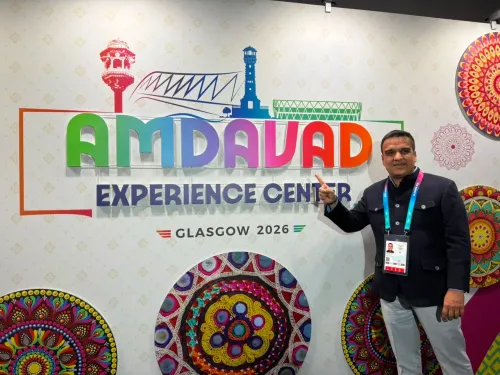
Ahmedabad was awarded the 2030 Commonwealth Games — marking 100 years of the Commonwealth sporting movement — at the Commonwealth Sport General Assembly in Glasgow in November 2025 .
Commonwealth Sport's Games Reset framework requires hosting costs to be cut by at least 60 per cent from historic levels; governments are no longer expected to provide unlimited financial guarantees.
Chaware advocates an independent economic and legacy assessment post-Games, citing the governance concerns that surrounded the 2010 Delhi Commonwealth Games .
He supports reinstating shooting (absent since Gold Coast 2018 ), wrestling , hockey , and archery , and has raised the possibility of including cricket and yoga in the programme.
BCORE , established in 2024 , is planning a national Safe Sport programme for the 2026-27 academic session at Rashtriya Raksha University .
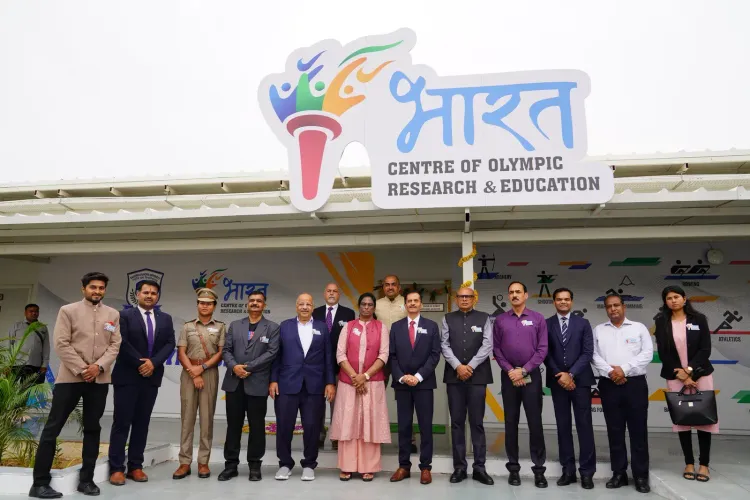
Dr Utsav Chaware, Director of the Bharat Centre of Olympic Research and Education (BCORE) at Rashtriya Raksha University, has argued that Ahmedabad must treat the 2030 Commonwealth Games as a strategic tool for urban and sporting legacy — not as an end in itself. Speaking in an exclusive interview on 18 August, Chaware said the centenary Games should serve as a practical test of India's capacity to host major sporting events sustainably, with direct lessons for the country's bid to stage the 2036 Olympic and Paralympic Games.
'India must use the Games strategically. As a nation, a city and a state, we need to leverage the opportunities they create. The Games themselves are not the most important thing; what matters is how our cities, states and country use and benefit from them,' he said.
Background: Ahmedabad's CWG 2030 mandate
Ahmedabad was formally awarded the 2030 Commonwealth Games at the Commonwealth Sport General Assembly in Glasgow in November 2025. The edition marks 100 years of the Commonwealth sporting movement. India's 2036 Olympic bid, led by the Indian Olympic Association (IOA), is currently in the International Olympic Committee's (IOC) Continuous Dialogue phase with its Future Host Commission. Chaware, who heads India's first IOC-recognised Olympic Studies Centre, said the central question for Ahmedabad should not be whether it can stage the Games, but what the city and country want to achieve through them.
The Barcelona model and legacy planning
Chaware pointed to the Barcelona 1992 Olympics as a benchmark for host-driven transformation. 'Barcelona's 1992 Olympics is a strong example, where the Games were used to accelerate urban regeneration, improve infrastructure, transform the waterfront and create new public spaces. Similarly, India should plan the Games not just as a sporting event, but as a catalyst for long-term city development and improved quality of life,' he said.
He stressed that the hosting ecosystem extends well beyond competition venues. 'It is not just the venue where the competition happens. Around the venue, there are many avenues that we should be ready to attend — accommodation, hospitality, transport, training and acclimatisation centres, gyms, medical facilities and commercial spaces,' he said. Ahmedabad's existing infrastructure — including the Sardar Vallabhbhai Patel Sports Enclave, the Veer Savarkar Sports Complex, and the Gujarat Police Academy area at Karai — could form the foundation of this ecosystem.
Temporary venues, independent scrutiny and the Delhi lesson
Drawing on the Paris 2024 experience, Chaware advocated a flexible approach to venue planning. 'Paris has showcased that instead of building any new venue for the Games, we have been working on the temporary venues,' he said, while cautioning that 'temporary venues can also be more costly than the permanent venues.' The approach, he argued, would allow Ahmedabad to experiment without creating a permanent stock of facilities that may struggle to find post-event purpose.
He was direct about the shadow cast by the 2010 Delhi Commonwealth Games, which drew criticism over expenditure, governance, and infrastructure utilisation. Chaware backed an independent economic and legacy assessment mechanism to examine the 2030 Games after the event — covering infrastructure use, employment, tourism, transport, accommodation, broadcasting, logistics, and sporting participation. 'If we simply say everything is good, we risk overlooking the gaps and challenges that come with organising the Games,' he said.
Commonwealth Sport's Games Reset framework, which governs the 2030 edition, already calls for hosting costs to be reduced by at least 60 per cent from historic Commonwealth Games levels and removes the requirement for an unlimited government financial guarantee. Chaware said India should combine public funding with commercial and partnership models rather than scaling down ambition purely on financial grounds.
Sports programme, Safe Sport and anti-doping priorities
On the sports programme, Chaware argued that India should exercise host influence to bring shooting, wrestling, hockey, and archery back into the Commonwealth Games schedule. Shooting has been absent since Gold Coast 2018. He also suggested that yoga could be considered subject to formal recognition requirements, and that cricket should not be excluded from the conversation. 'With cricket, why not? It will give all the viewership, attendance, sponsorship and it could mold the game how India wants to fashion the game,' he said.
BCORE, established in 2024, has made Safe Sport and athlete safeguarding a central priority, with a national programme planned for the 2026-27 academic session at Rashtriya Raksha University. Chaware said safeguarding must be embedded in the training ecosystem year-round, not introduced only at competition venues. On anti-doping, he identified it as one of three areas India must strengthen alongside broader participation and its global narrative for the Games. 'India needs more technologically advanced solutions, stronger research and education in anti-doping, and better compliance mechanisms,' he said.
The third priority, in his framing, is India's global story. 'Ahmedabad 2030 should give India an opportunity to tell a story about how a major sporting event can be economically, environmentally and socially sustainable,' he said. With the World Police and Fire Games scheduled in Gujarat in 2029, the state is expected to accumulate hosting experience in the years leading up to the Commonwealth Games — a runway that Chaware believes India should use deliberately.
Point of View
But whether it can resist the familiar trap of infrastructure-first, legacy-as-afterthought planning. The push for an independent post-Games audit is the most consequential recommendation here — without it, the 2030 Games risks becoming another headline number that flatters at announcement and disappoints in retrospect. With 2036 on the horizon, India cannot afford that.
NationPress
18 Aug 2026
Frequently Asked Questions
Why is Ahmedabad hosting the 2030 Commonwealth Games?
Ahmedabad was formally awarded the 2030 Commonwealth Games at the Commonwealth Sport General Assembly in Glasgow in November 2025. The edition marks 100 years of the Commonwealth sporting movement and is part of India's broader effort to build hosting experience ahead of its 2036 Olympic bid.
What is the Commonwealth Sport Games Reset framework?
The Games Reset is Commonwealth Sport's revised hosting model that requires costs to be cut by at least 60 per cent from historic Commonwealth Games levels, mandates greater use of existing venues, and removes the requirement for governments to provide unlimited financial guarantees. It also allows for a flexible, host-specific sports programme.
Who is Dr Utsav Chaware and what is BCORE?
Dr Utsav Chaware is the Director of the Bharat Centre of Olympic Research and Education (BCORE) at Rashtriya Raksha University. BCORE, established in 2024, is India's first IOC-recognised Olympic Studies Centre and focuses on Olympic research, education, and athlete safeguarding.
What sports could return to the Commonwealth Games in 2030?
Chaware supports reinstating shooting — absent from the Commonwealth Games since Gold Coast 2018 — along with wrestling, hockey, and archery. He has also raised the possibility of including cricket and yoga in the programme, subject to formal recognition requirements.
How does CWG 2030 connect to India's 2036 Olympic bid?
India's 2036 Olympic bid, led by the Indian Olympic Association, is currently in the IOC's Continuous Dialogue phase with its Future Host Commission. Chaware argues that Ahmedabad 2030 should serve as a practical test of India's capacity to host major sporting events sustainably, generating lessons directly applicable to the Olympic bid.