Supreme Court: NCSC cannot order arrears or pass binding directions
Synopsis
The Supreme Court has drawn a clear constitutional line: the NCSC can investigate and recommend, but it cannot order. By striking down a direction that required the Mumbai Port Authority to pay arrears to an SC employee, the bench has effectively told India's marginalised communities that constitutional commissions are not courts — and that enforceable relief must be sought elsewhere.
Key Takeaways
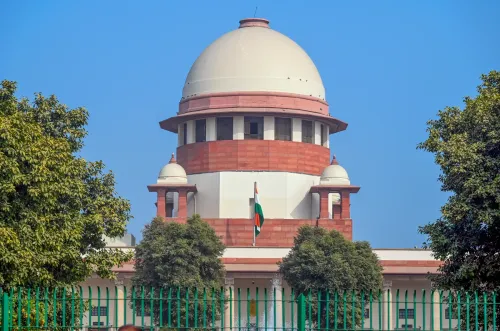
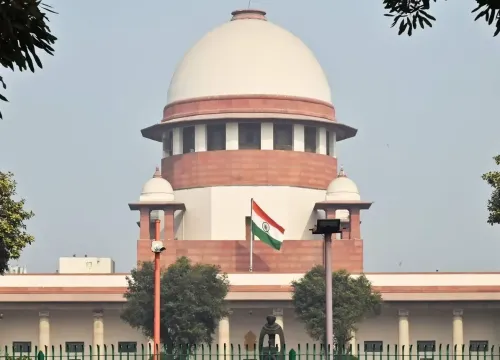
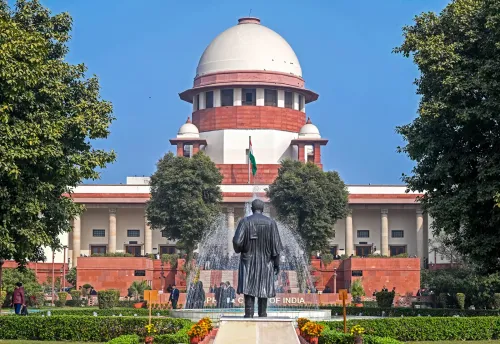
The Supreme Court ruled on 28 July that the NCSC cannot issue enforceable directions or adjudicate service disputes.
A bench of Justice Sanjay Karol and Justice A.G.
Masih set aside a Bombay High Court judgment that had upheld NCSC's direction to the Mumbai Port Authority .
Under Article 338 , the NCSC's role is recommendatory and advisory — it can record findings and refer matters to governments but cannot order compliance or financial relief.
The NCSC's direction requiring payment of arrears was declared non-est in law (having no legal existence).
The ruling sets a precedent for Articles 338A and 338B bodies — the NCST and NCBC — which operate under the same constitutional framework.
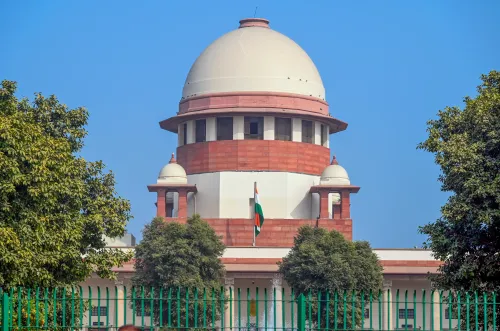
The Supreme Court of India has ruled that the National Commission for Scheduled Castes (NCSC) holds no adjudicatory power and cannot issue enforceable directions in service matters, clarifying that its constitutional mandate under Article 338 is strictly recommendatory and advisory in nature. The judgment, delivered on 28 July, settles a long-contested question about the limits of the NCSC's authority.
The Ruling and What It Overturns
A bench comprising Justice Sanjay Karol and Justice A.G. Masih set aside a Bombay High Court judgment that had upheld an NCSC direction requiring the Mumbai Port Authority to implement promotion-related orders and pay arrears to a Scheduled Caste employee within 30 days. The Supreme Court declared the NCSC's direction requiring payment of arrears “contrary to the provisions of the Constitution and as such non-est in law.”
What Article 338 Actually Permits
The bench examined the precise scope of Article 338 and held that the NCSC's civil-court-equivalent powers under clause (8) are confined to facilitating investigations — summoning witnesses, receiving evidence, and requisitioning documents. The court was explicit: “It is therefore clear that while it has powers to requisition documents and receive evidence, it does not have the power to make an order in furtherance of that evidence.”
In other words, the NCSC may record a factual finding and then refer the matter to the concerned government — either the Centre or a state government — to act upon. It cannot itself direct compliance or award financial relief.
The Commission's Argument, Rejected
The NCSC had contended that the word “safeguards” in Article 338(5)(b) conferred upon it the power to enforce its findings. The Supreme Court rejected this squarely, stating: “Such a submission is difficult to accept in view of the explicit language of the Article. It certainly does not confer adjudicatory power, at best recommendatory in nature.”
The bench further noted that the NCSC and its constitutional counterparts under Articles 338A and 338B — covering Scheduled Tribes and Other Backward Classes respectively — are bodies with “a socially beneficent purpose” but are not designed to take over adjudicatory functions that belong to courts and tribunals.
Background: How the Dispute Arose
The case originated when the Mumbai Port Authority demoted an employee belonging to the Scheduled Caste category following a revision of seniority. The revision stemmed from a Bombay High Court judgment that had quashed the Centre's 2002 Office Memorandum granting consequential seniority to SC/ST employees promoted through reservation.
The aggrieved employee approached the NCSC, which directed the Mumbai Port Authority to adhere to reservation guidelines, grant promotions per reservation rules, and pay arrears within 30 days. The Port Authority challenged this, arguing the Commission lacked constitutional authority for binding directions beyond the functions listed in Article 338(5). The Bombay High Court sided with the NCSC; the Supreme Court has now reversed that position.
Implications for SC/ST Rights Bodies
The ruling has significant implications for how constitutional commissions for marginalised communities function in practice. While the judgment affirms the NCSC's investigative and recommendatory role, it draws a firm line against these bodies acting as quasi-judicial authorities. Aggrieved individuals will need to pursue enforceable remedies through appropriate courts or tribunals rather than relying on NCSC directions alone. The decision also sets a precedent applicable to the National Commission for Scheduled Tribes (NCST) and the National Commission for Backward Classes (NCBC), given the parallel constitutional framework.
Point of View
SC/ST employees who face discrimination within government bodies have turned to the NCSC as a faster, more accessible alternative to courts — and some state authorities have complied with its directions voluntarily. By firmly stripping the Commission of any adjudicatory veneer, the Supreme Court has pushed that constituency back toward an already overburdened judicial system. The deeper question the judgment leaves unanswered is whether Parliament should legislate stronger enforcement mechanisms for these constitutional bodies, or whether the current recommendatory model — dependent on executive goodwill — is adequate to deliver the constitutional promise of safeguards for Scheduled Castes.
NationPress
28 Oct 2026
Frequently Asked Questions
What did the Supreme Court rule about the NCSC?
The Supreme Court ruled that the National Commission for Scheduled Castes (NCSC) cannot issue binding or enforceable directions and has no power to adjudicate service disputes. Its role under Article 338 of the Constitution is recommendatory and advisory only.
What was the Mumbai Port Authority case about?
A Scheduled Caste employee of the Mumbai Port Authority was demoted following a seniority revision after the Centre's 2002 Office Memorandum on consequential seniority for SC/ST employees was quashed. The employee approached the NCSC, which directed the Port Authority to restore promotions and pay arrears within 30 days — a direction the Supreme Court has now declared unconstitutional.
What powers does the NCSC actually have under Article 338?
Under Article 338, the NCSC can investigate complaints, summon witnesses, receive evidence, and requisition documents. It can record factual findings and recommend that the Centre or a state government take action. It cannot, however, pass orders directing compliance or award financial relief such as arrears.
Does this ruling affect the NCST and NCBC as well?
Yes. The Supreme Court noted that the NCSC's counterparts under Articles 338A (National Commission for Scheduled Tribes) and 338B (National Commission for Backward Classes) operate under a parallel constitutional framework. The reasoning in this judgment would apply equally to those bodies.
What should SC/ST employees do if they face discrimination at work?
Following this ruling, SC/ST employees seeking enforceable relief — such as reinstatement, promotion, or payment of arrears — will need to approach appropriate courts or statutory tribunals rather than relying on NCSC directions. The NCSC remains a forum for investigation and recommendations, but compliance by employers is not legally compellable through the Commission.