SC directs Centre to form committee on pharma marketing regulation

Synopsis
The Supreme Court has told the Centre to form a committee to decide whether pharma companies should face statutory penalties for gifting doctors — a move that could close a decade-old regulatory loophole where only doctors faced consequences, not the drug firms that courted them. It comes as the same Bench battles a separate crisis over cancer drugs sold at ten times their retailer price.
Key Takeaways
The Supreme Court on 8 October 2026 directed the Centre to constitute a three-member committee on statutory regulation of pharma marketing practices.
The committee will examine whether a statutory framework is needed to regulate pharmaceutical companies offering gifts, hospitality, and travel to doctors.
The current framework penalises doctors who accept such benefits but has no corresponding statutory mechanism against the pharma companies that offer them.
The Centre must file a compliance affidavit; the matter is next listed for 29 January .
In related PILs, the same Bench flagged a nearly ten-fold MRP disparity on a cancer drug — ₹27,000 MRP versus a retailer supply price of ₹2,700–₹3,000 — calling it 'broad daylight dacoity'.
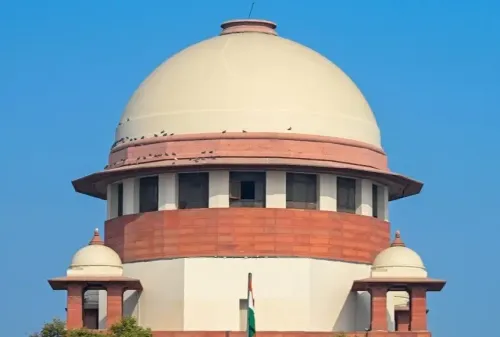
The Supreme Court of India on Thursday, 8 October 2026, directed the Centre to constitute a committee to examine whether a statutory framework is needed to regulate pharmaceutical companies' marketing practices — including the offering of gifts, hospitality, travel facilities, and other benefits to doctors as prescription incentives. The direction came from a Bench of Justices Vikram Nath and Sandeep Mehta while hearing a petition demanding statutory checks on unethical interactions between drug firms and medical professionals.
What the Court Directed
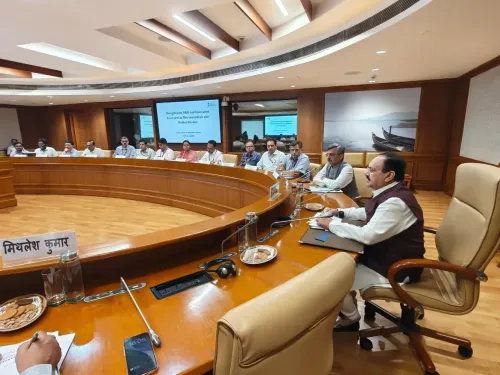
Solicitor General Tushar Mehta informed the Bench that the Union government would constitute a three-member committee to assess whether a statutory regulatory framework is required for pharmaceutical companies' marketing conduct, and if so, recommend the form such regulation should take. The committee will solicit suggestions and objections from stakeholders before submitting its recommendations to the Centre.
The Centre has also been asked to file an affidavit confirming compliance with the court's directions. The matter is next scheduled for hearing on 29 January.
The Regulatory Asymmetry at the Heart of the Case
The petition drew attention to a structural imbalance in the existing framework: while doctors who accept gifts or hospitality from pharmaceutical companies face disciplinary consequences, there is no corresponding statutory mechanism to penalise or regulate the drug companies that offer such inducements in the first place. The Centre acknowledged before the court that the current framework does provide for action against doctors who accept such benefits, but conceded that direct statutory regulation of pharma companies on this issue remains unaddressed.
This is not the first time Indian courts or regulators have flagged the problem. Pharmaceutical industry self-regulation through the Uniform Code for Pharmaceutical Marketing Practices (UCPMP) has existed for years but critics argue it lacks teeth, since compliance remains voluntary and enforcement has been inconsistent.
The Broader Medicine Pricing Context
The unethical marketing hearing is unfolding alongside a separate but related set of PILs before the same Bench examining medicine pricing, generic drugs, medical devices, and prescription practices. In those proceedings, the court has sharply questioned the wide gap between the price at which medicines are supplied to retailers and their Maximum Retail Price (MRP).
In a previous hearing, the court cited a cancer medicine carrying an MRP of ₹27,000 while being supplied to retailers at roughly ₹2,700 to ₹3,000 — a nearly ten-fold disparity. The court described the gap as 'broad daylight dacoity' and questioned why manufacturers should be permitted to fix MRPs substantially above the retailer supply price. It went further, noting that such extreme markups could undermine patient trust — a patient might suspect a medicine is spurious if a drug priced at ₹27,000 is suddenly available for ₹3,000.
The Bench also raised the question of whether a uniform margin could be prescribed for pharmaceutical products covered under the Essential Commodities Act, regardless of whether those medicines are classified as essential or non-essential under the Drug Price Control Order (DPCO).
Why This Matters for Patients and the Healthcare System
Unethical pharma marketing practices carry direct consequences for patients: when prescriptions are influenced by gifts or financial benefits rather than clinical evidence, patients may be steered toward costlier branded drugs over equally effective generics, inflating out-of-pocket healthcare expenditure. India's drug regulatory landscape has long been criticised for its fragmented oversight, with the Central Drugs Standard Control Organisation (CDSCO) focused on safety and quality while marketing conduct has fallen between regulatory jurisdictions.
A statutory framework — if the committee recommends one — could create enforceable penalties for pharma companies engaging in prohibited marketing, closing the asymmetry the petitioner flagged. Whether the committee's recommendations will carry legislative urgency, however, remains to be seen.
What Happens Next
The three-member committee's composition and terms of reference are yet to be notified. The Centre must file its compliance affidavit ahead of the next hearing on 29 January, at which point the court will assess progress. The companion PILs on medicine pricing are continuing on a parallel track before the same Bench, and further observations on MRP regulation are expected in upcoming sittings.
Point of View
Not just the demand side. Penalising only doctors while leaving pharma companies unregulated is like fining jaywalkers while exempting the car that encouraged them to cross. India's voluntary UCPMP code has existed since 2014 and has demonstrably failed to change behaviour — if the committee recommends a statutory framework, the bigger question is whether the political will exists to legislate against an industry that spends heavily on lobbying. The companion MRP litigation is equally consequential: a ten-fold markup described by the apex court as 'broad daylight dacoity' is not a rounding error — it is a structural feature of how Indian pharma pricing works, and any serious reform will face fierce industry resistance.
NationPress
8 Oct 2026
Frequently Asked Questions
What did the Supreme Court direct on pharma marketing practices?
The Supreme Court directed the Centre on 8 October 2026 to form a three-member committee to examine whether a statutory regulatory framework is needed to govern pharmaceutical companies' marketing conduct, including the offering of gifts, hospitality, and travel to doctors. The committee will gather stakeholder input and submit its recommendations to the government.
Why is there a regulatory asymmetry in the current framework?
Under the existing rules, doctors who accept gifts or benefits from pharma companies can face disciplinary action, but there is no statutory mechanism to penalise the pharmaceutical companies that offer such inducements. The petitioner argued this imbalance makes the framework structurally ineffective.
When is the next Supreme Court hearing on this matter?
The matter is scheduled for its next hearing on 29 January. The Centre has been directed to file a compliance affidavit before that date.
What is the Supreme Court's concern about medicine pricing?
In a separate but related set of PILs before the same Bench, the court flagged a cancer drug with an MRP of ₹27,000 that was supplied to retailers for ₹2,700–₹3,000 — a nearly ten-fold gap. The court described this as 'broad daylight dacoity' and questioned whether a uniform margin should be mandated under the Essential Commodities Act.
What is the UCPMP and why has it been criticised?
The Uniform Code for Pharmaceutical Marketing Practices (UCPMP) is an industry self-regulation framework that prohibits pharma companies from offering gifts, cash, or hospitality to doctors. Critics argue it lacks enforcement teeth because compliance is voluntary, and its track record in curbing unethical marketing has been widely questioned.