SC sets aside Delhi HC order suspending Sengar's life sentence in Unnao rape case
Synopsis
The Supreme Court has reversed the Delhi High Court's decision to suspend Kuldeep Singh Sengar's life sentence in the 2017 Unnao rape case, keeping the expelled BJP leader behind bars. The ruling also shuts down a technical legal argument that an MLA is not a 'public servant' under POCSO — a question with implications far beyond this case.
Key Takeaways
The Supreme Court on 15 May 2025 set aside the Delhi High Court order suspending Kuldeep Singh Sengar's life sentence in the 2017 Unnao rape case .
A Bench of CJI Surya Kant and Justice Joymalya Bagchi partly allowed the CBI's special leave petition against the High Court's conditional bail grant.
The Delhi HC has been directed to decide Sengar's criminal appeal preferably within three months .
Sengar was convicted in December 2019 and sentenced to life imprisonment plus a ₹25 lakh fine; he has spent more than 10 years in custody.
A separate conviction in March 2020 for conspiring in the custodial death of the survivor's father carries a 10-year rigorous imprisonment sentence.
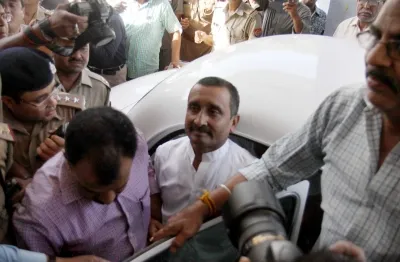
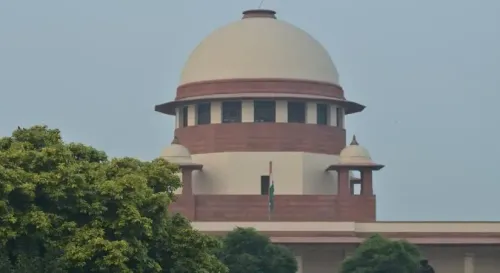
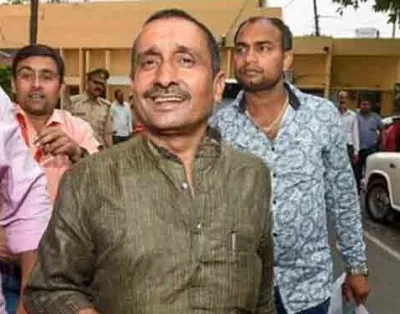
The Supreme Court on Friday, 15 May set aside the Delhi High Court order that had suspended the life sentence of expelled Bharatiya Janata Party (BJP) leader Kuldeep Singh Sengar in the 2017 Unnao rape case. The ruling reinstates Sengar's incarceration after the apex court had already stayed the High Court's bail order in December 2024.
What the Supreme Court Ordered
A Bench comprising Chief Justice of India (CJI) Surya Kant and Justice Joymalya Bagchi partly allowed the special leave petition filed by the Central Bureau of Investigation (CBI) challenging the Delhi High Court's conditional bail grant to Sengar. The Bench set aside the High Court order and directed it to decide Sengar's criminal appeal 'as expeditiously as possible, preferably within three months.'
The apex court further clarified that if the High Court finds it unlikely to conclude the appeal early, it 'may pass a fresh order on the prayer for suspension of sentence after hearing all parties, including counsel for the complainant.' The Bench explicitly stated it was not expressing any opinion on the merits of the matter at this stage.
The POCSO 'Public Servant' Dispute
Solicitor General Tushar Mehta, appearing for the CBI, argued that the Delhi High Court had adopted an erroneously narrow interpretation in assessing whether a Member of the Legislative Assembly qualifies as a 'public servant' under the Protection of Children from Sexual Offences (POCSO) Act. He contended that a legislator occupies a dominant position and cannot be excluded from the aggravated penetrative sexual assault provisions of POCSO on technical grounds alone.
Justice Bagchi orally remarked that the Supreme Court was 'not endorsing the hyper-technical approach taken by the High Court,' signalling the Bench's discomfort with the lower court's reasoning.
Sengar's Defence Arguments
Senior advocate N. Hariharan, representing Sengar, contended that material existed to show the survivor was not a minor at the time of the incident, raising a challenge to the applicability of the POCSO Act itself. Hariharan also noted that Sengar had already spent more than 10 years in custody and that the question of an MLA's status as a public servant warranted separate consideration.
Background and Prior Convictions
In December 2019, a Delhi trial court convicted Sengar of kidnapping and raping a minor girl and sentenced him to imprisonment for the remainder of his natural life, along with a fine of ₹25 lakh. The Supreme Court had previously transferred all cases related to the Unnao incident from Uttar Pradesh to Delhi and ordered day-to-day trials.
Separately, in March 2020, a Delhi court convicted Sengar for conspiring in the custodial death of the rape survivor's father, sentencing him to 10 years' rigorous imprisonment. In February 2025, the Supreme Court declined to interfere with the Delhi High Court's refusal to suspend that sentence.
The Delhi High Court had suspended Sengar's life sentence in December 2024 and granted conditional bail pending his appeal against conviction. The Supreme Court had immediately stayed that order, ensuring Sengar remained in custody. Friday's ruling now formally sets aside the High Court's bail grant, with the appeal expected to be heard on a fast-tracked basis.
Point of View
Whether an MLA is a 'public servant' for the purposes of aggravated assault provisions, remains unresolved and has wider legislative implications. Sengar's defence has now consumed over five years of appellate proceedings, a pattern that critics argue dilutes the deterrent effect of fast-track court convictions. The three-month timeline the apex court has set for the High Court is firm in language but unenforceable in practice, raising the question of whether the case will again drift. The survivor and her family have waited since 2017; the judicial system owes them finality, not another procedural cycle.
NationPress
6 Oct 2026
Frequently Asked Questions
What did the Supreme Court rule in the Unnao rape case on 15 May 2025?
The Supreme Court set aside the Delhi High Court order that had suspended Kuldeep Singh Sengar's life sentence and granted him conditional bail in the 2017 Unnao rape case. The apex court directed the High Court to decide Sengar's criminal appeal preferably within three months.
Who is Kuldeep Singh Sengar and what was he convicted for?
Kuldeep Singh Sengar is an expelled BJP leader and former MLA from Uttar Pradesh. A Delhi trial court convicted him in December 2019 for kidnapping and raping a minor girl in 2017 and sentenced him to life imprisonment along with a ₹25 lakh fine. He was separately convicted in March 2020 for conspiring in the custodial death of the survivor's father.
Why did the CBI challenge the Delhi High Court's bail order?
The CBI argued that the Delhi High Court erred in adopting a narrow interpretation of whether an MLA qualifies as a 'public servant' under the POCSO Act. Solicitor General Tushar Mehta contended that a legislator occupies a dominant position and cannot be excluded from aggravated penetrative sexual assault provisions on technical grounds.
What happens next in the Unnao rape case?
The Delhi High Court has been asked to decide Sengar's criminal appeal as expeditiously as possible, preferably within three months. If it finds an early decision unlikely, it may pass a fresh order on the suspension of sentence after hearing all parties, including the complainant's counsel.
Has the Supreme Court previously intervened in this case?
Yes. The Supreme Court earlier transferred all Unnao-related cases from Uttar Pradesh to Delhi and ordered day-to-day trials. In December 2024, it stayed the Delhi HC's bail order immediately after it was passed, ensuring Sengar remained in custody. In February 2025, it also declined to interfere with the HC's refusal to suspend Sengar's sentence in the custodial death case.