Delhi pollution: Farmers not sole cause, Supreme Court flags vehicle emissions
Synopsis
The Supreme Court has done what farmer unions have demanded for years — questioned the singular blame placed on stubble burning for Delhi's toxic air. With CSE data showing transport as the largest local emission source and Delhi's vehicle count now matching Mumbai, Kolkata, and Chennai combined, the court's directive to four states to submit vehicular emission plans could mark a genuine shift in how India's most politicised pollution debate is framed.
Key Takeaways
The Supreme Court bench of Chief Justice Surya Kant , Justice Joymalya Bagchi , and Justice V.
Mohana questioned placing the entire pollution blame on farmers, citing vehicular emissions as a major factor.
BKS General Secretary Mohini Mohan Mishra demanded withdrawal of cases against farmers and called for 'family planning of cars.' AIKS President Rajan Kshirsagar alleged that government policy has unfairly criminalised farming while protecting corporates.
CSE data shows stubble burning contributed approximately 14% of Delhi's pollution on 5 November , while transport remains the largest ongoing local source.
Delhi's registered vehicle count crossed 15.6 million as of 2024–25 , with 6.43 lakh new vehicles added in the past year — the highest single-year rise in nine years .
The court has directed Delhi , Haryana , Uttar Pradesh , and Rajasthan to submit vehicular emission action plans.
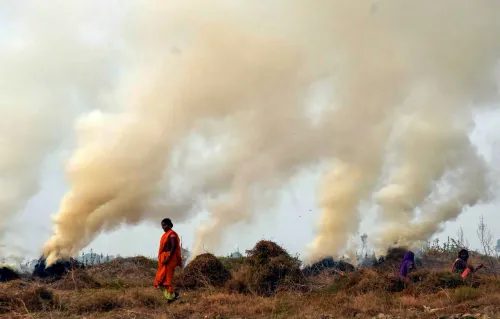
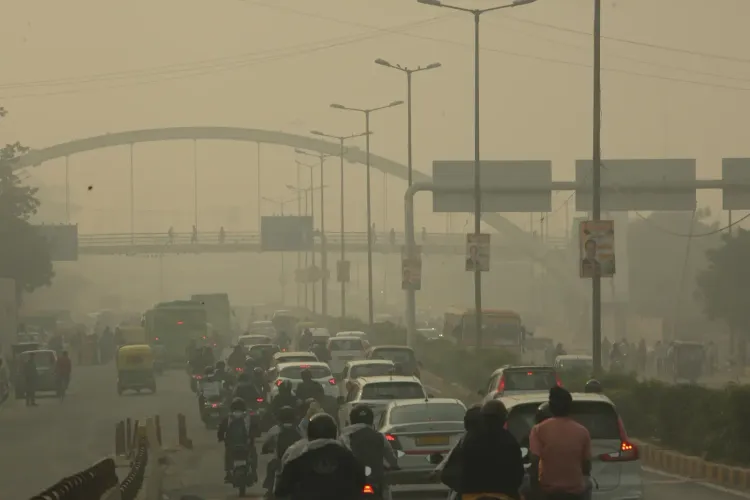
Farmer organisations across Punjab, Haryana, and western Uttar Pradesh have renewed their push to broaden the Delhi-NCR pollution debate, finding fresh backing in a Supreme Court observation this week that questioned the practice of placing the entire blame for the capital's toxic winter air on crop stubble burning. The court's remarks have shifted attention toward vehicular emissions, long identified by scientists as one of the largest local pollution sources.
What the Supreme Court Said
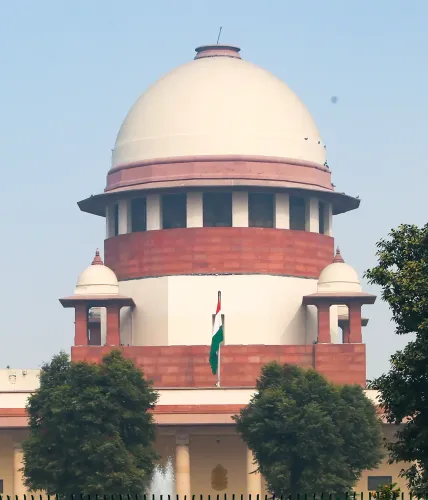
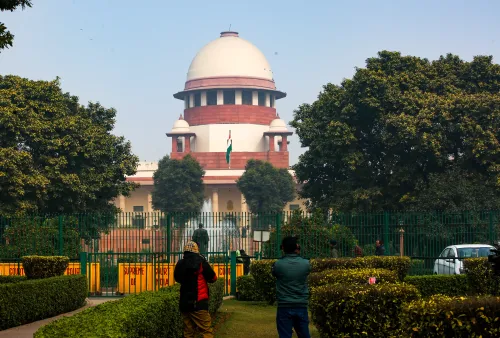
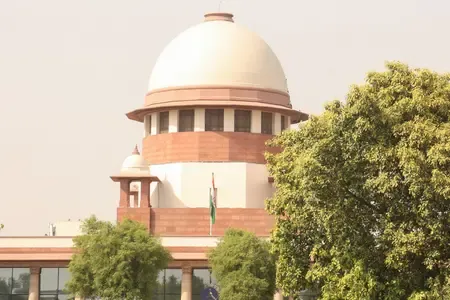
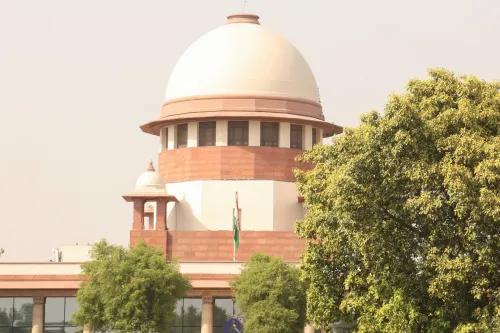
A bench comprising Chief Justice Surya Kant, Justice Joymalya Bagchi, and Justice V. Mohana noted that stubble burning is only one among several contributors to deteriorating air quality and drew pointed attention to the scale of vehicular emissions. The court directed the governments of Delhi, Haryana, Uttar Pradesh, and Rajasthan to submit action plans covering vehicular movement, emission standards, and measures to curb polluting vehicles.
Notably, the bench cited the Covid-19 lockdown as evidence: even as stubble burning did not entirely cease during that period, Delhi recorded significantly clearer skies — suggesting that factors beyond farm fires play a decisive role in the city's annual pollution crisis.
Farmer Organisations Respond
Bharatiya Kisan Sangh (BKS) General Secretary Mohini Mohan Mishra, whose organisation is affiliated with the Rashtriya Swayamsevak Sangh (RSS), welcomed the court's intervention and demanded that states withdraw all pending cases against farmers and refund fines imposed on them, with interest.
'The strong objection raised by the Supreme Court against blaming only farmers for pollution makes it clear that farmers are not the primary cause of pollution,' Mishra said. He called for stricter regulation of private vehicle ownership, arguing there should be 'family planning for cars with respect to the numbers owned by a family.'
The All India Kisan Sabha (AIKS), the peasant wing of the Communist Party of India (CPI), echoed the concern from a different political vantage. AIKS President Rajan Kshirsagar alleged that 'agriculture has been painted as a polluting job, while legislations are framed to support corporates.' He added that farmers had 'repeatedly stressed that stubble burning is not the principal reason for pollution in Delhi and the NCR, as it is evident.'
What the Data Shows
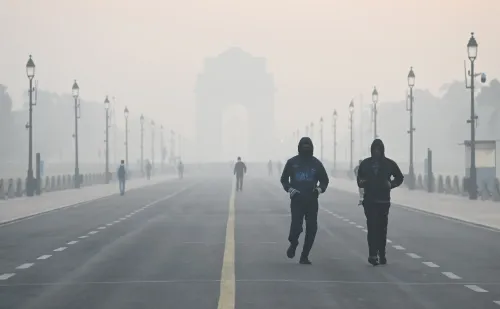
Scientific assessments broadly support the multi-source framing. According to an analysis by the Centre for Science and Environment (CSE), levels of nitrogen dioxide in Delhi's air peaked during evening rush hours and remained elevated until midnight — a pattern consistent with traffic congestion rather than agricultural fires. The same body has consistently argued that Delhi's air quality crisis stems from vehicular pollution, industrial emissions, construction dust, waste burning, and adverse meteorological conditions, with crop residue burning acting as an aggravating rather than exclusive factor.
Data indicated that stubble burning accounted for approximately 14 per cent of Delhi's pollution contribution on 5 November, while transportation remained one of the largest ongoing local emission sources. A separate report noted that stubble burning's impact had, in fact, declined closer to Diwali this season.
Delhi's Vehicle Load: A Growing Crisis
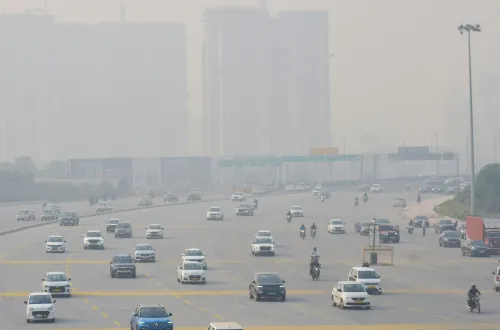
The scale of Delhi's vehicular burden puts the debate in sharp relief. Earlier CSE reports this year estimated that between 1,800 and 2,000 new vehicles are added to Delhi's roads every single day. As of 2024–2025, Delhi's total registered vehicle count crossed 15.6 million, driven by a significant surge in private two-wheelers and cars.
Strikingly, according to the same data, the number of registered vehicles in Delhi now matches the combined total of registered vehicles in the three metropolitan cities of Mumbai, Kolkata, and Chennai. The Economic Survey of Delhi 2025–26 further recorded that an additional 6.43 lakh vehicles were added to the capital in a single year — the largest single-year increase in nine years.
What Happens Next
Farmer unions broadly acknowledge the need to reduce stubble burning but insist that solutions must be practical, incentive-based, and equitable rather than punitive. The Supreme Court's directive to four state governments to submit vehicular emission plans marks a potential shift in policy emphasis. Whether that translates into enforcement action on vehicle pollution — or remains a courtroom observation — will determine how meaningfully Delhi's multi-source pollution problem is addressed in the months ahead.
Point of View
Stubble burning becomes an easy visual scapegoat, often along partisan lines depending on which party governs Punjab or Haryana. Meanwhile, Delhi has quietly added more registered vehicles than Mumbai, Kolkata, and Chennai put together. The CSE's nitrogen dioxide data, peaking at rush hour rather than harvest season, is damning. The real test now is whether the court's directive to four state governments produces enforceable emission standards or just more affidavits.
NationPress
12 Nov 2026
Frequently Asked Questions
What did the Supreme Court say about Delhi's pollution and stubble burning?
The Supreme Court observed that stubble burning is only one of several contributors to Delhi's deteriorating air quality and highlighted the much larger challenge posed by vehicular emissions. The bench directed Delhi, Haryana, Uttar Pradesh, and Rajasthan to submit action plans on vehicular movement and emission standards.
What do farmer organisations want from the government?
Farmer bodies including the BKS have demanded that states withdraw cases filed against farmers over stubble burning and refund fines with interest, arguing the Supreme Court's observations vindicate their long-held position. They also want pollution solutions to be incentive-based rather than punitive.
How much does stubble burning actually contribute to Delhi's pollution?
According to data cited in court proceedings, stubble burning accounted for approximately 14% of Delhi's pollution on 5 November, while transport remained the largest ongoing local emission source. The CSE has consistently described the pollution crisis as multi-source, with farm fires acting as an aggravating rather than primary factor.
How serious is Delhi's vehicle pollution problem?
Delhi's registered vehicle count crossed 15.6 million as of 2024–25, with 1,800 to 2,000 new vehicles added daily, according to CSE data. The Economic Survey of Delhi 2025–26 recorded 6.43 lakh new vehicle registrations in a single year — the largest annual increase in nine years — and Delhi's total vehicle count now matches the combined total of Mumbai, Kolkata, and Chennai.
Why did the Supreme Court cite the Covid-19 lockdown in the pollution case?
The court pointed out that stubble burning did not entirely stop during the Covid-19 lockdown, yet Delhi recorded significantly cleaner air during that period. This, the bench noted, suggests that factors beyond farm fires — particularly reduced traffic — play a decisive role in the city's seasonal pollution crisis.