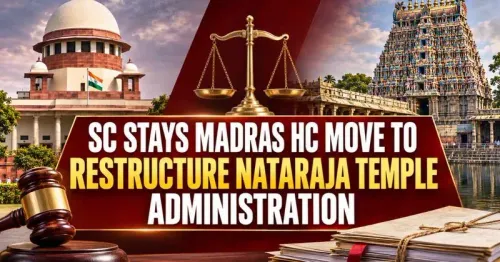
Swamy flags SC stay on Madras HC Nataraja temple order
Synopsis
The Supreme Court has stayed a Madras High Court order on the Nataraja temple in Chidambaram, halting a potential state takeover and reigniting a decades-long constitutional battle between Tamil Nadu's HR&CE Department and the hereditary Dikshitar priestly community.
Key Takeaways
The Supreme Court of India has stayed a Madras High Court order relating to the takeover of the Nataraja temple in Chidambaram, Tamil Nadu .
The temple has been administered by the hereditary Podu Dikshitar community for centuries under claimed constitutional protections.
The Tamil Nadu HR&CE Act of 1959 grants the state powers to regulate and take over Hindu temples, and is at the core of the dispute.
The Supreme Court stay restores the status quo and signals prima facie merit in the challenge against the High Court's direction.
The case raises broader constitutional questions about equal treatment of religious institutions and the limits of state intervention under Articles 25 and 26 .
Veteran politician Dr.
Subramanian Swamy highlighted the Supreme Court's stay on 5 November 2026 , underscoring the political salience of the case.
A thousand-year-old temple at the centre of one of India's most contentious religious-autonomy battles has just received a reprieve from the nation's highest court. Veteran politician Dr. Subramanian Swamy flagged on 5 November 2026 that the Supreme Court of India has stayed a Madras High Court order relating to the potential state takeover of the iconic Nataraja temple in Chidambaram, Tamil Nadu.
The temple at the heart of the fight
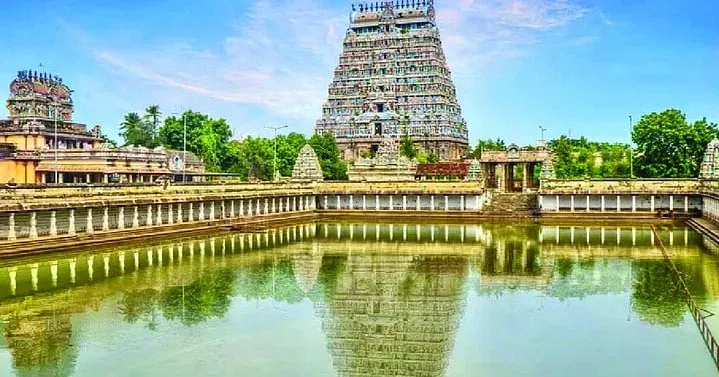
The Chidambaram Nataraja temple is not merely an ancient structure — it is one of Hinduism's 'Pancha Bhuta Stalas,' the five cosmic elemental shrines, and arguably the most theologically significant Shaivite temple in the Tamil tradition. For centuries, its rituals and management have been the exclusive preserve of the Podu Dikshitar community, a tightly knit hereditary priestly lineage that regards custodianship of the shrine as both a religious duty and a constitutional right.
That arrangement has been under sustained legal pressure. The Tamil Nadu Hindu Religious and Charitable Endowments (HR&CE) Department, empowered by the Tamil Nadu HR&CE Act of 1959, has periodically sought regulatory or administrative control over the temple — a move the Dikshitars have resisted in court for decades, arguing that state interference violates their rights under Articles 25 and 26 of the Constitution, which protect religious freedom and the right of denominations to manage their own affairs.
Why the Supreme Court stay changes the equation
The Supreme Court's decision to stay the Madras High Court order halts any immediate state action in its tracks. In Indian constitutional practice, a stay of this nature signals that the apex court found prima facie merit in the challenge — enough to pause the lower court's direction pending a fuller hearing. It does not resolve the dispute, but it restores the status quo for now.
The Chidambaram temple has seen multiple rounds of such litigation. Each cycle follows a recognisable arc: the state invokes HR&CE powers, the Dikshitars challenge in court, and the judiciary is left to arbitrate between the state's regulatory reach and a religious community's claim to customary autonomy. The Supreme Court now becomes the arena where that balance will be reset — again.
A pattern bigger than one temple
What makes this case constitutionally resonant is that it sits squarely within a wider national debate. Critics of HR&CE-style legislation argue that temple endowment laws apply almost exclusively to Hindu institutions — churches and mosques in Tamil Nadu are not subject to equivalent state oversight — raising questions of equal treatment under the Constitution. Defenders of state regulation counter that centuries of mismanagement and financial opacity in temple trusts justify oversight, and that HR&CE intervention protects devotees' interests.
Dr. Swamy, a long-time advocate for Hindu temple autonomy from state control, has consistently argued that hereditary priestly communities and temple trusts should retain independent management rights. His flagging of the Supreme Court stay underlines the political salience the Chidambaram case carries beyond Tamil Nadu's borders.
The final word now belongs to the Supreme Court. When it takes up the full hearing, it will not just decide the fate of one ancient shrine — it will draw a line, however provisional, on how far the state can reach into the sanctum of religious administration in India.
Point of View
Rather than settling the debate, tends to push it to a higher arena. For the Dikshitars, the stay is validation; for state governments that rely on HR&CE powers to audit and reform temple finances, it is a reminder that hereditary and denominational claims carry serious constitutional weight. The final adjudication could set a precedent that reshapes temple administration across southern India.
NationPress
5 Nov 2026
Frequently Asked Questions
What is the Nataraja temple takeover case about?
The case concerns whether the Tamil Nadu government, through its HR&CE Department, can take administrative control of the ancient Nataraja temple in Chidambaram, which has traditionally been managed by the hereditary Dikshitar priestly community. The Dikshitars argue that state takeover violates their constitutional rights to religious autonomy under Articles 25 and 26.
Why did the Supreme Court stay the Madras High Court order on the Nataraja temple?
The Supreme Court issued a stay, which typically means the court found prima facie grounds to pause the lower court's direction pending a fuller hearing. The stay halts any immediate state action and restores the status quo while the apex court examines the case.
Who are the Dikshitar priests of the Chidambaram temple?
The Podu Dikshitars are a hereditary community of priests who have administered the Chidambaram Nataraja temple for centuries. They claim exclusive custodianship of the temple's rituals and management as both a religious duty and a right protected under the Indian Constitution.
What is the Tamil Nadu HR&CE Act and how does it apply to temples?
The Tamil Nadu Hindu Religious and Charitable Endowments Act, 1959, empowers the state government to regulate, supervise, and in some cases take over the administration of Hindu religious institutions and their endowments. Critics argue it applies disproportionately to Hindu temples, unlike churches or mosques.
What happens next in the Nataraja temple Supreme Court case?
With the stay in place, the Supreme Court is expected to schedule full hearings on the dispute. Its final ruling could have significant implications for temple administration across Tamil Nadu and potentially other southern states that have similar HR&CE legislation.