Supreme Court stray dog order: Mixed reactions from activists, lawyers, residents

Synopsis
The Supreme Court has refused to soften its stray dog management directions and gone further — ordering ABC centres in every district, permitting euthanasia of aggressive dogs, and threatening contempt action against non-compliant officials. The ruling exposes a fault line between animal welfare advocates and public safety concerns that no single court order can fully resolve.
Key Takeaways
The Supreme Court on 19 May refused to recall its earlier stray dog management directions and issued fresh orders for stricter ABC framework implementation nationwide.
A bench of Justice Vikram Nath , Justice Sandeep Mehta , and Justice N.V.
Anjaria dismissed modification applications filed by animal rights groups.
All states and UTs must establish at least one fully functional ABC centre per district , with surgical facilities and trained personnel.
Authorities are permitted to use euthanasia for rabid, incurably ill, or demonstrably aggressive dogs.
Officials failing to comply face contempt of court and disciplinary action.
Reactions were divided: activist Gauri Maulekhi called it balanced; advocate Nanita Sharma criticised it for not adequately protecting animals.
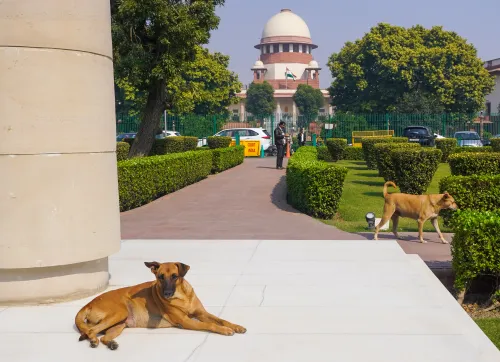
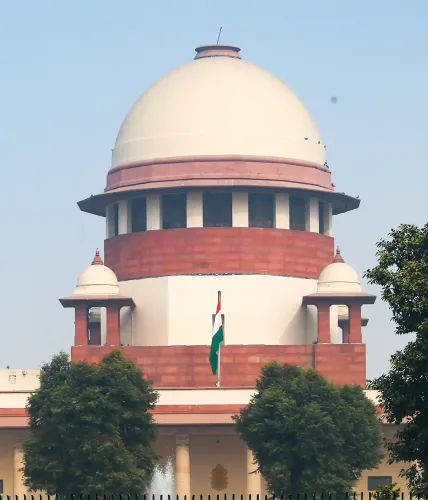
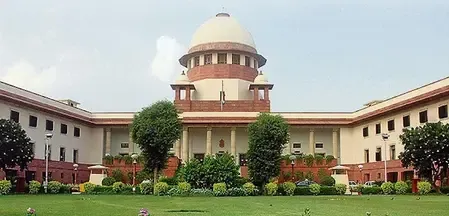
The Supreme Court of India's decision on 19 May to refuse the recall of its earlier stray dog management directions — while simultaneously issuing fresh orders for stricter implementation of the Animal Birth Control (ABC) framework nationwide — has triggered sharply divided responses from animal rights activists, dog lovers, legal advocates, and ordinary residents. The ruling, delivered by a bench led by Justice Vikram Nath, reaffirmed that the right to life with dignity encompasses the right to live without fear of dog attacks in public spaces.
What the Court Directed
A bench comprising Justice Vikram Nath, Justice Sandeep Mehta, and Justice N.V. Anjaria dismissed a batch of applications filed by dog lovers and animal rights groups seeking modifications to directions issued by the apex court in November last year. The earlier directions had mandated that stray dogs picked up from sensitive public locations — including schools, hospitals, bus stands, and railway stations — must not be released back at the same sites after sterilisation and vaccination.
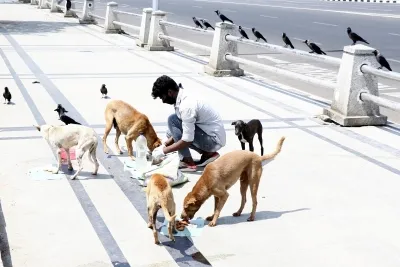
In its fresh directions, the court ordered all states and Union Territories to take time-bound steps to strengthen infrastructure under the ABC Rules. At minimum, one fully functional ABC centre must be established in every district, equipped with surgical facilities, trained personnel, and adequate logistics support. Authorities were further directed to expand such centres based on population density and to undertake capacity-building measures including staff training, shelter strengthening, and coordinated vaccination drives.
The bench also ordered that anti-rabies vaccines and immunoglobulin must be adequately stocked in all government medical facilities. Authorities were permitted to resort to legally permissible measures — including euthanasia — in cases involving rabid, incurably ill, or demonstrably aggressive dogs. Officials who fail to comply were warned of liability for contempt of court and disciplinary action.
Voices in Support
Animal rights activist Gauri Maulekhi described the order as largely balanced. 'I think that earlier the court had said to remove dogs from different places, but now, while keeping the situation under control, these decisions have largely been left to the states, so they can act as they find appropriate. The Supreme Court has also allowed the establishment of Animal Birth Control centres in every state. I would say it is a fairly balanced order. Now, it is necessary to have a large ABC centre in every area,' she said.
Former Union Minister Vijay Goel welcomed the directions, noting that his organisation Lok Abhiyan had been raising concerns about stray dog attacks and public inconvenience for several years. 'I welcome the Supreme Court's order on the issue of stray dogs. Our organisation, Lok Abhiyan, has been working for several years on the problems faced by people due to stray dogs, and we have continuously raised this issue,' he said.
A resident of Greater Noida also reacted positively: 'It is a good judgment. There are many incidents of quarrels due to stray dogs. So, it is necessary to establish ABC centres.'
Criticism from Animal Welfare Advocates
Advocate Nanita Sharma was sharply critical, arguing the ruling failed to adequately address cruelty against animals. 'The judgment has not come out in a very balanced way. They have spoken a lot about humans, but they have not said much about animals. There is a lot of cruelty happening against animals as well... The court has also allowed euthanasia. So, I think the order of November 8 has once again been repeated,' she said.
Advocate Vivek Sharma, however, took a more positive view, calling it 'a very good step by the judiciary' and noting that 'the judgment has mainly been divided into three parts.'
Broader Context and What It Means
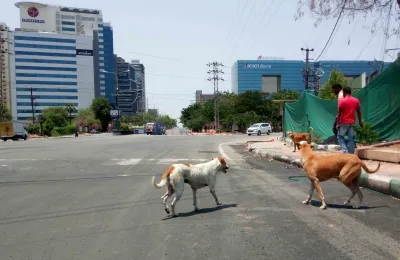
The court noted that the stray dog menace has assumed 'staggering dimensions' across India, reflecting serious deficiencies in the implementation of existing rules. This is not the first time the apex court has intervened on this issue — the November directions themselves came after a series of reported attacks, and the current order signals the court's frustration with patchy enforcement at the state level.
Notably, the ruling places the primary burden of implementation squarely on state governments and UTs, with the threat of contempt proceedings serving as an enforcement lever. With district-level ABC centres now mandated and euthanasia of aggressive dogs explicitly permitted, the order attempts to balance animal welfare with public safety — a tension that the mixed reactions on Tuesday illustrate plainly.
How swiftly states respond to the court's time-bound directions will determine whether this landmark ruling translates into measurable change on the ground.
Point of View
And both times the subtext is the same: states have simply not done the work. Mandating ABC centres in every district is the right structural move, but the court has no direct implementation machinery; contempt threats are blunt instruments when the failure is administrative capacity, not wilful defiance. The permission for euthanasia of aggressive dogs will draw sustained legal challenge from animal welfare groups, and the absence of a clear definition of 'demonstrably aggressive' is a litigation waiting to happen. The deeper tension — between India's Prevention of Cruelty to Animals Act and the public safety imperative — remains unresolved by this order, and will return to court.
NationPress
8 Oct 2026
Frequently Asked Questions
What did the Supreme Court order on stray dogs on 19 May 2025?
The Supreme Court refused to recall its earlier stray dog management directions and issued fresh orders mandating at least one fully functional ABC centre in every district across all states and Union Territories. The bench also permitted euthanasia of rabid, incurably ill, or demonstrably aggressive dogs and warned non-compliant officials of contempt action.
What is the Animal Birth Control (ABC) framework?
The ABC framework is a statutory scheme under which stray dogs are sterilised and vaccinated to control their population, rather than being culled. The Supreme Court's latest directions require states to strengthen ABC infrastructure, including surgical facilities, trained staff, and coordinated vaccination drives, within a time-bound schedule.
Why did the Supreme Court refuse to modify its earlier November directions?
The court dismissed modification applications filed by animal rights groups, holding that the earlier directions — which barred sterilised dogs from being released back at sensitive locations like schools and hospitals — were necessary given the 'staggering dimensions' of the stray dog menace and persistent failures in implementation.
Who criticised the Supreme Court's stray dog ruling and why?
Advocate Nanita Sharma criticised the ruling, arguing it focused heavily on human concerns while inadequately addressing cruelty against animals. She also objected to the court's permission for euthanasia, saying the November order had effectively been repeated without meaningful new protections for animals.
Who welcomed the Supreme Court's stray dog order?
Animal rights activist Gauri Maulekhi called it a fairly balanced order, noting that states had been given flexibility to act according to local needs. Former Union Minister Vijay Goel also welcomed it, citing his organisation Lok Abhiyan's long-standing campaign against stray dog attacks. Residents of Greater Noida expressed support for the ABC centre mandate.