Odisha CM Majhi opens maritime security meet, calls seas gateways to growth
Synopsis
For the first time in its 14-year history, India's top multi-agency maritime security policy meeting moved out of New Delhi — landing in Bhubaneswar, where Odisha CM Mohan Charan Majhi framed the Bay of Bengal not as a border but as a launchpad, pointing to a deep-sea port in Ganjam and a shipbuilding cluster near Paradip as proof that coastal states are now central to India's maritime ambitions.
Key Takeaways
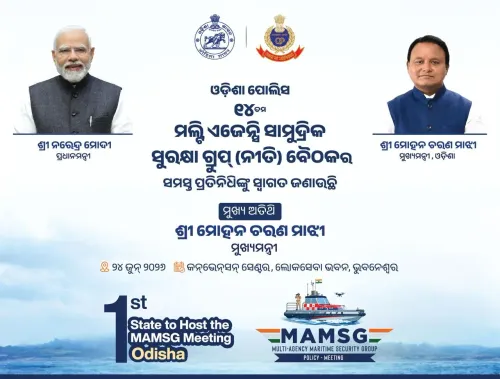
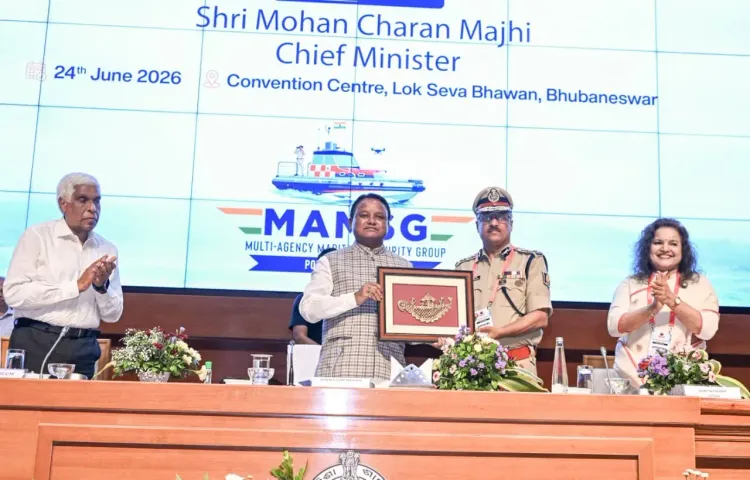
Odisha CM Mohan Charan Majhi inaugurated the 14th Multi-Agency Maritime Security Group (Policy) Meeting in Bhubaneswar on 24 June .
The meeting is being held outside New Delhi for the first time in its history.
Odisha has a coastline of nearly 575 km along the Bay of Bengal .
A deep-sea port in Ganjam and a shipbuilding cluster near Paradip are under development.
Former Vice Admiral Biswajit Dasgupta , National Maritime Security Coordinator, called for a multi-model strategic framework for maritime security.
Odisha backs Union initiatives including SAGAR , Act East Policy , BIMSTEC , and Coastal Security Scheme Phase-III .
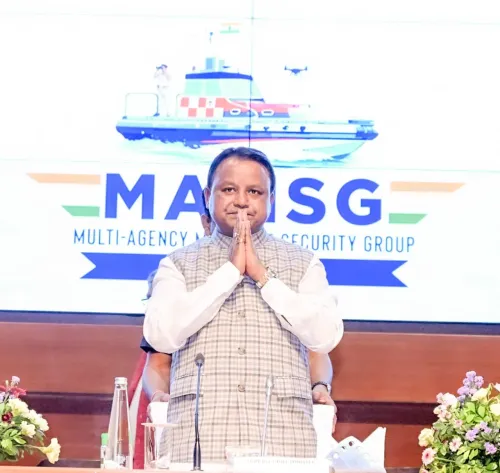
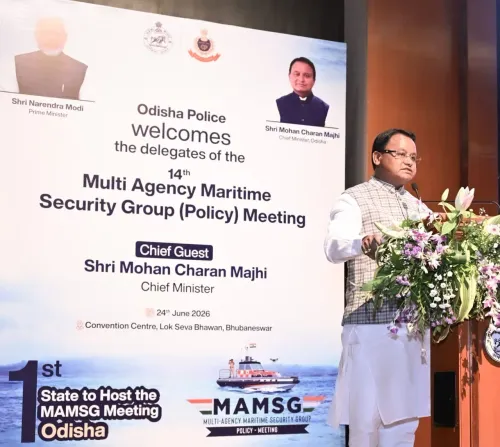
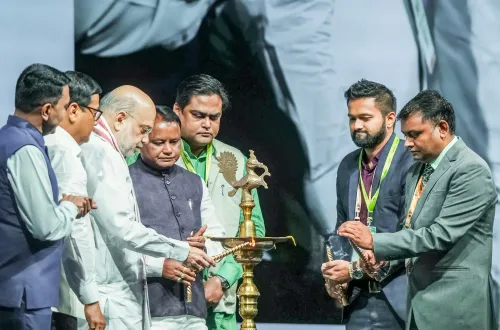
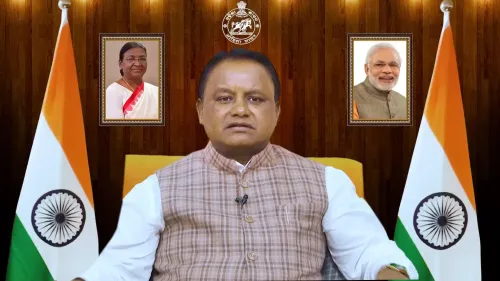
Odisha Chief Minister Mohan Charan Majhi on Wednesday, 24 June inaugurated the 14th Multi-Agency Maritime Security Group (Policy) Meeting at Lok Seva Bhavan in Bhubaneswar, describing the seas as gateways to economic prosperity and international cooperation rather than mere geographical boundaries. The meeting is being held outside New Delhi for the first time in its history.
Key Remarks by the Chief Minister
Addressing the high-level gathering, Chief Minister Majhi declared that the 21st century is the Indo-Pacific century and that India is steadily emerging as a major maritime power on the global stage. He framed the choice of Odisha as the host venue as a reflection of Prime Minister Narendra Modi's commitment to Cooperative Federalism.
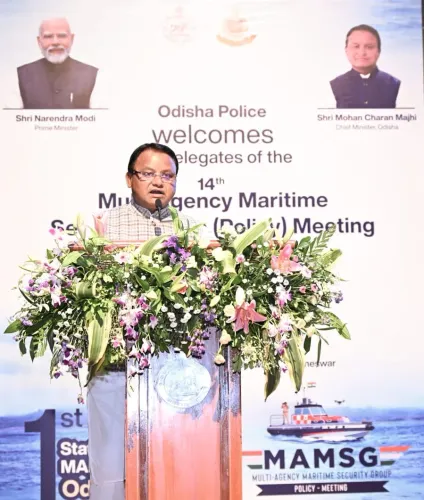
'Our oceans, ports, fisheries resources, and the Blue Economy are the most valuable national assets. The protection of these assets is essential not only for national security but also for economic development and the welfare of millions of coastal residents whose livelihoods depend on the sea,' Majhi said.
He also broadened the definition of maritime security, noting that it now encompasses cybersecurity, protection of critical infrastructure, disaster management, maritime domain awareness, and environmental conservation — well beyond traditional law-and-order concerns.
Odisha's Maritime Heritage and Strategic Ambitions
Majhi highlighted that Odisha holds a coastline of nearly 575 kilometres along the Bay of Bengal. He drew on the state's ancient seafaring legacy — the Sadhabas of Kalinga, who forged trade and cultural ties with Southeast Asian nations through maritime routes — a heritage still celebrated through the annual Bali Jatra festival.
On the infrastructure front, a deep-sea port is being developed in Ganjam, while a shipbuilding cluster is being established near Paradip, both aimed at reinforcing Odisha's strategic maritime position within India's broader development story.
Policy Frameworks and Technology
The Chief Minister reaffirmed Odisha's support for several Union government initiatives, including SAGAR (Security and Growth for All in the Region), the Act East Policy, BIMSTEC, and the Coastal Security Scheme Phase-III. He also underscored the growing role of Artificial Intelligence (AI), unmanned systems, and advanced monitoring networks in maritime security operations.
Among specific measures cited were the installation of NABHMITRA transponders on fishing boats and the rollout of the Coastal Vibrant Village Programme. Majhi also commended the contributions of the Indian Navy, Indian Coast Guard, Odisha Police, and other agencies in securing the country's maritime borders.
National Maritime Security Coordinator's Address
National Maritime Security Coordinator (NMSC) and former Vice Admiral Biswajit Dasgupta told the meeting that no single model can adequately address maritime security challenges. He argued that a multi-model strategic framework is essential, and noted that the National Maritime Security Office (NMSO) in New Delhi is actively driving awareness initiatives and providing guidance to all coastal states.
The meeting's shift to Bhubaneswar signals a broader push to decentralise national security deliberations and draw coastal states more deeply into the policy process — a trend likely to shape India's maritime governance architecture in the years ahead.
Point of View
A deep-sea port in Ganjam and a shipbuilding cluster near Paradip, suggest the state is positioning itself as an operational maritime hub, not merely a policy participant. Yet the gap between announcements and execution in coastal infrastructure has historically been wide. The real measure of this meeting's significance will be whether it accelerates project timelines or remains a symbolic first.
NationPress
24 Jun 2026
Frequently Asked Questions
What is the Multi-Agency Maritime Security Group (Policy) Meeting?
It is a high-level national forum that brings together multiple government agencies to coordinate maritime security policy across India's coastal states. The 14th edition, held on 24 June in Bhubaneswar, is the first time the meeting has taken place outside New Delhi.
Why was the meeting held in Bhubaneswar this time?
Odisha CM Mohan Charan Majhi said the choice reflects Prime Minister Narendra Modi's approach to Cooperative Federalism, drawing coastal states into national security deliberations. Odisha's strategic coastline of nearly 575 km along the Bay of Bengal made it a fitting host.
What maritime infrastructure is being developed in Odisha?
A deep-sea port is being developed in Ganjam and a shipbuilding cluster is being established near Paradip, both aimed at strengthening Odisha's role in India's maritime economy and security framework.
What is the NABHMITRA transponder system mentioned at the meeting?
NABHMITRA transponders are communication and safety devices installed on fishing boats to enhance maritime domain awareness and the safety of fishermen at sea. CM Majhi cited their installation as one of Odisha's concrete steps toward stronger coastal security.
Who is the National Maritime Security Coordinator who addressed the meeting?
Former Vice Admiral Biswajit Dasgupta, serving as National Maritime Security Coordinator (NMSC), addressed the meeting. He said maritime security cannot rely on a single model and that a multi-model strategic framework guided by the National Maritime Security Office (NMSO) is essential.