Pashupati seal row: Hindu seers reject US historian's 'Eurasian deity' claim
Synopsis
A 4,300-year-old seal from Mohenjo-daro has ignited a modern culture war. After India's Ministry of Culture claimed the Pashupati seal depicts Shiva, US historian Audrey Truschke pushed back on X — and Hindu seers in Ayodhya responded with calls for an apology, framing the dispute as a direct assault on India's civilisational identity.
Key Takeaways
India's Ministry of Culture described the Harappan Pashupati seal as depicting Shiva-Pashupati in a 27 May 2025 post on X.
US-based historian Audrey Truschke countered that the figure likely derives from proto-Elamite iconography, representing an Eurasian 'lord of animals' .
Hindu seers in Ayodhya , including Mahant Sitaram Das Maharaj and Mahant Deveshacharya Ji Maharaj , condemned Truschke's claim as an attempt to tarnish India's Sanatan heritage.
Seers demanded Truschke apologise and remove her post from X .
The Pashupati seal , discovered at Mohenjo-daro , is approximately 4,300 years old ; its Shiva identification has been debated in academic circles since the mid-20th century.
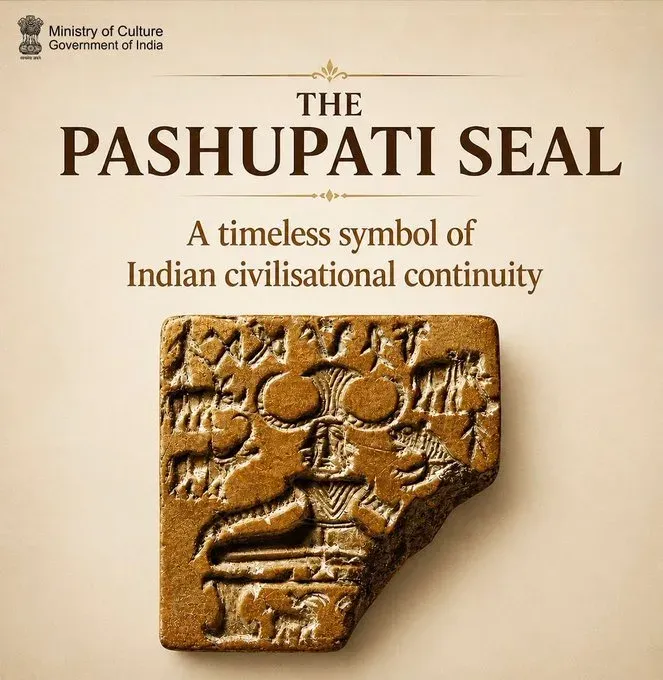
A sharp cultural controversy broke out after Audrey Truschke, a US-based historian, challenged a post by India's Ministry of Culture that described a 4,300-year-old Harappan Pashupati seal as depicting 'Shiva-Pashupati'. Truschke countered on X on 27 May 2025 that the figure more likely derives from proto-Elamite iconography, representing an Eurasian deity described as 'lord of animals' — a claim that drew swift and fierce condemnation from Hindu religious leaders in Ayodhya.
What the Ministry of Culture Said
In its 27 May post on X, the Ministry of Culture described the steatite seal — discovered at Mohenjo-daro in undivided India — as showing a seated figure in yogic posture, specifically Mulabandhasana, surrounded by animals. The ministry stated: 'While ancient sites may lie across modern borders, India remains the living custodian of this heritage. The yogic posture, Shaivite symbolism, and spiritual ethos seen in the Pashupati Seal continue to thrive in India's temples, daily worship of Shiva, yogic traditions, and cultural life even today.' It further asserted that 'from the Vedic period to contemporary Bharat, this civilisational thread has remained alive and unbroken.'
Truschke's Counterpoint
Responding directly to the ministry's characterisation, Audrey Truschke wrote on X: 'This isn't Shiva. It's more likely adapted from proto-Elamite iconography, showing an Eurasian deity 'lord of animals'.' She added: 'Indian history is amazing, wonderful, and fantastic — It's well worth getting it right.' Truschke's position reflects a broader academic debate among archaeologists and historians, many of whom note that the Shiva identification of the Pashupati seal — while widely accepted in Indian cultural and religious discourse — remains contested in peer-reviewed scholarship.
Seers in Ayodhya Respond
Mahant Sitaram Das Maharaj of Ayodhya's Saket Bhavan temple condemned Truschke's remarks, saying: 'If international agencies will try to harm the history of India, it will not be tolerated at any cost.' He asserted that the seal 'undoubtedly represents Shiva-Pashupati' and is a symbol of India's Sanatan tradition, adding that Truschke 'does not have any knowledge about the history of India's Sanatan tradition.'
Mahant Deveshacharya Ji Maharaj called the historian's claim 'absolutely not acceptable' and urged that 'no country can run a propaganda to insult another nation.' He also called on Truschke to apologise and remove her post from X. Arya Sant Varun Das Ji Maharaj described the claim as 'completely misleading and negative,' alleging it was intended to sow confusion.
Context and What It Means
The Pashupati seal, unearthed at Mohenjo-daro — now in Pakistan — in the 1920s, has long been a focal point in debates over the continuity of Indic civilisation. The seal is housed in the National Museum of Pakistan in Karachi, yet its cultural significance is fiercely claimed by India as part of the shared Indus Valley heritage. Notably, this is not the first time the seal's religious identity has sparked controversy; academic literature has debated the Shiva attribution since at least the mid-20th century. The row arrives at a politically charged moment, with questions of civilisational ownership and cultural heritage increasingly entering mainstream public discourse in India.
The seers remain confident the historical record will ultimately affirm the seal's Shaivite identity, even as the academic debate shows no signs of resolution.
Frequently Asked Questions
What is the Pashupati seal controversy about?
The controversy centres on whether a 4,300-year-old Harappan steatite seal from Mohenjo-daro depicts the Hindu deity Shiva-Pashupati, as claimed by India's Ministry of Culture, or an Eurasian 'lord of animals' figure rooted in proto-Elamite iconography, as argued by US historian Audrey Truschke. The dispute went public after Truschke challenged the ministry's post on X on 27 May 2025.
What did Audrey Truschke say about the Pashupati seal?
Truschke posted on X that the figure on the seal 'isn't Shiva' and is 'more likely adapted from proto-Elamite iconography, showing an Eurasian deity lord of animals.' She added that Indian history is 'amazing, wonderful, and fantastic' and worth 'getting right.'
How did Hindu seers in Ayodhya respond?
Hindu seers in Ayodhya condemned Truschke's claim as an attempt to tarnish India's Sanatan culture and history. Mahant Sitaram Das Maharaj said it 'will not be tolerated at any cost,' while Mahant Deveshacharya Ji Maharaj called it 'absolutely not acceptable' and demanded Truschke apologise and delete her post.
Where is the Pashupati seal currently housed?
The Pashupati seal was discovered at Mohenjo-daro, a site now located in present-day Pakistan, and is housed in the National Museum of Pakistan in Karachi. India's Ministry of Culture has asserted that India remains the 'living custodian' of this shared Indus Valley heritage.
Is the Shiva identification of the Pashupati seal accepted by historians?
The identification is widely accepted in Indian cultural and religious discourse but remains debated in academic scholarship. Historians and archaeologists have questioned the Shiva attribution since at least the mid-20th century, with some arguing the iconography predates Vedic traditions and may have parallels in West Asian art.