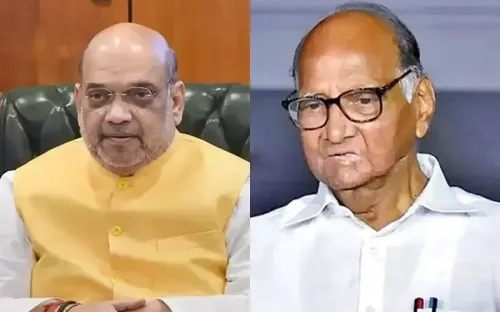
Amit Shah: Double tax on sugar mills ended under our govt
Synopsis
Union Home Minister Amit Shah credited his government with resolving decades of double taxation on cooperative sugar mills, citing Maharashtra Deputy CM Ajit Pawar's acknowledgement of it as the cooperative sector's greatest-ever achievement.
Key Takeaways
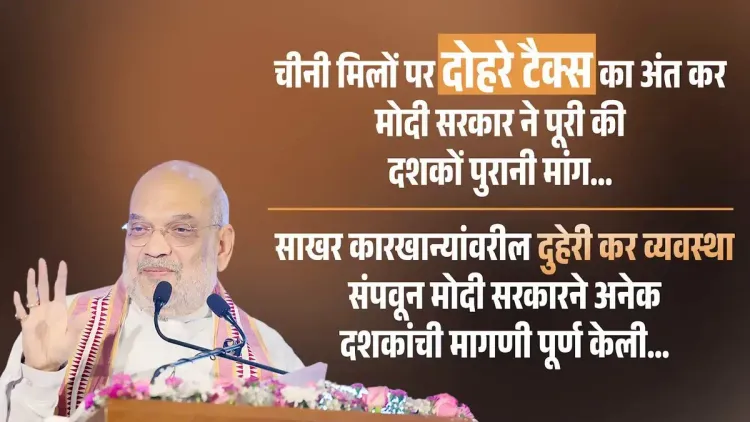
Union Home Minister Amit Shah posted on 16 November 2026 in Hindi and Marathi highlighting the end of double taxation on cooperative sugar mills.
Ajit Pawar and other cooperative leaders had reportedly fought against this double-tax burden for decades.
Pawar is said to have called the resolution the single biggest achievement for the cooperative sector.
The Ministry of Cooperation , created in July 2021 , was established specifically to address structural issues in India's cooperative institutions including sugar societies.
Cooperative sugar mills are central to rural livelihoods and state politics in Maharashtra , directly affecting sugarcane farmers.
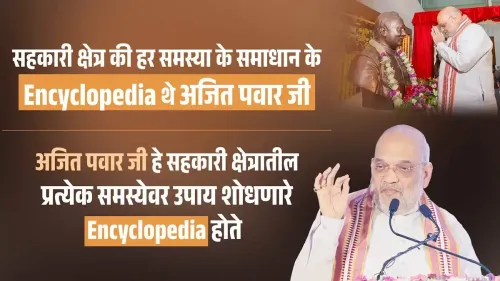
For decades, cooperative sugar mills — the backbone of Maharashtra's rural economy — carried a tax burden that their leaders fought to lift but could never shake. Union Home Minister and Minister of Cooperation Amit Shah, posting on X on Monday, 16 November 2026, stated that Ajit Pawar and other cooperative leaders had struggled for decades against double taxation on sugar mills, and that when his government resolved the issue, Pawar called it the single greatest achievement for the cooperative sector.
Posting in both Hindi and Marathi — a deliberate nod to Maharashtra's cooperative heartland — Shah wrote: 'Ajit Pawar ji aur anya sahkari neta chini milon par lag rahe double tax ke khilaf dashakon se sangharsh kar rahe the, hamari sarkar mein jab iska samadhan hua to unhone ise sahkarita ke liye sabse badi uplabdhi bataya.' ('Ajit Pawar and other cooperative leaders were fighting for decades against the double tax being levied on sugar mills; when our government resolved this, he called it the biggest achievement for the cooperative sector.')A decades-long grievance in Maharashtra's sugar belt
Cooperative sugar mills are not just factories — they are the financial centre of gravity for sugarcane farmers across western Maharashtra, a region that shapes both rural livelihoods and state politics. The double-taxation complaint had been a persistent structural grievance: mills argued they were being taxed at two levels on the same operations, squeezing margins and limiting the surplus that could be passed on to farmer-members.
Ajit Pawar, Maharashtra's Deputy Chief Minister and a figure whose political identity is deeply intertwined with the state's cooperative sugar network, had long championed the cause. That a leader of his stature — and his political lineage — acknowledged the resolution as the sector's biggest win carries significant weight, and Shah has chosen to highlight that endorsement pointedly.
Ministry of Cooperation's role since 2021
The resolution sits within a broader policy push that began when the Ministry of Cooperation was carved out as a standalone ministry in July 2021, with Shah at its helm. The ministry was designed precisely to give focused institutional attention to cooperative bodies — sugar societies, dairy federations, credit societies — that had historically fallen between the cracks of agriculture and finance policy at the Centre.
Since its creation, the ministry has pursued rationalisation of taxes and removal of structural bottlenecks that had accumulated over decades of fragmented state-level governance. The double-tax relief for sugar mills represents one of the more politically resonant outcomes of that mandate, particularly in a state where the cooperative sector is a pillar of the rural economy.
Shah's political framing and what it signals
The post is notably bipartisan in texture — Shah is amplifying praise from Ajit Pawar, a leader from a rival political tradition, to validate a governance outcome. It is a classic 'results speak' frame: rather than making a direct claim, Shah lets a credible sectoral voice make it for him. The choice to post in both Hindi and Marathi suggests the message is calibrated for national policy audiences as well as Maharashtra's sugar-belt voters simultaneously.
With state-level implementation of the tax relief still unfolding — and future budgets and Ministry of Cooperation announcements in the pipeline — the cooperative sugar sector will be watching whether the relief translates into measurable improvements in mill margins and farmer payouts. The political credit, for now, has been claimed clearly.
Point of View
He frames a governance win as cross-party validation — a move that strengthens his Ministry of Cooperation's policy narrative while subtly tying Pawar's credibility to the BJP-led Centre's record. The dual-language post signals that this message is aimed simultaneously at national policy audiences and Maharashtra's sugar-belt electorate. More broadly, the double-tax resolution is part of a larger BJP strategy to position the Ministry of Cooperation — a wholly new institutional creation — as a vehicle for delivering tangible change to rural cooperative economies that state governments had left in structural limbo for decades.
NationPress
16 Nov 2026
Frequently Asked Questions
What was the double tax on cooperative sugar mills in India?
Cooperative sugar mills in Maharashtra had long complained of being taxed at two levels on the same operations, a structural burden that squeezed mill margins and reduced payouts to farmer-members. The Central government announced a resolution to this issue under the Ministry of Cooperation.
What did Ajit Pawar say about the double tax removal on sugar mills?
According to Amit Shah's post, Ajit Pawar called the resolution of the double-tax issue the single biggest achievement for the cooperative sector, acknowledging decades of struggle by cooperative leaders to have it addressed.
What is India's Ministry of Cooperation and when was it created?
The Ministry of Cooperation is a standalone Central ministry created in July 2021 with Amit Shah as its minister. It was set up to give focused attention to cooperative institutions — including sugar societies, dairy federations, and credit societies — and address long-standing structural and fiscal issues.
How do cooperative sugar mills affect Maharashtra's farmers?
Cooperative sugar mills are the financial hub of sugarcane farming communities across western Maharashtra. They process farmers' cane and distribute surplus earnings back to member-farmers, making their financial health directly linked to rural incomes and livelihoods.
Why did Amit Shah post in both Hindi and Marathi?
Shah posted in both Hindi and Marathi to reach national policy audiences as well as Maharashtra's large cooperative and sugar-belt communities simultaneously, reflecting the regional significance of the issue to the state's rural economy and politics.