Amit Shah Lays Foundation of NHEC Cooperative, Launches Bharat Taxi in Pune

Synopsis
Union Home Minister Amit Shah visited Pune on November 15, 2026, to lay the foundation of NHEC's 110-acre cooperative manufacturing facility, launch Bharat Taxi with share certificates for drivers, and inaugurate the Central Registrar's western regional office — advancing the government's cooperative-led Atmanirbhar Bharat push.
Key Takeaways
NHEC Multi-State Cooperative Society will build a 110-acre facility in Pune to manufacture sugar mill machinery, CBG plants, and dairy processing equipment.
Bharat Taxi was formally launched in Pune; drivers received share certificates , making them co-owners of the cooperative taxi service.
The western regional office of the Central Registrar of Cooperative Societies was inaugurated in Pune to decentralise cooperative governance.
All three events align with the Atmanirbhar Bharat framework, using cooperatives to integrate farmers into higher-value manufacturing and services.
The Ministry of Cooperation was established in July 2021 and has since pushed expansion of multi-state cooperatives across agriculture, agro-processing, and mobility sectors.
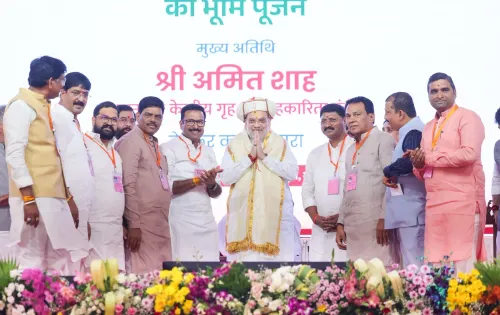
Three groundbreakings in a single afternoon — and each one aimed squarely at the farmer, the driver, and the cooperative sector's climb up the value chain. Union Home Minister and Minister of Cooperation Amit Shah travelled to Pune, Maharashtra on Sunday, November 15, 2026, to lay the foundation stone of the NHEC Multi-State Cooperative Society, launch the Bharat Taxi service in the city, and inaugurate the western regional office of the Central Registrar of Cooperative Societies — three distinct moves that together sketch the government's ambition for the cooperative sector.
A 110-Acre Factory for Sugar, Gas and Dairy
The centrepiece of the day was the bhoomi pujan (groundbreaking) of the NHEC facility — a 110-acre campus that will manufacture sugar mill machinery, Compressed Bio-Gas (CBG) plants, and dairy processing equipment. Shah framed the project explicitly within the Atmanirbhar Bharat framework, arguing that the cooperative sector is now a primary vehicle for making India self-reliant from production through to industry. The logic is direct: if cooperative-owned factories build the machines that process sugarcane and milk, farmers capture a larger share of the final value instead of surrendering it to external suppliers and processors. Shah stated that farmers will now receive 'full benefit of every product derived from sugarcane and milk.'
Bharat Taxi Reaches Pune — Drivers Get Share Certificates
The second event of the afternoon carried a sharper human dimension. Shah formally launched Bharat Taxi in Pune and personally handed share certificates to drivers — called saarathis — marking them as co-owners of the service rather than gig-economy contractors. The cooperative taxi model, already operating across several Indian cities, is designed to give drivers formal recognition, dignity, and financial stakes in the platform they power. For passengers, the pitch is reliability and safety through a regulated cooperative structure rather than an algorithm-driven aggregator. The share-certificate handover was a deliberate piece of symbolism: the driver as shareholder, not merely a service provider.
A New Regional Office to Decentralise Cooperative Governance
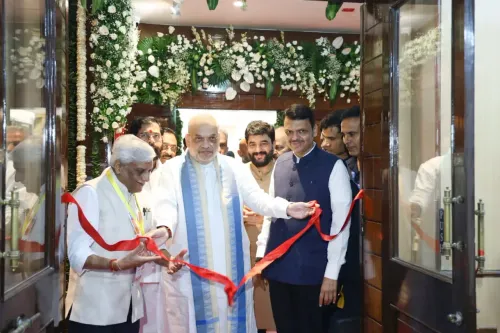
Rounding out the programme, the western regional office of the Central Registrar of Cooperative Societies was inaugurated in Pune. The Central Registrar is the regulatory authority under the Ministry of Cooperation — itself a relatively new institution, created in July 2021 to give the sector focused ministerial attention for the first time in independent India's history. Opening a western regional office decentralises registration and compliance functions, reducing the administrative distance between Maharashtra's dense cooperative ecosystem and the central regulatory authority. It is a structural step, unglamorous but consequential for the thousands of multi-state societies based in western India.
The Bigger Picture: Cooperatives as Industrial Anchors
Sunday's events in Pune are part of a sustained pattern since 2021 — the government systematically using multi-state cooperative structures to extend the Atmanirbhar Bharat programme beyond agriculture into agro-processing, energy, and services. The theory of change is that cooperative ownership at the production level prevents value from draining away to private intermediaries. The NHEC facility, if it reaches operation, would be an unusually upstream test of that theory: a cooperative building the very machines other cooperatives use. How quickly the facility moves from groundbreaking to production, and how many farmers actually enrol, will be the real measure of its impact.
Point of View
Not just the farm output level, which would be a structural leap if realised. Bharat Taxi's share-certificate model is a direct challenge to platform-economy aggregators, and its political optics — the minister handing ownership documents to drivers — are carefully calibrated. The western regional office opening signals the government's intent to build a denser administrative infrastructure for the sector, which will determine whether the policy ambition translates into ground-level uptake.
NationPress
15 Nov 2026
Frequently Asked Questions
What is NHEC and what will it build in Pune?
NHEC is a multi-state cooperative society whose 110-acre facility in Pune will manufacture sugar mill machinery, Compressed Bio-Gas (CBG) plants, and dairy processing equipment, aiming to give farmers full value from sugarcane and milk products.
What is Bharat Taxi and how does it work?
Bharat Taxi is a cooperative taxi service operating across multiple Indian cities. Drivers are co-owners of the service and receive share certificates, distinguishing it from conventional gig-economy aggregator platforms.
Why was the Central Registrar of Cooperative Societies western regional office opened in Pune?
The new Pune office decentralises registration and compliance functions for the dense cooperative ecosystem of western India, reducing administrative distance from the central regulatory authority under the Ministry of Cooperation .
When was the Ministry of Cooperation created and why?
The Ministry of Cooperation was created in July 2021 under Prime Minister Narendra Modi's government to give the cooperative sector dedicated ministerial focus for the first time in independent India's history.
How does the NHEC cooperative facility connect to Atmanirbhar Bharat?
By manufacturing the machinery used in sugar and dairy processing domestically through a cooperative, the NHEC facility supports the Atmanirbhar Bharat goal of reducing dependence on external industrial suppliers while routing profits back to farmer-owners.