Amit Shah highlights 'Shabd Sangrahalaya' tracing language from Omkar to AI
Synopsis
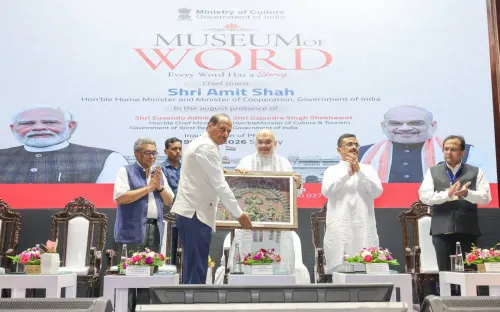
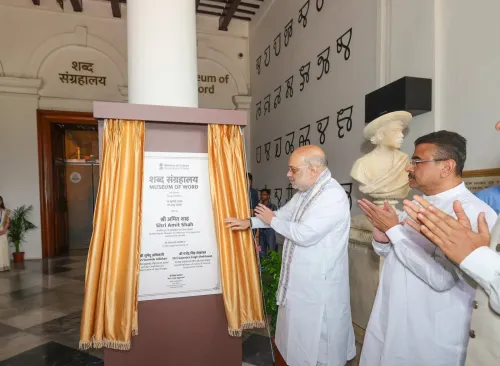
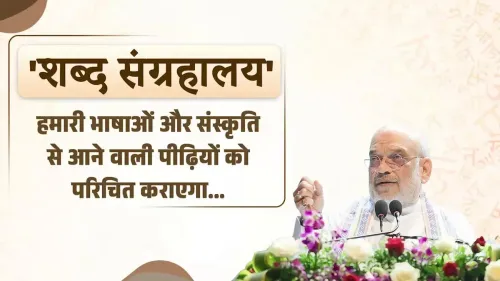
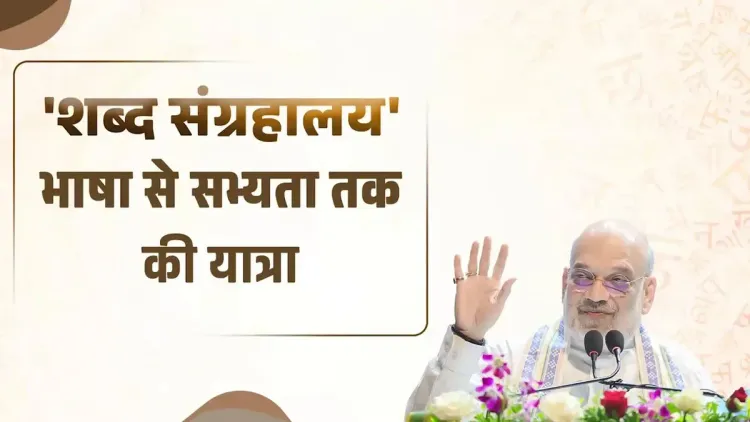
Union Home Minister Amit Shah on 19 July 2026 highlighted the 'Shabd Sangrahalaya', a Word Museum tracing India's linguistic evolution from the primordial Omkar sound through ancient manuscripts and the printing press to artificial intelligence, sharing a video of the institution on X.
Key Takeaways
Amit Shah posted about the Shabd Sangrahalaya (Word Museum) on 19 July 2026 , describing it as a chronicle of India's entire language journey.
The museum's narrative spans Omkar , Vedic grammar, shruti-smriti oral traditions, palm-leaf manuscripts , stone inscriptions, the printing press , and artificial intelligence .
The institution's thematic scope aligns with the National Mission for Manuscripts (launched 2003 ), which digitises ancient Indian textual sources.
The National Education Policy 2020 supports promotion of Indian languages, classical knowledge systems and oral traditions — themes central to the museum.
Key stakeholders include linguists , heritage archivists , and AI researchers working on Indian-language natural language processing.
Possible next steps include digital archive rollouts and AI language tools linked to existing national cultural missions.
Union Home Minister Amit Shah on Sunday, 19 July 2026, shared his impressions of a cultural institution called the 'Shabd Sangrahalaya' (Word Museum), describing it as a comprehensive chronicle of India's linguistic journey — from the primordial sound of Omkar through grammar, oral and textual traditions, palm-leaf manuscripts, stone inscriptions and the printing press, all the way to artificial intelligence.
Context
In his post on X, Shah wrote: 'Yah Shabd Sangrahalaya Omkar se lekar vyakaran, shruti-smriti, tadpatra-shilalekh aur printing press se hote hue AI tak ki samuchi bhasha-yatra ka varnan karta hai' — meaning, 'This Word Museum describes the entire language journey, from Omkar through grammar, shruti-smriti [oral and remembered traditions], palm-leaf manuscripts and stone inscriptions, through the printing press, all the way to AI.' The post was accompanied by a video, offering viewers a visual walkthrough of the institution.
The Shabd Sangrahalaya is presented as a space that maps the evolution of human language and communication across millennia, anchoring India's ancient knowledge systems within a modern, technology-forward narrative.
Policy Backdrop
The museum's thematic sweep aligns with several long-standing national cultural and education initiatives. The National Mission for Manuscripts, launched in 2003, has worked to survey, conserve and digitise palm-leaf manuscripts, stone inscriptions and other ancient textual sources across India — precisely the heritage categories Shah referenced in his post.
The National Education Policy 2020 further entrenched the promotion of Indian languages, mother tongues, classical knowledge systems and oral traditions as policy priorities. The framing of the Shabd Sangrahalaya — connecting pre-modern knowledge systems such as shruti (heaoral) and smriti (remembered/written) traditions with contemporary AI-based natural language processing — reflects this documented policy trajectory.
Stakeholders and Impact
The institution, as described, is relevant to a broad range of communities: linguists and Sanskrit scholars, heritage archivists engaged in manuscript preservation, and AI researchers working on Indian-language natural language processing tools. By situating ancient grammatical traditions alongside modern computational linguistics, the museum offers a narrative bridge that could inform both academic research and technology development.
For the general public, the Shabd Sangrahalaya represents a curated entry point into India's multilayered linguistic heritage — from the Vedic oral canon and tadpatra (palm-leaf) manuscripts to the democratising impact of the printing press and the emerging possibilities of AI-driven language tools.
What's Next
Cultural institutions of this kind often serve as anchors for broader digital archiving initiatives. Rollout of associated digital archives or AI-powered Indian-language tools under existing national missions — such as the National Mission for Manuscripts — is a natural next step to watch. The museum's themes may also find resonance in upcoming parliamentary discussions on culture and education budgets, where the intersection of classical heritage and digital technology has gained increasing attention.
Point of View
The Home Minister lends political weight to the intersection of heritage preservation and AI, a space where cultural policy and technology policy increasingly overlap. This also signals the government's intent to keep Indian-language AI development anchored in a broader civilisational identity, not merely as a technical exercise. The move is likely to resonate with both cultural nationalists and the growing community of researchers working on low-resource Indian-language AI models.
NationPress
18 Oct 2026
Frequently Asked Questions
What is the Shabd Sangrahalaya?
The Shabd Sangrahalaya, or Word Museum, is a cultural institution that traces India's linguistic journey from the primordial sound of Omkar through ancient grammar, oral traditions, palm-leaf manuscripts, stone inscriptions and the printing press, all the way to artificial intelligence.
What did Amit Shah say about the Shabd Sangrahalaya?
On 19 July 2026, Union Home Minister Amit Shah posted on X that the Shabd Sangrahalaya describes the 'entire language journey' of India, from Omkar through shruti-smriti traditions, palm-leaf manuscripts and stone inscriptions, through the printing press, to AI.
What is the National Mission for Manuscripts?
The National Mission for Manuscripts, launched in 2003, is a government initiative to survey, conserve and digitise ancient Indian textual sources including palm-leaf manuscripts and stone inscriptions — the same heritage categories highlighted in the Shabd Sangrahalaya.
How does the National Education Policy 2020 relate to Indian language heritage?
The National Education Policy 2020 includes provisions for the promotion of Indian languages, mother tongues, classical knowledge systems and oral traditions, providing a policy framework that supports institutions like the Shabd Sangrahalaya.
What is the significance of connecting ancient Indian languages with AI?
Linking classical linguistic traditions with artificial intelligence reflects a broader national effort to apply modern natural language processing tools to India's diverse and historically rich language ecosystem, benefiting linguists, archivists and AI researchers alike.