Amit Shah praises Patan Patola's scientific design at NID Gandhinagar inauguration
Synopsis
Amit Shah's address at NID Gandhinagar went beyond a routine inauguration — invoking a 1982 visit to a Patola weaving family in Patan, he made the case that India's traditional crafts already embody world-class design thinking. His call to treat design as an industrial and career imperative, not just an art form, signals a policy framing that could reshape how institutions like NID are funded and directed.
Key Takeaways
Amit Shah inaugurated the Incubation and Innovation Centre at NID Gandhinagar on 17 May 2025 .
Shah recalled a 1982 visit to a Patan Patola weaving family, calling its design 'exquisitely, minutely and scientifically' executed.
He urged that design be recognised not as decoration but as a tool improving functionality, utility and public use .
Shah said design's importance now extends to high-tech sectors including semiconductors and chip manufacturing .
He called on NID to build systems bridging creative talent and commercialisation for better professional outcomes.
The event was attended by CM Bhupendra Patel , Piyush Goyal , and Deputy CM Harsh Sanghavi , among others.
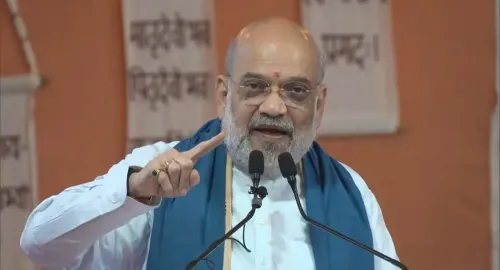
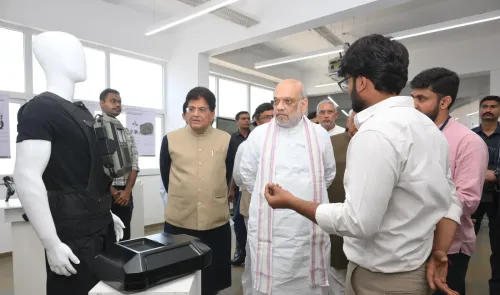
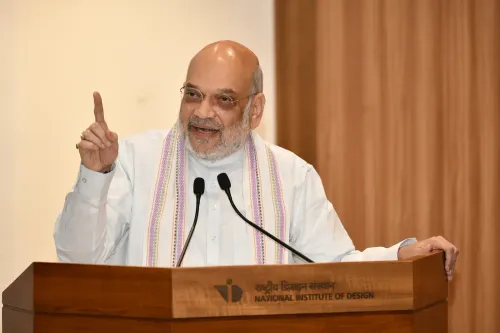
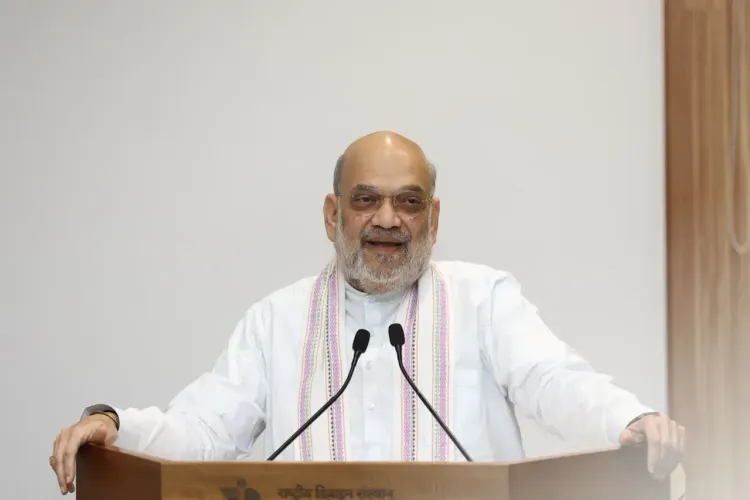
Union Home and Cooperation Minister Amit Shah on Sunday, 17 May praised the intricate craftsmanship and scientific precision behind Patan Patola weaving at the inauguration of the Incubation and Innovation Centre at the National Institute of Design (NID) in Gandhinagar, Gujarat. Recalling a visit he made to Patan district in 1982, Shah said India's traditional design heritage deserved far greater recognition and modern-day expansion.
Shah's 1982 Patan Visit
Addressing students, faculty, and senior officials at the NID event, Amit Shah described how a local worker named K.C. Patel had taken him to the home of a Patola weaving family during his early political years. His curiosity about the craft prompted him to ask detailed questions about its methods and processes.
'Those who have seen Patan Patola would know how exquisitely, minutely and scientifically its design has been done,' Shah said. He added: 'I tell you, perhaps such scientific design with colour combinations may hardly exist anywhere else.'
Design as a Career and National Asset
Shah argued that India already possesses deep-rooted design traditions that remain underutilised and disconnected from modern professional opportunities. He called for creating an environment where more young people could embrace design as a viable career path.
'This discipline exists within us; it has to be explored. Creating an environment where more people could accept design as a career is essential for fully utilising the country's creative potential,' he said.
Notably, he cautioned against reducing design to mere aesthetics. 'Design should not be seen only as aesthetics or decoration but as a field that improves functionality, utility and public use,' Shah said — framing design as an economic and industrial imperative rather than an artistic luxury.
Role of NID and Modern Industry
The Home Minister said design's relevance now extends to high-technology sectors including semiconductors and chip manufacturing, alongside industrial infrastructure. He urged NID to build dedicated systems that bridge the gap between creative talent and commercialisation, ensuring designers receive better professional opportunities and industry recognition.
Shah described NID as an institution that connects creativity, innovation, and entrepreneurship, noting that one of the original objectives behind establishing the institute in Ahmedabad in 1961 was to identify and nurture design abilities present in ordinary people.
Who Attended the Event
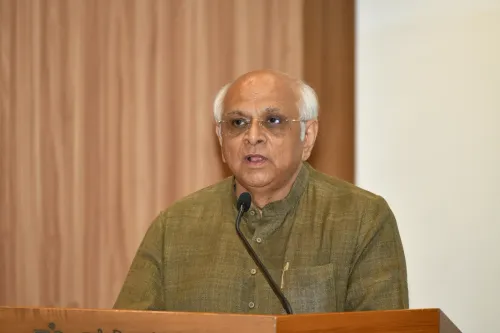
The inauguration was attended by Gujarat Chief Minister Bhupendra Patel, Union Commerce and Industry Minister Piyush Goyal, Deputy Chief Minister Harsh Sanghavi, NID Governing Council Chairman Jayaprakash Shivhare, and NID Director Dr Ashok Mandal, along with students and faculty members.
The event signals a broader policy push to position design institutions as engines of both cultural preservation and industrial innovation — a direction that NID, with its expanded incubation infrastructure, is now expected to accelerate.
Point of View
Making design education palatable to a broader constituency than it has traditionally reached. But the harder question is institutional: NID has existed since 1961, and the gap between India's craft heritage and its design industry remains wide. Inaugurating an incubation centre is a beginning, not a bridge. Whether the Centre follows through with funding, curriculum reform, and industry linkages — or whether this remains a well-photographed ribbon-cutting — will determine if the Patola metaphor translates into policy with teeth.
NationPress
23 Sept 2026
Frequently Asked Questions
What did Amit Shah say about Patan Patola weaving?
Amit Shah said Patan Patola weaving is among the most scientifically designed textile traditions in the world, recalling a 1982 visit to a weaving family in Patan. He described its colour combinations and precision as virtually unmatched globally.
What was inaugurated at NID Gandhinagar?
The Incubation and Innovation Centre at the National Institute of Design (NID) in Gandhinagar, Gujarat was inaugurated on 17 May 2025. The event was attended by senior Union and state government ministers alongside NID leadership, students, and faculty.
Why did Amit Shah stress design as a career?
Shah argued that India possesses deep-rooted design traditions that remain underutilised and disconnected from professional opportunities. He called for creating an environment where more young people embrace design as a career to fully harness the country's creative potential.
Which sectors did Amit Shah link to design?
Shah said design's relevance now spans industrial infrastructure as well as high-technology sectors including semiconductors and chip manufacturing, urging NID to help connect design talent with these emerging industry requirements.
When was NID originally established?
The National Institute of Design was established in Ahmedabad in 1961. Shah noted that one of its founding objectives was to identify and nurture design abilities present in ordinary people across India.