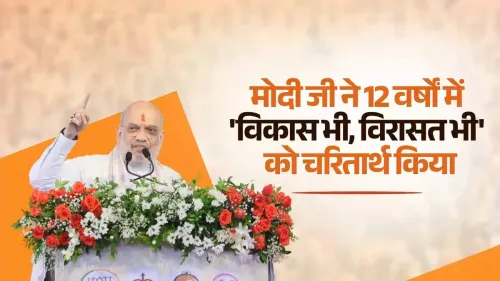
Amit Shah: Modi govt honoured forgotten freedom fighters in 12 years
Synopsis
Union Home Minister Amit Shah has asserted that the Modi government, over twelve years in power, has restored honour to numerous freedom fighters and national heroes who had long been overlooked in India's official historical narrative.
Key Takeaways
Union Home Minister Amit Shah posted on June 11, 2026 , crediting the Modi government's 12 years with honouring forgotten freedom fighters and national heroes.
The post was written in Hindi and broadly frames a pattern of heritage recognition under the current administration.
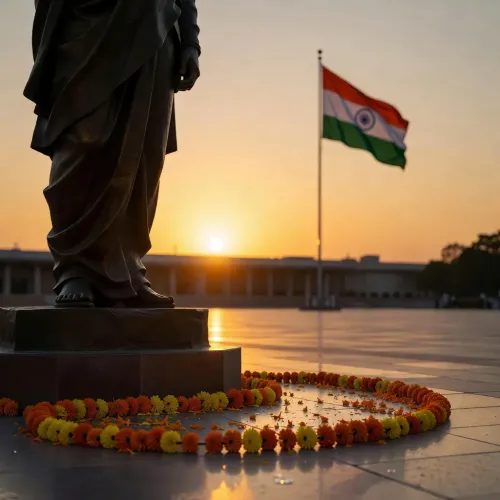
The Statue of Unity for Sardar Vallabhbhai Patel , inaugurated in 2018 , is among the most prominent symbols of this policy.
Parakram Diwas on 23 January was declared in 2021 to annually commemorate Netaji Subhas Chandra Bose .
Freedom-fighter families and heritage researchers are key stakeholders in these recognition efforts.
Further heritage announcements are expected around Independence Day 2026 in August.
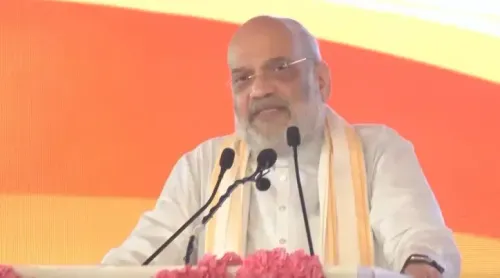
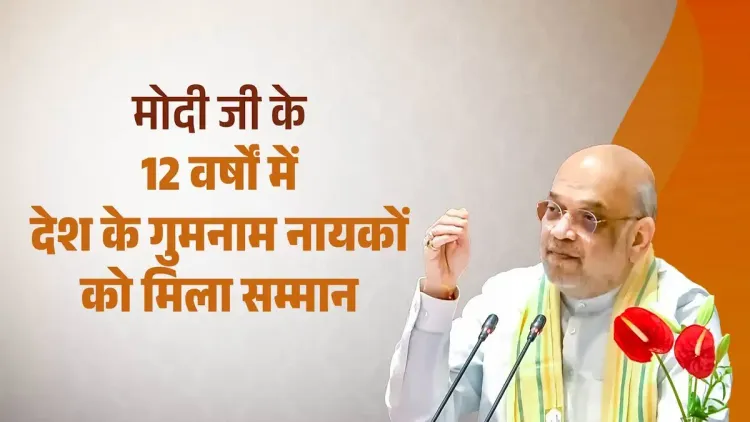
Union Home Minister Amit Shah on Thursday, June 11, 2026, posted on X to assert that under Prime Minister Narendra Modi's twelve years in office, numerous forgotten freedom fighters and national heroes of India have received the recognition they deserved.
Shah's post, written in Hindi, stated: 'Modi ji ke 12 varshon mein desh ke anek bhule-bisre swatantrata senaniyon aur rashtriya nayakon ko samman mila' — 'In Modi ji's 12 years, many of the country's forgotten freedom fighters and national heroes have received honour.'
Context
The post arrives as the Modi government completes its twelfth year in power, a milestone the ruling Bharatiya Janata Party (BJP) has been marking with a series of communications highlighting its governance record. Shah, one of the BJP's most prominent leaders and a former national president of the party, has been a consistent voice in framing the government's cultural and heritage agenda.
The assertion centres on a pattern of official recognition extended to independence-era figures who, according to the government, were insufficiently acknowledged in earlier decades of post-independence India.
Policy Backdrop
The central government's effort to expand the pantheon of officially recognised freedom fighters has taken several concrete forms since 2014. The Statue of Unity, dedicated to Sardar Vallabhbhai Patel and inaugurated in Gujarat in 2018, stands as the world's tallest statue and was positioned as a correction of what the government described as decades of neglect of Patel's legacy.
In 2021, the government declared 23 January as Parakram Diwas to honour Netaji Subhas Chandra Bose, institutionalising annual commemoration of a figure long considered under-recognised in official national memory. These steps form part of a broader programme that has included renaming exercises, new memorials, and the establishment of commemorative days across BJP-governed states and at the Union level.
Heritage researchers and historians have noted that the exercise of reclaiming or elevating certain historical figures is a recurring feature of governments seeking to reshape national identity narratives, and the current administration has pursued this with particular consistency and scale.
Stakeholders and Impact
The primary beneficiaries of such recognition policies are families of freedom fighters, many of whom have long petitioned successive governments for formal acknowledgement of their ancestors' contributions. Heritage researchers, archivists, and institutions dedicated to independence-era history also gain visibility and, in some cases, funding when the state elevates particular figures.
Critics from opposition parties have at times argued that the government's choices of which figures to honour reflect political priorities rather than a comprehensive historical reckoning. The government has countered that it is filling genuine gaps left by previous administrations.
What's Next
With Independence Day 2026 approaching in August, further announcements — including new memorials, commemorative schemes, or the elevation of additional historical figures — are plausible. The government has historically used national observances as occasions to unveil heritage-related initiatives. Observers will watch for whether specific names or programmes are attached to the broad commitment Shah has reiterated in this post.
Point of View
Reinforcing the party's identity as a restorer of 'neglected' national heroes. The framing draws a sharp implicit contrast with the Congress-led governments of earlier decades, a narrative the BJP has consistently deployed to distinguish its cultural agenda. By speaking in broad terms rather than naming specific figures, Shah keeps the message aspirational and inclusive, allowing supporters to project their own regional or ideological heroes onto it. The post fits a well-established pattern in which heritage and history are mobilised as soft-power instruments ahead of major national observances.
NationPress
26 Oct 2026
Frequently Asked Questions
Which freedom fighters has the Modi government honoured in 12 years?
The government has recognised several figures, including dedicating the Statue of Unity to Sardar Vallabhbhai Patel in 2018 and declaring 23 January as Parakram Diwas for Netaji Subhas Chandra Bose in 2021, among other memorials and commemorative days. Amit Shah's post does not name specific individuals beyond this broader claim.
What is Parakram Diwas and why was it declared?
Parakram Diwas is observed on 23 January each year to honour the birth anniversary of Netaji Subhas Chandra Bose. The central government declared it in 2021 to give formal annual recognition to a leader the BJP has described as historically under-acknowledged.
What did Amit Shah say about Modi's 12 years in office?
Amit Shah posted on X on June 11, 2026, saying that in Modi's 12 years, many of the country's forgotten freedom fighters and national heroes have received the honour they deserved.
What is the Statue of Unity and where is it located?
The Statue of Unity is a memorial to Sardar Vallabhbhai Patel located in Gujarat. Inaugurated in 2018, it is the world's tallest statue and was presented by the government as recognition of Patel's contributions to India's unification.
Why does the BJP focus on honouring freedom fighters?
The BJP has made cultural heritage and the elevation of independence-era figures a consistent part of its governance narrative since 2014, arguing that certain leaders were neglected by previous administrations and that restoring their memory strengthens national identity and integration.