Amit Shah orders central agencies to expand presence in Siliguri Corridor
Synopsis
Home Minister Amit Shah has put the Siliguri Corridor — India's most strategically fragile land link — on high alert, ordering central agencies and CAPF wings to expand their presence, adopt a quadrangular border security approach, and clear all encroachments. The directives, backed by a formal PIB statement, signal the Centre's sharpening focus on the 22-kilometre 'Chicken Neck' that connects eight northeastern states to mainland India.
Key Takeaways
Home Minister Amit Shah directed all central agencies and CAPF wings to increase their footprint in the Siliguri Corridor ('Chicken Neck') in Darjeeling district, West Bengal .
Shah stressed a quadrangular approach to border security and ordered its full implementation by all agencies.
The Corridor must be kept free of encroachments ; steps to stop illegal immigration were also directed.
Issues of PIO activities , demographic changes, and border affairs were discussed during the review.
West Bengal CM Suvendu Adhikari was urged to open more Sainik schools , raise NCC cadet numbers, and strengthen Civil Defence and Home Guards in the corridor.
All pending infrastructural projects in the corridor were directed to be completed in a time-bound manner .
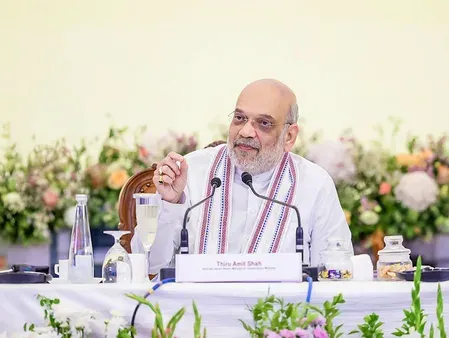
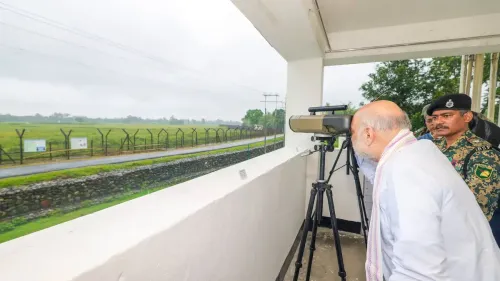
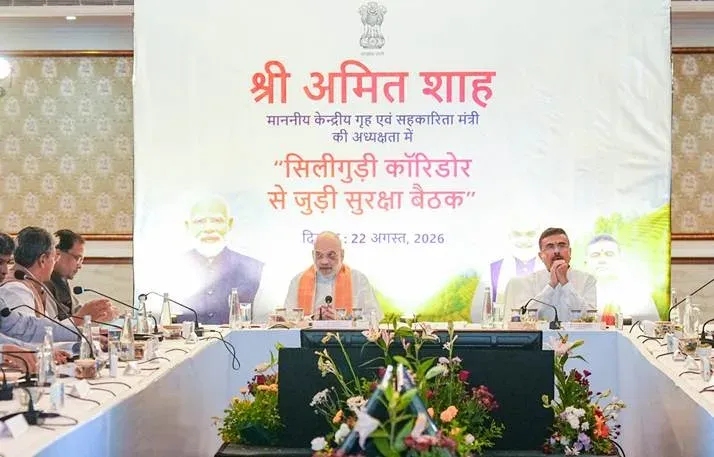
Home Minister Amit Shah has directed all central agencies — including intelligence units and Central Armed Police Forces (CAPF) wings — to significantly expand their footprint in the Siliguri Corridor, the strategically vital stretch in Darjeeling district in northern West Bengal commonly known as the 'Chicken Neck'. The directive came following a security review Shah conducted during a two-day visit to North Bengal, according to a statement issued by the Press Information Bureau (PIB).
Key Directives from the Review
During the review, Shah stressed the adoption of a quadrangular approach to border security and directed all agencies present to implement it in full spirit. He also ordered that the Siliguri Corridor be kept free of encroachments and underscored the urgent need to halt illegal immigration through the corridor. Pending infrastructural projects critical to the corridor's security were flagged, with Shah directing that all such works be completed in a time-bound manner.
Issues Discussed at the Review
The meeting covered a range of sensitive concerns including activities of Persons of Indian Origin (PIOs), demographic changes along the border zone, illegal immigration patterns, and broader border affairs. The corridor, which connects India's northeastern states to the mainland through a narrow strip of land, has long been considered one of the country's most strategically sensitive regions.
'He said that under the leadership of Prime Minister Narendra Modi, the Union government is committed to making the security of the Siliguri Corridor impregnable,' the PIB statement quoted Shah as saying.
What the Home Minister Told the West Bengal Government
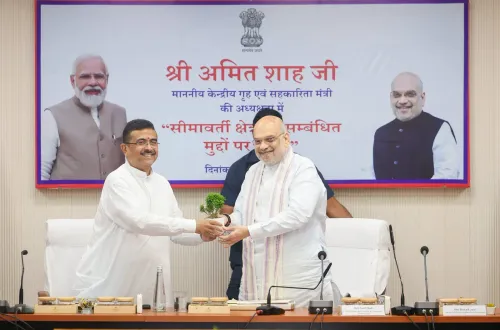
Shah also engaged with West Bengal Chief Minister Suvendu Adhikari, suggesting the state explore possibilities of opening more Sainik schools in North Bengal. He further asked the Chief Minister to work towards increasing the number of senior NCC cadets in the region. Shah also urged the state government to strengthen the institutions of Civil Defence and Home Guards specifically within the Siliguri Corridor zone.
Why the Siliguri Corridor Matters
The Siliguri Corridor is a roughly 22-kilometre-wide strip of land that serves as the only land connection between India's eight northeastern states and the rest of the country. It is flanked by Bangladesh to the south, Nepal to the north and west, and Bhutan to the northeast — making it uniquely vulnerable to external pressures. Security analysts have long warned that any disruption to the corridor would effectively sever the Northeast from mainland India. This is the latest in a series of high-level security reviews the Centre has conducted in the region amid concerns over demographic shifts and cross-border movement.
What Comes Next
With Shah's directives now on record via a formal PIB statement, central agencies are expected to begin operationalising the expanded deployment framework. The push to strengthen NCC, Civil Defence, and Home Guards signals a layered, multi-tier security architecture being envisioned for the corridor. How the West Bengal state government — currently led by Chief Minister Suvendu Adhikari — responds to the Centre's recommendations will be closely watched in the coming weeks.
Point of View
CAPF deployment, encroachment removal, and NCC expansion in the Siliguri Corridor points to a coordinated securitisation strategy that goes well beyond infrastructure. What is notably absent from the PIB statement is any mention of specific timelines, troop numbers, or accountability metrics for the agencies directed to act. High-level reviews of the Chicken Neck have been conducted before; the gap between directive and deployment has historically been wide. The real test will be whether the quadrangular approach translates into verifiable on-ground change — or remains a strategic framework on paper.
NationPress
7 Oct 2026
Frequently Asked Questions
What is the Siliguri Corridor and why is it called the 'Chicken Neck'?
The Siliguri Corridor is a narrow strip of land, roughly 22 kilometres wide, in northern West Bengal that serves as the only land connection between India's northeastern states and the rest of the country. It is nicknamed the 'Chicken Neck' due to its narrow, elongated shape, and is considered one of India's most strategically sensitive zones, flanked by Bangladesh, Nepal, and Bhutan.
What did Home Minister Amit Shah direct during his North Bengal visit?
Shah directed all central agencies — including intelligence units and CAPF wings — to expand their presence in the Siliguri Corridor. He also ordered adoption of a quadrangular border security approach, removal of encroachments, a crackdown on illegal immigration, and time-bound completion of pending infrastructure projects in the corridor.
What is the quadrangular approach to border security mentioned by Amit Shah?
The quadrangular approach to border security is a framework Shah directed all agencies to implement in the Siliguri Corridor, though the PIB statement did not elaborate its specific components publicly. It is understood to involve coordinated deployment across multiple tiers of security — central, state, intelligence, and armed forces.
What was asked of the West Bengal state government?
Shah urged West Bengal Chief Minister Suvendu Adhikari to explore opening more Sainik schools in North Bengal, increase the number of senior NCC cadets in the region, and strengthen Civil Defence and Home Guards institutions specifically within the Siliguri Corridor.
Why is the Centre increasing its focus on the Siliguri Corridor now?
The review comes amid ongoing concerns over demographic changes, illegal immigration, PIO activities, and border affairs in the region, all of which were discussed during Shah's visit. The corridor's unique geographic vulnerability — connecting eight northeastern states through a narrow strip — makes it a perennial strategic priority for the Union government.