Amit Shah unveils Ajit Pawar bust in Pune, reveals why he joined Mahayuti
Synopsis
For the first time, Amit Shah publicly revealed the private conversation that convinced Ajit Pawar to break with Sharad Pawar and join Mahayuti — quoting the late leader as saying 'everything has its era' and that Modi's rise made the alliance inevitable. The bust unveiling in Pune, attended even by opposition MP Supriya Sule, was as much a political statement about Pawar's legacy as it was a memorial tribute.
Key Takeaways
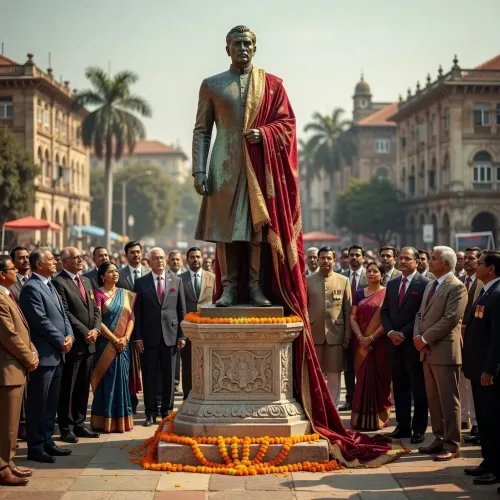
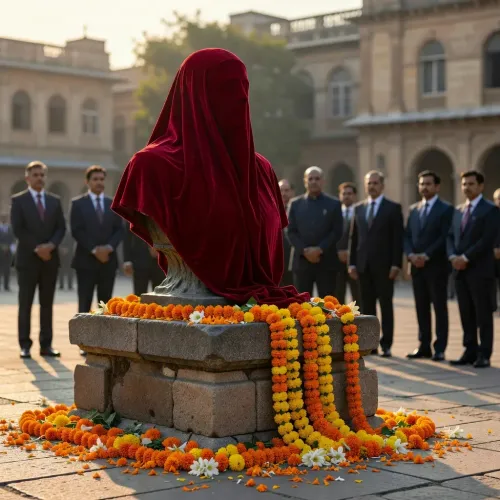
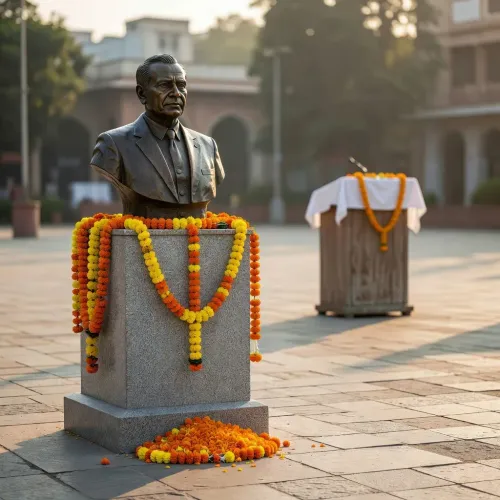
Union Home Minister Amit Shah unveiled a half-bust statue of late Deputy CM Ajit Pawar at the Pune Zilla Parishad on 16 November 2026 .
Shah publicly disclosed Pawar's own words on why he joined Mahayuti : 'After Narendra Modi became Prime Minister, the country's development and Mahayuti cannot be separated.' Shah noted Pawar's entry into Mahayuti came after two or three unsuccessful attempts but brought stability and continuity to the state government.
NCP(SP) MP Supriya Sule attended the cross-party ceremony, reflecting Pawar's legacy beyond factional lines.
Shah recalled Pawar calling him on the landline as early as 7:00 a.m. during the Covid-19 pandemic to coordinate state affairs.
Shah received news of Pawar's passing approximately two hours after a call from CM Devendra Fadnavis between 8:00 a.m. and 8:30 a.m. on the day of the accident.
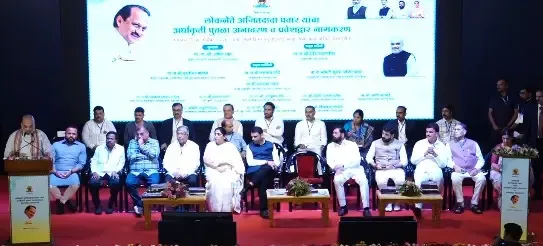
Union Home Minister Amit Shah on Monday, 16 November 2026, unveiled a half-bust statue of Maharashtra's late Deputy Chief Minister Ajit Pawar near the entrance gate of the Pune Zilla Parishad, paying an emotional tribute to the late leader and publicly disclosing — for the first time — the private conversation that led to Pawar's landmark decision to join the ruling Mahayuti alliance.
A Cross-Party Gathering in Pune
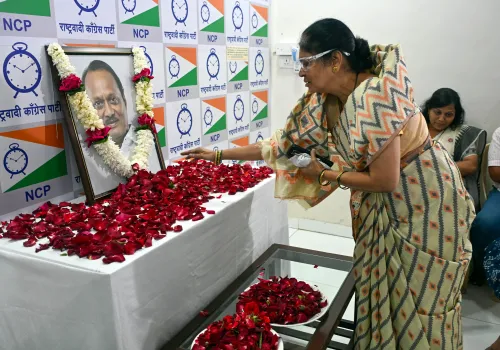
The unveiling ceremony drew senior leaders from across Maharashtra's political spectrum. Chief Minister Devendra Fadnavis, Deputy Chief Ministers Eknath Shinde and Sunetra Pawar, Agriculture Minister Dattatray Bharne, Union Minister Murlidhar Mohol, Minister of State Madhuri Misal, and Pune Mayor Manjusha Nagpure were present on the dais. Notably, Nationalist Congress Party (Sharadchandra Pawar) MP Supriya Sule also attended to pay her respects, underscoring the cross-party regard for the late leader.
The 'Secret' Behind Ajit Pawar's Entry into Mahayuti
Addressing the gathering, Shah lifted the curtain on the private exchange he had with Ajit Pawar at the time of the latter's decision to break with uncle Sharad Pawar and align with Mahayuti — a move that had triggered widespread political speculation across Maharashtra.
'When Ajit Dada decided to join Mahayuti, I was surprised and asked him why he was taking such a big step despite his political background, knowing it would shock the public — especially since power comes and goes,' Shah recounted. He then quoted Pawar's response verbatim: 'Amit Bhai, everything has its era. After Narendra Modi became Prime Minister, the country's development and Mahayuti cannot be separated. I want to align myself with the progress of Maharashtra and the nation, and therefore, I want to be part of Mahayuti.'
Shah acknowledged that Pawar's entry into the alliance came after 'two or three unsuccessful attempts,' but maintained that his eventual arrival brought 'much-needed stability and continuity' to the state government, enabling it to take tougher administrative decisions.
Shah Recalls Pawar's Blunt Honesty and Worker Loyalty
Shah praised Ajit Pawar's forthright style, saying he was a leader who 'spoke his mind clearly — a yes for what he agreed with and a firm no for what he didn't.' He recalled that during seat-sharing negotiations within Mahayuti, Pawar presented his party's positions candidly — a quality Shah said he 'deeply admired.'
Shah also highlighted Pawar's rare commitment to grassroots workers, noting that he frequently argued 'patiently yet firmly' with Shah himself, Fadnavis, and Shinde to protect the interests of NCP leaders and ordinary party members. 'Very few leaders in high positions fight for their ordinary workers the way Dada did,' Shah remarked.
Covid Calls at 7 a.m. and a Final Farewell
Sharing a personal memory from the Covid-19 pandemic, Shah revealed that while coordination with Maharashtra's then-Chief Minister was difficult, Pawar was consistently proactive. 'Dada used to call me regularly regarding state work. We often spoke on the landline as early as 7:00 a.m., which showed he was already at his office by that hour,' Shah said, recalling joint decisions in the cooperative sector to support sugar factories during the crisis.
Shah also expressed deep sorrow over Pawar's sudden death in what he described as a tragic accident. He said he received a call from Devendra Fadnavis between 8:00 a.m. and 8:30 a.m. on the morning of the tragedy, informing him of the critical situation, followed by the news of Pawar's passing approximately two hours later. Calling it 'an irreparable personal and state loss,' Shah said Pawar's 'sensitive, well-planned, and time-bound style of functioning' would remain an enduring model for young politicians in Maharashtra and beyond.
Legacy and What It Signals for Maharashtra Politics
This comes amid ongoing consolidation within the Mahayuti alliance ahead of future electoral cycles. The public tribute — attended even by opposition-linked leaders such as Supriya Sule — signals that Ajit Pawar's legacy transcends factional lines. Dignitaries at the event recalled his rapid pace of work, his deep connection with rural Maharashtra, and his decades of experience in the cooperative sector. His decision to split from Sharad Pawar's NCP faction remains one of the most consequential political realignments in recent Maharashtra history, and Monday's ceremony appeared designed, in part, to frame that choice as a principled one rather than a merely opportunistic move.
Point of View
The BJP effectively co-opts a contested legacy. The attendance of Supriya Sule complicates that framing, suggesting the Sharad Pawar camp is unwilling to cede the emotional terrain entirely. Maharashtra's ruling alliance has much to gain from burnishing Ajit Pawar's image as a statesman; the question is whether that narrative survives the scrutiny of his faction's ongoing legal and organisational battles within the NCP.
NationPress
16 Nov 2026
Frequently Asked Questions
What did Amit Shah reveal about Ajit Pawar's decision to join Mahayuti?
Shah disclosed a private conversation in which Ajit Pawar told him: 'After Narendra Modi became Prime Minister, the country's development and Mahayuti cannot be separated. I want to align myself with the progress of Maharashtra and the nation.' This was described as the real reason behind Pawar's decision to break with Sharad Pawar's faction and join the ruling alliance.
Where was the bust of Ajit Pawar unveiled, and who attended?
The half-bust statue was unveiled near the entrance gate of the Pune Zilla Parishad on 16 November 2026. Chief Minister Devendra Fadnavis, Deputy CMs Eknath Shinde and Sunetra Pawar, Union Minister Murlidhar Mohol, and NCP(SP) MP Supriya Sule were among those present.
Who was Ajit Pawar, and why was his Mahayuti entry significant?
Ajit Pawar was Maharashtra's Deputy Chief Minister and a senior NCP leader who chose to split from his uncle Sharad Pawar's faction to join the Mahayuti ruling alliance — one of the most consequential political realignments in recent Maharashtra history. His entry reportedly brought stability to the state government and enabled tougher administrative decisions, according to Amit Shah.
What personal memories did Amit Shah share about Ajit Pawar?
Shah recalled that during the Covid-19 pandemic, Pawar called him on the landline as early as 7:00 a.m. to coordinate state work, and that they jointly decided on cooperative-sector measures to support sugar factories. He also praised Pawar's blunt honesty during seat-sharing talks and his commitment to protecting grassroots NCP workers.
How did Amit Shah learn of Ajit Pawar's death?
Shah said he received a call from Chief Minister Devendra Fadnavis between 8:00 a.m. and 8:30 a.m. on the day of the accident, informing him of the critical situation. The news of Pawar's passing came approximately two hours later, which Shah described as an irreparable personal and state loss.