Shekhawat pitches creative economy at Transform Bharat Summit
Synopsis
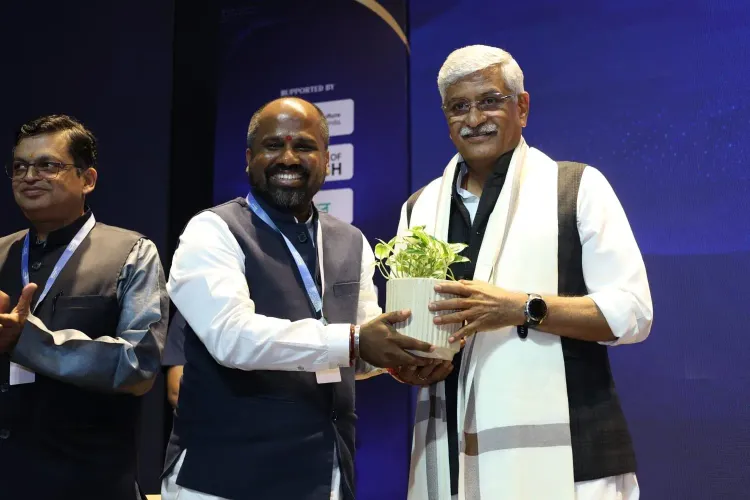
At the Transform Bharat Summit 2026 in New Delhi, Culture Minister Gajendra Singh Shekhawat outlined India's creative-economy vision — linking heritage monuments to jobs, PPPs, the Gyan Bharatam initiative, and PM Modi's 'Vikas bhi, Virasat bhi' framework.
Key Takeaways
Gajendra Singh Shekhawat addressed the Transform Bharat Summit 2026 in New Delhi on 16 November 2026 .
The minister invoked PM Modi's 'Vikas bhi, Virasat bhi' principle as the foundation of India's cultural-economic policy.
Four policy levers cited: Gyan Bharatam , expanded public-private partnerships , monuments as 'living cultural hubs', and incentives for cultural entrepreneurs .
The approach builds on existing schemes — Adopt a Heritage (2017) , PRASAD , and Swadesh Darshan — launched since 2014-15.
Heritage is explicitly framed as a pillar of the Viksit Bharat 2047 vision of a self-reliant developed India.
India's cultural heritage is no longer just a relic to be preserved — it is becoming a platform for jobs, startups, and economic growth. Union Culture and Tourism Minister Gajendra Singh Shekhawat made that case at the 'Transform Bharat Summit 2026' in New Delhi on Monday, November 16, 2026, laying out the government's vision for a creative economy rooted in civilisational assets.
'Vikas bhi, Virasat bhi' — the mantra taking policy shape
Speaking at the summit, Shekhawat invoked Prime Minister Narendra Modi's guiding principle — 'Vikas bhi, Virasat bhi' ('development as well as heritage') — framing it as the philosophical foundation of India's cultural and economic progress. The minister's remarks signal that this slogan, long a rhetorical touchstone for the BJP, is now being operationalised as a concrete policy framework. Heritage sites, he argued, must be simultaneously preserved and converted into generators of livelihoods, innovation, and entrepreneurship.
Gyan Bharatam, PPPs, and the monument-as-hub model
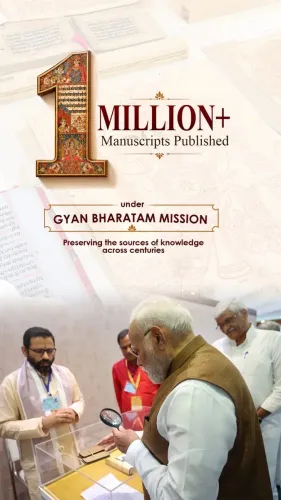
Shekhawat named four specific levers the government intends to pull. First is Gyan Bharatam, a knowledge-heritage initiative. Second is a deepened push for public-private partnership in monument management — a model the government has pursued since the Adopt a Heritage scheme launched in 2017. Third is the reimagining of historical monuments as 'living cultural hubs' rather than static tourist stops. Fourth is direct incentives for cultural entrepreneurs who can build businesses around India's heritage ecosystem.
The policy lineage here runs back to 2014-15, when the PRASAD and Swadesh Darshan schemes were launched to rejuvenate pilgrimage destinations and develop thematic tourist circuits. What the minister articulated at the summit represents the next evolutionary layer — moving from infrastructure development to economic activation, targeting employment and start-up creation.
Heritage as a pillar of Viksit Bharat 2047
Shekhawat was explicit about the long-term ambition: 'Hamari virasat kewal hamare gauravshali atit ki dharohar nahin, balki aatmanirbhar aur viksit Bharat ke ujjwal bhavishy ki shakti hai' — 'Our heritage is not merely a legacy of our glorious past, but the strength of a self-reliant and developed India's bright future.' The framing plugs cultural policy directly into the government's Viksit Bharat 2047 narrative, the overarching goal of making India a developed nation by its centenary of independence.
Local communities near monuments, heritage tourism operators, and cultural entrepreneurs are the stakeholders who stand to benefit — or be tested — as these proposals move from summit stage to ground-level implementation. The practical details: funding timelines for Gyan Bharatam, the pipeline of new PPP monument projects, and the structure of entrepreneur incentives, will be the real measure of momentum.
India's centuries-deep cultural inventory has rarely been short of vision. The question the summit leaves open is whether this creative-economy blueprint will generate the institutional follow-through that converts heritage into opportunity at scale.
Point of View
Swadesh Darshan, Adopt a Heritage) under a single 'creative economy' brand tied to the Viksit Bharat 2047 deadline. Politically, it reinforces the BJP's consistent effort to frame cultural nationalism not merely as identity politics but as an economic growth story, broadening its appeal beyond core voters. The Gyan Bharatam initiative, still undefined in scope, is the key variable: if it carries meaningful funding and institutional architecture, it could genuinely activate heritage as an entrepreneurship platform; without that, it risks being another summit pledge. The challenge for the Ministry is execution — converting marquee summit rhetoric into measurable outcomes in employment and monument-linked business creation.
NationPress
16 Nov 2026
Frequently Asked Questions
What is the Transform Bharat Summit 2026?
The Transform Bharat Summit 2026 is a conference held in New Delhi where government ministers and stakeholders discussed India's economic and developmental priorities. Culture Minister Gajendra Singh Shekhawat used the platform to present the government's creative-economy vision linking heritage to jobs and entrepreneurship.
What is 'Vikas bhi, Virasat bhi'?
'Vikas bhi, Virasat bhi' — meaning 'development as well as heritage' — is PM Narendra Modi's guiding principle for cultural policy, asserting that economic growth and the preservation of India's civilisational heritage are complementary rather than competing goals.
What is the Gyan Bharatam initiative?
Gyan Bharatam is a knowledge-heritage initiative mentioned by Minister Shekhawat as one of the tools to link India's cultural legacy to economic activity. Its precise scope, funding, and launch details have not yet been officially specified in public records.
What is the Adopt a Heritage scheme?
The Adopt a Heritage scheme, launched in 2017 , invites public and private sector entities to adopt and develop monuments and heritage sites, funding facilities and maintenance in exchange for visibility — a public-private partnership model Shekhawat referenced at the summit.
How does heritage policy connect to Viksit Bharat 2047?
The government frames India's cultural heritage as an economic asset — through tourism, entrepreneurship, and creative industries — that can contribute to the broader goal of making India a developed nation by 2047 , the centenary of independence, under the Viksit Bharat framework.