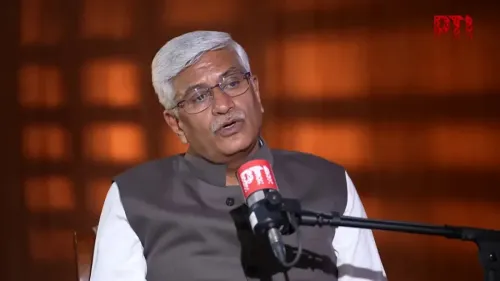
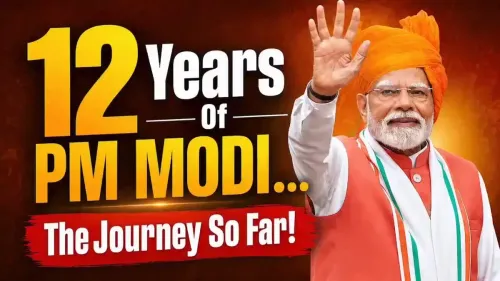
Shekhawat adopts Modi's GTA-style storytelling for India tourism
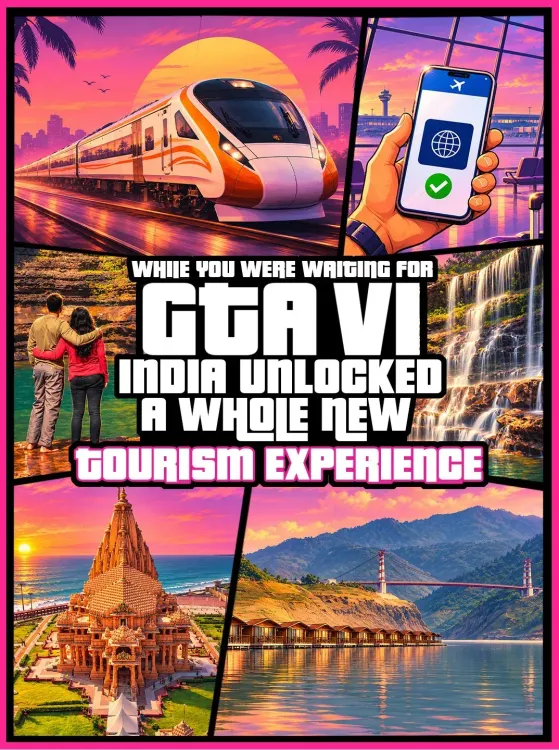
Synopsis
Union Tourism Minister Gajendra Singh Shekhawat has announced the adoption of PM Modi's GTA-style creative storytelling format to showcase India's tourism transformation, covering lesser-known destinations, pilgrimage infrastructure, and travel connectivity.
Key Takeaways
Gajendra Singh Shekhawat announced on 19 November 2026 that the Ministry of Culture and Tourism is adopting a GTA-style creative content format inspired by PM Modi.
The campaign targets four pillars: unlocking lesser-known destinations, upgrading pilgrimage infrastructure, improving connectivity, and enhancing travel experiences.
The Swadesh Darshan scheme (launched 2014–15 ) supports theme-based tourist circuit development across Indian states.
The PRASAD scheme (launched 2014–15 ) focuses on pilgrimage site rejuvenation and infrastructure.
Swadesh Darshan 2.0 is the current upgraded iteration, with fresh circuit rollouts and new budget allocations under watch.
The ministry's creative push aims to convert infrastructure investments into actual tourist footfall at underexplored destinations.
Storytelling has become the new infrastructure. Union Culture and Tourism Minister Gajendra Singh Shekhawat on Thursday, 19 November 2026 announced that his ministry is borrowing a creative content format pioneered by Prime Minister Narendra Modi — a GTA-style visual narrative — to spotlight India's rapidly evolving tourism landscape.
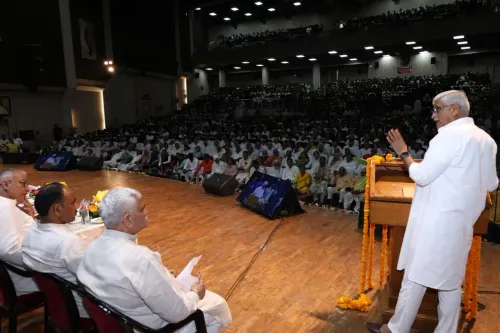
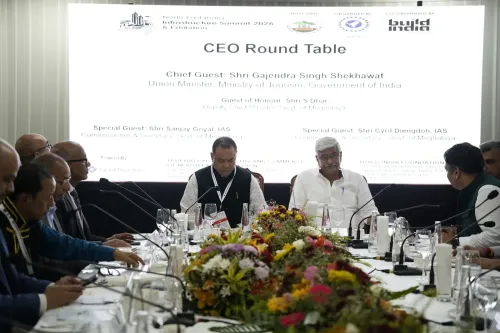
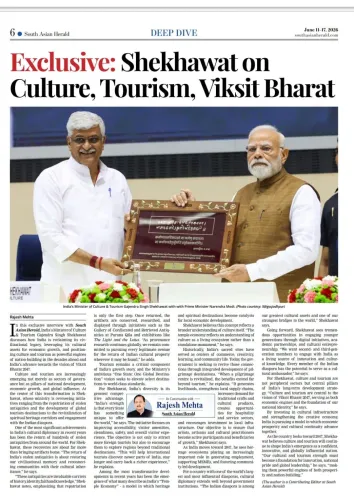
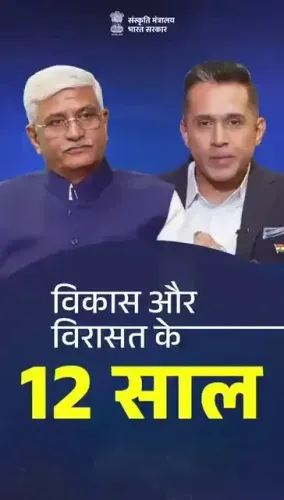
Shekhawat wrote that PM Modi 'leads, we follow,' crediting the Prime Minister's use of the gaming-inspired storytelling format and signalling the ministry's intent to replicate it for tourism promotion. The post, accompanied by six images, framed the effort around four pillars: unlocking lesser-known destinations, upgrading pilgrimage infrastructure, improving connectivity, and enhancing overall travel experiences.
From Swadesh Darshan to scroll-stopping content
The creative pivot sits atop more than a decade of policy groundwork. The Swadesh Darshan scheme, launched in 2014–15, was designed to develop theme-based tourist circuits across states, pulling travellers beyond the Golden Triangle and into India's overlooked heartland. Alongside it, the PRASAD scheme — also initiated in 2014–15 — focused specifically on rejuvenating pilgrimage sites, funding better facilities for the millions of devout Indians who travel to religious destinations each year. Shekhawat's post signals these hardware investments are now being paired with a software push: narrative innovation.
The underlying logic is straightforward. Infrastructure alone does not move tourists — awareness does. By framing India's tourism transformation inside a format that cuts through digital noise, the ministry is betting that engaging storytelling can convert unfamiliar destinations into genuine demand.
Lesser-known destinations and the connectivity push
The reference to 'unlocking lesser-known destinations' points to a deliberate decongestion strategy. India's top-tier sites — Agra, Jaipur, Varanasi, Goa — are well-mapped on global itineraries. The government's sustained effort has been to build awareness and connectivity for the second tier: heritage corridors, tribal circuits, coastal belts, and spiritual hubs that remain undiscovered by most domestic and international visitors. Swadesh Darshan 2.0, the upgraded iteration of the original scheme, is the current vehicle for this, with fresh circuit rollouts expected alongside new budget allocations for pilgrimage infrastructure.
Connectivity has been the accelerant. Expanded air routes, highway upgrades, and new rail links have quietly slashed travel times to destinations that once demanded genuine expedition planning. The ministry's storytelling campaign, Shekhawat suggests, is now the missing final link — making people want to actually go.
A minister amplifying a PM's playbook
The post is also a political signal wrapped in a tourism brief. By explicitly crediting Modi's creative direction and positioning the ministry as an executor of that vision, Shekhawat reinforces the BJP government's brand of top-down cultural energy — the leader innovates, the cabinet delivers. It is a posture that doubles as governance communication and party messaging simultaneously.
India's tourism story, Shekhawat argues, 'deserves to be told in new and engaging ways.' If the GTA-style format lands with the digital audience the way the ministry hopes, the real payoff will show up not in content metrics — but in footfall at destinations that have waited years to be discovered.
Point of View
Ministers execute and amplify. The tourism ministry's shift toward format-driven digital storytelling reflects a broader recognition that policy infrastructure alone does not generate demand; awareness campaigns must do the last mile. The reference to lesser-known destinations and pilgrimage upgrades signals that Swadesh Darshan 2.0 and PRASAD remain the government's twin structural bets for distributing tourism's economic dividend beyond already-saturated hotspots. How effectively the GTA-style content translates into measurable footfall at Tier-2 tourism sites will be the real policy test.
NationPress
19 Nov 2026
Frequently Asked Questions
What is the GTA-style storytelling format Gajendra Singh Shekhawat mentioned?
The term refers to a creative, visually dynamic narrative format used in social media content — inspired by PM Modi's own use of the style — to tell India's tourism story in an engaging way. The specific format involves sequential visual storytelling, though precise production details have not been officially specified.
What is the Swadesh Darshan scheme?
Swadesh Darshan is a central government scheme launched in 2014–15 to develop theme-based tourist circuits across Indian states, designed to promote lesser-known destinations and distribute tourism revenue more evenly. Its upgraded version, Swadesh Darshan 2.0, continues the rollout of new circuits.
What is the PRASAD scheme in India?
PRASAD stands for Pilgrimage Rejuvenation and Spiritual Augmentation Drive, launched in 2014–15. It funds infrastructure upgrades at major pilgrimage sites across India to improve facilities for religious tourists.
What lesser-known destinations is India's tourism ministry promoting?
The ministry's campaigns under Swadesh Darshan circuits have targeted heritage corridors, tribal tourism zones, coastal belts, and spiritual hubs beyond the mainstream Golden Triangle route. Specific new destinations are expected under Swadesh Darshan 2.0 rollouts.
What is Gajendra Singh Shekhawat's role in the Indian government?
Gajendra Singh Shekhawat is the Union Minister of Culture and Tourism, a senior BJP leader and Lok Sabha MP representing Jodhpur in Rajasthan.