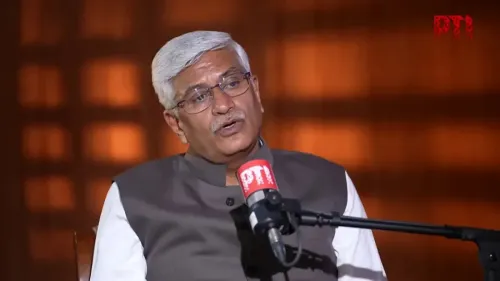
Shekhawat credits Modi for India's global culture-tourism rise
Synopsis
Union Culture and Tourism Minister Gajendra Singh Shekhawat has credited PM Narendra Modi with building India's global voice in culture and tourism over 12 years, citing the PRASAD and Swadesh Darshan schemes, pilgrimage site redevelopment, and the Atithi Devo Bhava philosophy as pillars of the government's integrated heritage-tourism strategy.
Key Takeaways
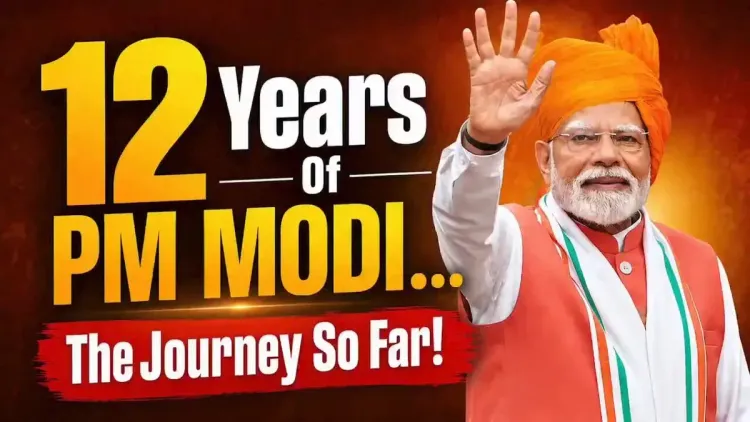
Union Minister Gajendra Singh Shekhawat posted on 26 May 2026 crediting PM Modi with transforming India's global culture and tourism profile over 12 years .
He invoked the ancient principle Atithi Devo Bhava as the guiding ethos of the government's tourism conduct for both foreign and domestic visitors.
The PRASAD scheme (launched 2014-15 ) focuses on integrated redevelopment of pilgrimage and spiritual tourism destinations across India.
The Swadesh Darshan scheme (launched 2014-15 ) funds thematic tourist circuits highlighting India's cultural and natural diversity.
The government frames tourism growth as a soft-power instrument under the broader Viksit Bharat development vision.
Focus now shifts to Union Budget 2026-27 allocations and possible new circuit announcements for Swadesh Darshan and PRASAD.
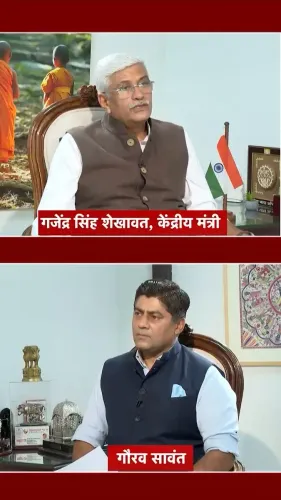
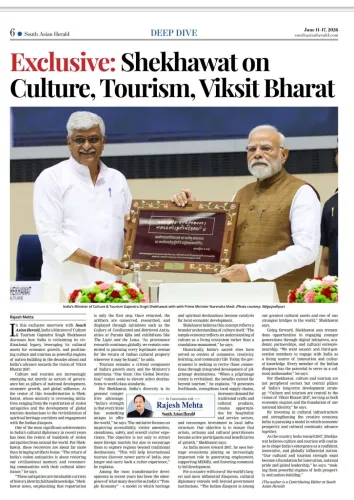
Union Culture and Tourism Minister Gajendra Singh Shekhawat on Tuesday, 26 May 2026, credited Prime Minister Narendra Modi with transforming India's global standing in culture and tourism over the past 12 years, asserting that the country now has a powerful voice inviting the world to experience its cultural diversity. The minister posted the message on X, tagging the Prime Minister's Office and the ruling party's official handle.
Posting in Hindi, Shekhawat wrote: '12 saal pehle sanskriti aur paryatan ko vishwa mein gunjaayamaan karti 'awaaz' nahin thi' ('Twelve years ago there was no 'voice' that made culture and tourism resonate across the world'). He argued that Modi's 'powerful voice' is now personally inviting citizens of every country to experience India's cultural diversity.
Context
The post marks roughly 12 years since the Narendra Modi-led government took office in May 2014, a milestone the ruling BJP has been highlighting across ministries. Shekhawat invoked the ancient Sanskrit principle 'Atithi Devo Bhava' ('The guest is divine'), describing it as the philosophical foundation of the current government's tourism conduct. He emphasised that no effort is being spared to make the experience exceptional for both foreign and domestic tourists.
Policy Backdrop
Since 2014, the Union government has pursued an integrated culture-tourism strategy combining heritage site redevelopment, spiritual circuits, and destination marketing. The PRASAD scheme (Pilgrimage Rejuvenation and Spiritual Augmentation Drive), launched in 2014-15, targets the integrated development of major pilgrimage destinations and spiritual tourism nodes across the country. Alongside it, the Swadesh Darshan scheme, also launched in 2014-15, funds thematic tourist circuits that showcase India's cultural and natural diversity.
Shekhawat's post specifically cited the redevelopment of tirth sthal (pilgrimage sites), expansion of tourism infrastructure, and the projection of India's spiritual heritage as key pillars that have strengthened the country's global reputation. These efforts are framed within the broader Viksit Bharat (Developed India) framework that the government has adopted as its long-term governance vision.
Stakeholders and Impact
The minister's statement directly addresses the hospitality sector, pilgrims, and international visitors, signalling continued policy emphasis on both inbound tourism and domestic pilgrim circuits. The Atithi Devo Bhava campaign, relaunched and expanded after 2014, is central to training and sensitising the hospitality workforce toward a guest-first ethos. Shekhawat's framing suggests the government views tourism not merely as an economic sector but as a soft-power instrument linked to diplomatic outreach.
The integration of cultural heritage, spiritual tourism, and infrastructure development under a single ministry — Culture and Tourism — reflects a deliberate shift from earlier fragmented, state-level efforts toward centrally coordinated branding and investment. This approach positions India's ancient civilisational identity as a competitive advantage in global tourism markets.
What's Next
Attention now turns to the Union Budget 2026-27, where allocations for the Culture and Tourism ministries will indicate the fiscal weight the government assigns to this agenda. Possible expansion announcements for new Swadesh Darshan or PRASAD circuits are expected in upcoming ministry reviews. Shekhawat's post closes with an affirmation that the journey toward a Viksit Bharat — a developed India — continues unabated, signalling no slowdown in the government's cultural and tourism policy ambitions heading into the next budget cycle.
Point of View
The minister is reinforcing the BJP's claim that cultural nationalism and economic development are complementary rather than competing goals. The explicit mention of pilgrimage site redevelopment and tourism infrastructure signals that spiritual tourism — a politically salient constituency for the ruling party — remains central to the ministry's agenda. The post also reflects a broader BJP communication pattern of using ministerial social media to build a cumulative governance narrative ahead of budget and election cycles.
NationPress
22 Sept 2026
Frequently Asked Questions
What is the PRASAD scheme in India?
The PRASAD scheme, or Pilgrimage Rejuvenation and Spiritual Augmentation Drive, was launched in 2014-15 by the Union government to fund the integrated development and beautification of major pilgrimage sites and spiritual tourism destinations across India.
What is the Atithi Devo Bhava campaign?
Atithi Devo Bhava , meaning 'the guest is divine', is a national tourism campaign rooted in an ancient Sanskrit principle. It was relaunched and expanded after 2014 to train the hospitality sector and promote a guest-first culture for both domestic and foreign visitors.
What is the Swadesh Darshan scheme?
Swadesh Darshan is a Union government scheme launched in 2014-15 that finances the development of thematic tourist circuits across India, showcasing the country's cultural, natural, and heritage diversity.
Who is Gajendra Singh Shekhawat?
Gajendra Singh Shekhawat is a senior BJP leader and Lok Sabha MP from Jodhpur, Rajasthan , currently serving as the Union Minister of Culture and Tourism in the Narendra Modi government.
What is Viksit Bharat and how does it relate to tourism?
Viksit Bharat (Developed India) is the Modi government's long-term development vision targeting a fully developed economy and society. Tourism and cultural heritage promotion are positioned as key pillars of this framework, linking soft-power projection with economic growth.