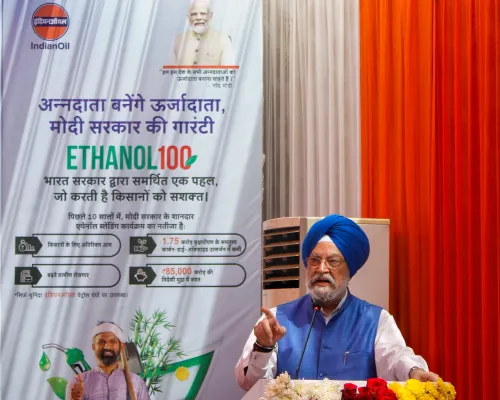
Shekhawat Backs E20 Ethanol Push With Key Policy Numbers

Synopsis
India achieved its 20% ethanol blending target ahead of schedule. Minister Gajendra Singh Shekhawat cited over ₹1 lakh crore in forex savings, ₹1.18 lakh crore to farmers and industry, and a 54-million-tonne CO₂ reduction as evidence of the programme's impact.
Key Takeaways
India achieved 20% ethanol blending (E20) ahead of its revised 2025 deadline, originally set for 2030 under the National Policy on Biofuels 2018.
All new vehicles sold in India have been mandated to be E20-compatible from April 2023 .
The government attributes foreign exchange savings of over ₹1 lakh crore to the programme through reduced crude oil imports.
Over ₹1.18 lakh crore has reportedly been channelled to farmers and industry through ethanol procurement.
The programme is credited with reducing CO₂ emissions by more than 54 million tonnes .
Key beneficiaries include sugarcane farmers , oil marketing companies, and vehicle manufacturers across major cane-producing states.
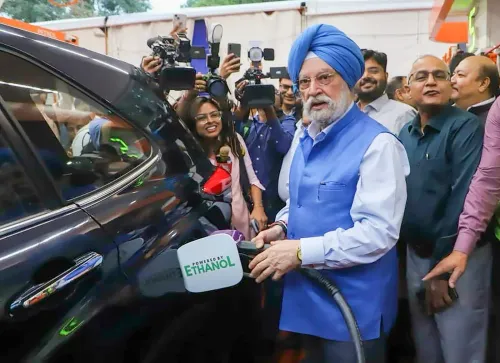
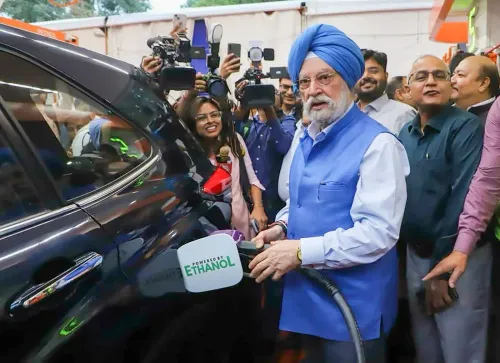
India's 20% ethanol blending programme crossed its original 2030 deadline years early — and Union Culture and Tourism Minister Gajendra Singh Shekhawat is making sure the numbers do the talking. In a post on X on Tuesday, 28 July 2026, Shekhawat laid out the headline figures behind India's E20 ethanol blending achievement, framing the milestone as a case study in evidence-based policymaking.
Posting in Hindi, Shekhawat wrote: 'E20: भरोसा तथ्यों पर!' — 'E20: Trust the facts!' — before listing four specific outcomes the government attributes to the programme: foreign exchange savings of over ₹1 lakh crore, transfers of over ₹1.18 lakh crore to farmers and industry, a reduction of more than 54 million tonnes of CO₂ emissions, and the mandate that all new vehicles sold from April 2023 onwards be E20-compatible.
A Deadline India Beat by Half a Decade
The backstory matters here. India's National Policy on Biofuels, 2018 originally set the 20% ethanol blending target for 2030. By 2021-22, the central government had pulled that deadline forward to 2025 — itself an ambitious revision. The fact that the target has now been declared achieved places India ahead of even that accelerated schedule, a rare instance of a flagship green-energy programme running ahead of its own revised clock. The policy rests on a straightforward logic: blend domestically produced ethanol — derived primarily from sugarcane and its byproducts — into petrol, and you cut crude oil imports, reduce pump-side emissions, and channel money into rural agricultural supply chains. Sugarcane farmers, oil marketing companies, and vehicle manufacturers are the three pillars the programme has leaned on to make that chain work.The Rural Economy Angle
The figure Shekhawat highlights — over ₹1.18 lakh crore flowing to farmers and industry — is the political and economic core of the E20 story. Ethanol blending has given India's sugarcane belt a guaranteed off-take channel beyond sugar, stabilising farm incomes in states like Uttar Pradesh, Maharashtra, and Karnataka that dominate cane production. For a government that has consistently tied energy security to rural welfare, this number is as much a farm-policy win as a climate one. The ₹1 lakh crore-plus in foreign exchange savings reflects the direct substitution effect: every litre of ethanol blended is a litre of imported crude that stays unburned and unpurchased. With India importing the vast majority of its crude oil, even marginal blending percentages translate into significant balance-of-payments relief at scale.What the E20 Rollout Signals for What Comes Next
Reaching 20% blending is a milestone, not a ceiling. The broader policy conversation in India is already moving toward flex-fuel standards — vehicles that can run on a wider range of ethanol-petrol ratios — and potentially higher blending targets beyond E20. The April 2023 mandate making all new vehicles E20-compatible was precisely the infrastructure move needed to keep that door open: a fleet that can handle 20% can, with further modification, handle more. The 54-million-tonne CO₂ reduction figure, if sustained, also feeds directly into India's commitments under its Nationally Determined Contributions to the Paris Agreement — giving the transport sector a measurable, domestically driven decarbonisation data point. India made a bet on biofuels when the 2030 deadline looked distant. It is now collecting on that bet — ahead of schedule, with numbers attached. The next question is how far beyond E20 the policy ambition travels.Point of View
Rural farm income, and climate credibility. By framing the achievement as 'trust the facts,' the post implicitly positions the programme against critics who questioned its feasibility. The broader arc points toward flex-fuel and higher blending mandates as the next frontier — and this data salvo looks like groundwork for that next policy push.
NationPress
28 Jul 2026
Frequently Asked Questions
What is India's E20 ethanol blending programme?
India's E20 programme mandates blending 20% ethanol with petrol across the country to reduce crude oil imports, lower transport emissions, and generate income for sugarcane farmers. The target was originally set for 2030 under the National Policy on Biofuels 2018, later advanced to 2025, and has now been declared achieved ahead of schedule.
When did India achieve the 20% ethanol blending target?
India achieved the 20% ethanol blending target ahead of its revised 2025 deadline. The milestone was highlighted by Minister Gajendra Singh Shekhawat in a post on 28 July 2026.
Are all new cars in India E20-compatible?
Yes. From April 2023, all new vehicles sold in India have been mandated to be E20-compatible, meaning they can run on fuel blended with up to 20% ethanol.
How much has India saved in foreign exchange through ethanol blending?
The government claims foreign exchange savings of over ₹1 lakh crore through reduced crude oil imports attributable to the ethanol blending programme.
How does ethanol blending benefit Indian farmers?
Ethanol is primarily produced from sugarcane and its byproducts in India. The blending mandate creates a guaranteed government-backed procurement channel for cane farmers, with over ₹1.18 lakh crore reportedly transferred to farmers and industry through the programme.