Shekhawat backs Kaveri 2.0 engine push for Atmanirbhar skies
Synopsis
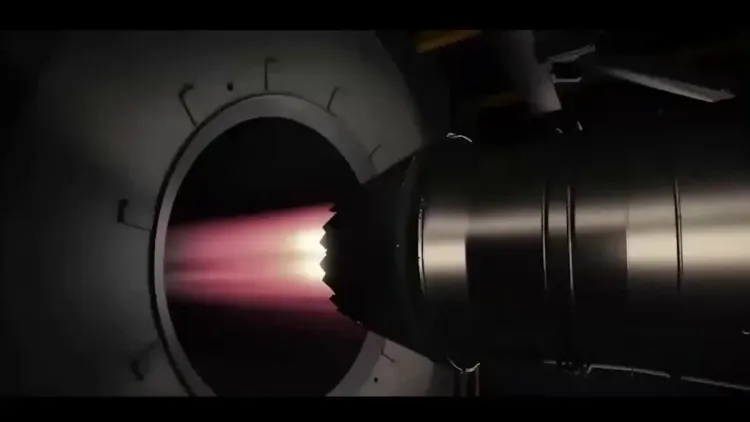
Union Minister Gajendra Singh Shekhawat amplified GTRE's next-generation fighter engine push on 9 August 2026, calling it a new era for Atmanirbhar defence. The move revives public focus on India's decades-old quest to end reliance on foreign aero-engines for its combat aircraft fleet.
Key Takeaways
Union Minister Gajendra Singh Shekhawat publicly backed India's indigenous fighter engine effort on 9 August 2026 .
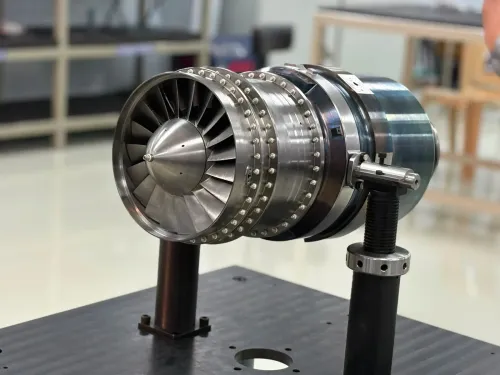
GTRE , a DRDO laboratory, has led India's aero-engine indigenisation drive since the 1980s under the original Kaveri turbofan programme.
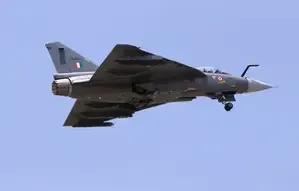
The original Kaveri was decoupled from the Tejas LCA , which currently flies on imported GE F404 engines.
India's active fighter fleet — including Su-30MKI, Rafale, MiG-29 , and Mirage 2000 — depends entirely on foreign powerplants.
Shekhawat's post frames any successor engine as central to Atmanirbhar Bharat and strategic import reduction.
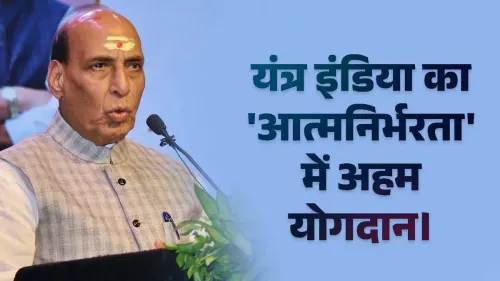
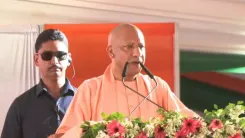
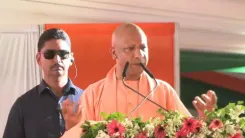
India's decades-long quest to power its own fighter jets from home-grown engines moved back into the spotlight on Sunday, 9 August 2026, when Union Culture and Tourism Minister Gajendra Singh Shekhawat threw his public weight behind the Gas Turbine Research Establishment (GTRE)'s next-generation aero-engine effort, calling it a defining moment for defence self-reliance.
Posting in Hindi, Shekhawat wrote: 'Bharat ka apna fighter jet engine banane ka sapna ab ek naye daur mein pravesh kar raha hai' — 'India's dream of building its own fighter jet engine is now entering a new era.' He invoked the phrase 'Atmanirbhar Raksha, Sashakt Bharat' (Self-reliant Defence, Empowered India), framing the programme as the next frontier in reducing foreign propulsion dependence.
What GTRE's Kaveri lineage actually represents
GTRE, a laboratory under the Defence Research and Development Organisation (DRDO), has been India's primary engine-development body since the 1980s, when the original Kaveri afterburning turbofan programme was launched with the explicit goal of powering the Tejas Light Combat Aircraft. That programme ran into persistent thrust and weight challenges and was eventually decoupled from the Tejas production variant, which today flies on General Electric F404 engines sourced from the United States.
The original Kaveri's setbacks did not kill indigenous engine ambitions — they sharpened them. DRDO and GTRE have continued core-engine research, and any successor effort would inherit decades of metallurgy, combustion, and compressor know-how accumulated through that programme. The research community and defence planners have long identified aero-engine technology as among the hardest and most strategically critical capabilities to indigenise.
Why a senior minister's signal matters now
Shekhawat is not a defence portfolio holder — he leads Culture and Tourism — making his post a statement of political solidarity with the Atmanirbhar Bharat framework rather than a policy announcement. But that is precisely the point: when senior BJP leaders from outside the defence establishment amplify an indigenisation milestone, it signals broad political consensus and keeps public attention on long-cycle R&D programmes that rarely generate headlines between testing milestones.
India's fighter fleet remains heavily import-dependent, with Sukhoi Su-30MKI, Rafale, MiG-29, and Mirage 2000 variants all relying on foreign powerplants. Any credible indigenous engine would be a strategic game-changer — cutting recurring foreign-exchange outflows, insulating India from sanctions risk, and opening a path to exporting propulsion technology to partner nations.
The road from laboratory demonstrator to a flight-certified, production-ready turbofan is long and unforgiving. But the political will is visible. And in defence indigenisation, sustained political attention is often the rarest fuel of all.
Frequently Asked Questions
What is the Kaveri engine and why did it fail to power the Tejas?
The Kaveri is an indigenous afterburning turbofan developed by GTRE-DRDO since the 1980s for the Tejas Light Combat Aircraft. It was decoupled from the Tejas production variant because it could not meet the required thrust-to-weight ratio within the aircraft's design constraints; Tejas now flies on imported GE F404 engines.
What is GTRE and what does it do?
GTRE stands for Gas Turbine Research Establishment, a DRDO laboratory based in Bengaluru. It is India's primary organisation for developing gas turbine engines for military aircraft.
Why is India trying to build its own fighter jet engine?
India's entire combat aircraft fleet runs on foreign engines, creating strategic vulnerability to sanctions, supply disruptions, and recurring foreign-exchange outflows. An indigenous engine would reduce import dependence and strengthen defence self-reliance under the Atmanirbhar Bharat framework.
What did Gajendra Singh Shekhawat say about the Kaveri engine?
On 9 August 2026, Shekhawat posted in Hindi calling the next-generation GTRE engine effort 'a new era' for India's dream of indigenous fighter propulsion, and invoked the slogan 'Atmanirbhar Raksha, Sashakt Bharat' — Self-reliant Defence, Empowered India.
Which foreign engines does India currently use in its fighter jets?
India's active fighters rely on imported powerplants: the Su-30MKI uses Russian AL-31F engines, the Rafale uses French Snecma M88 engines, the MiG-29 uses Russian RD-33 engines, and the Mirage 2000 uses French SNECMA M53 engines. The Tejas uses the American GE F404.