Shekhawat: BJP Will Find, Delist and Deport Infiltrators
Synopsis
Union Minister Gajendra Singh Shekhawat on 5 November 2026 declared BJP will find, delist from voter rolls, and deport infiltrators one by one, directly taunting Congress leader Rahul Gandhi over the party's immigration stance.
Key Takeaways
Union Minister Gajendra Singh Shekhawat posted on 5 November 2026 outlining a three-step BJP pledge: detect infiltrators, remove them from voter rolls, and deport them.
He taunted Rahul Gandhi directly, saying 'beat your chest as much as you like for infiltrators' — framing Congress as sympathetic to illegal immigrants.
The BJP's immigration position draws on the Assam Accord of 1985 , which committed to detecting and deporting post- 1971 Bangladesh border crossers.
The Assam NRC of 2019 excluded approximately 1.9 million people from the citizen register, the most concrete national action on this front to date.
Deportation remains the most legally complex step, requiring bilateral mechanisms and due process, areas where past enforcement has frequently stalled.
No nationwide NRC legislation has been passed; Shekhawat's statement signals the BJP intends to keep immigration pressure high heading into future electoral cycles.
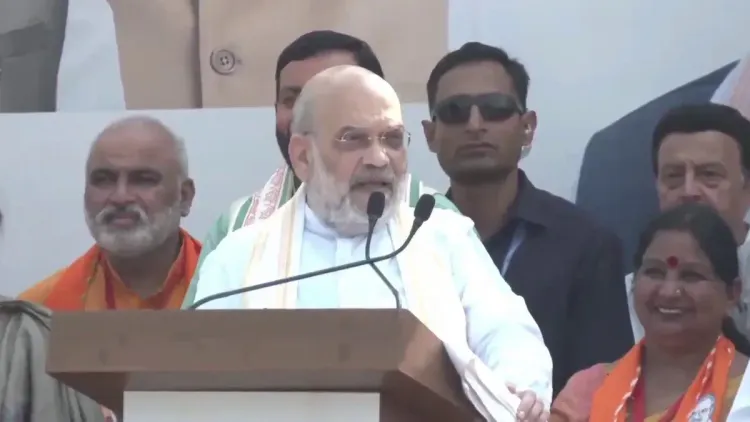
A promise to hunt infiltrators down, strip them from voter rolls, and deport them one by one — Union Culture and Tourism Minister Gajendra Singh Shekhawat made the BJP's immigration intent unmistakably sharp on Thursday, 5 November 2026, in a pointed post on X that also carried a direct taunt at Congress leader Rahul Gandhi.
Posting in Hindi, Shekhawat declared: 'BJP ka sankalp spasht hai, hum ghuspaithiyon ko dhundhenge, matdata suchi se hatayenge aur iske baad chun-chun kar desh se bahar nikalenge.' — 'The BJP's resolve is clear: we will find infiltrators, remove them from the voter list, and then deport them from the country, one by one.' He rounded on Gandhi with a combative flourish: 'Rahul babu, beat your chest as much as you like for the infiltrators.'
Voter Rolls at the Centre of the Immigration Debate
The statement lands squarely on a fault line that has defined BJP politics for decades — the claim that illegal immigrants, particularly those who crossed from Bangladesh after 1971, have burrowed into electoral rolls and skewed democratic outcomes in Assam, West Bengal, and other border states. The Assam Accord of 1985 first committed New Delhi to detecting and deporting post-1971 arrivals, a promise whose enforcement has remained contested ever since.
The most significant administrative action on this front remains the Assam National Register of Citizens (NRC), published in 2019, which was explicitly designed to separate citizens from those who could not prove legal residence. The exercise was contentious — it excluded nearly 1.9 million people from the final list, though legal proceedings around their status continued well beyond its publication.
Shekhawat Targets Gandhi Directly
The rhetorical thrust of Shekhawat's post is as much political combat as policy declaration. By addressing Rahul Gandhi as 'Rahul babu' — a diminutive that BJP leaders have used to signal dismissiveness — and daring him to 'beat his chest' in sympathy for infiltrators, Shekhawat frames the Congress as a defender of illegal immigrants. It is a framing the party has pressed in multiple state election cycles, particularly in West Bengal and Assam.
Gandhi and the Congress have consistently rejected that characterisation, arguing that BJP's immigration rhetoric targets minority communities and conflates long-settled residents with illegal entrants. The minister's post does not name any specific triggering event, but the sharp language and a video attached to the post suggest it is calibrated for an ongoing political moment.
What the Three-Step Pledge Actually Means
Shekhawat's formulation — find, delist, deport — maps onto three distinct administrative and legal processes. Detection requires ground-level identification drives, often carried out by district authorities. Removal from voter rolls demands action by the Election Commission of India under existing provisions for striking off ineligible names. Deportation, the most legally complex step, requires bilateral mechanisms with the country of origin and due process under Indian law — a stage where past efforts have frequently stalled.
Whether a nationwide NRC or expanded electoral-roll audit is imminent remains a live question in Indian politics, with Parliament yet to legislate a uniform framework. Shekhawat's post signals the BJP intends to keep the issue at a high political temperature.
The message is unambiguous: for the BJP, infiltration is not a dormant bureaucratic problem — it is an election-season weapon, and the party is not done sharpening it.
Point of View
The minister turns a policy position into a cultural clash, a move that has historically yielded dividends in border-state elections. The three-step framing — find, delist, deport — sounds operationally precise but papers over the significant legal and diplomatic obstacles that have blocked deportation at scale for decades. The real political action will be in whether any new legislative or administrative mechanism follows, or whether this remains a campaign-season signal rather than a governance roadmap.
NationPress
5 Nov 2026
Frequently Asked Questions
What did Gajendra Singh Shekhawat say about infiltrators?
Shekhawat declared on 5 November 2026 that BJP will find infiltrators, remove them from voter rolls, and then deport them from India one by one, posting in Hindi on X.
Why did Shekhawat target Rahul Gandhi in his immigration post?
Shekhawat taunted Gandhi by saying he could 'beat his chest as much as he likes for infiltrators,' framing the Congress as defenders of illegal immigrants — a recurring BJP political attack ahead of election cycles.
What is the Assam NRC and how does it relate to this statement?
The Assam National Register of Citizens, published in 2019, was designed to identify citizens and exclude illegal immigrants from official records; it excluded roughly 1.9 million people and is the most concrete precedent for the kind of exercise Shekhawat is advocating.
Can India actually deport illegal immigrants on a large scale?
Deportation requires bilateral agreements with the country of origin and due legal process under Indian law; past efforts have frequently stalled at this stage despite political commitments from successive governments.
What is a nationwide NRC and has it been passed?
A nationwide National Register of Citizens would aim to identify citizens across all Indian states, but as of now no such legislation has been enacted by Parliament; it remains a debated proposal within BJP's policy agenda.