Shekhawat: Cabinet Approves 3 Chemical Parks Under New Scheme
Synopsis
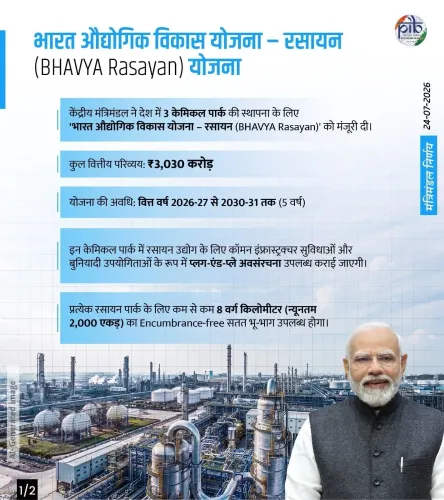
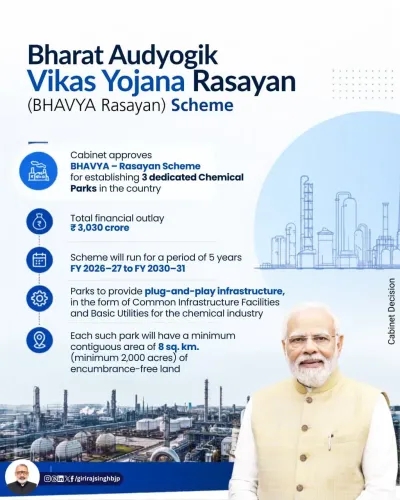
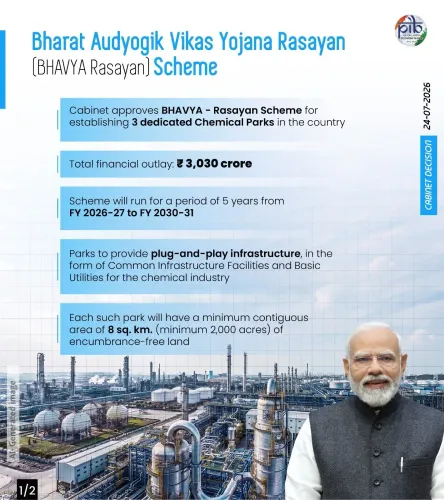
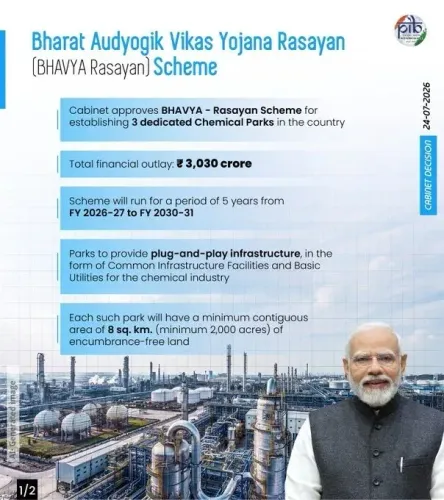
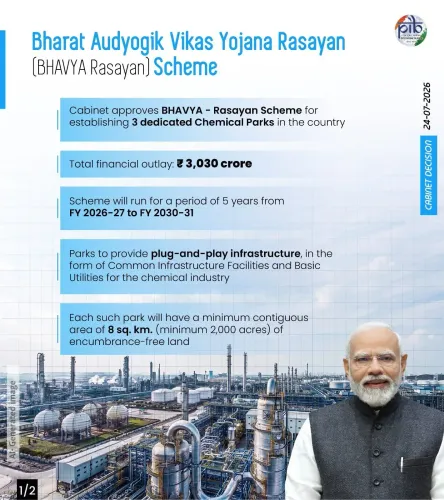
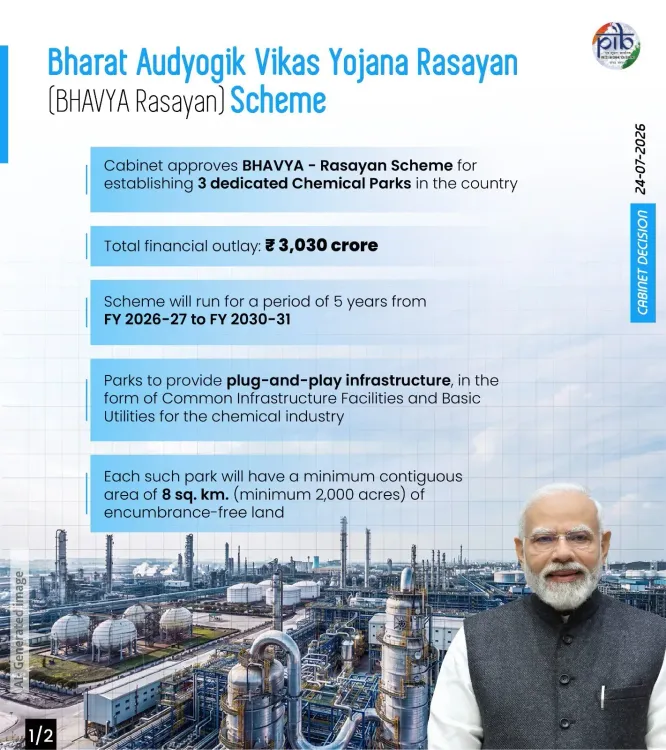
The Union Cabinet under PM Narendra Modi has approved the Bharat Industrial Development Scheme–Chemicals, providing for three dedicated chemical parks in India. Minister Gajendra Singh Shekhawat announced the decision, saying it will generate large-scale employment and strengthen the domestic chemicals industry.
Key Takeaways
The Union Cabinet, led by PM Narendra Modi , approved the Bharat Industrial Development Scheme–Chemicals on 25 July 2026 .
Three dedicated chemical parks will be established across India under the scheme.
The scheme aims to generate large-scale employment in the manufacturing sector.
India's chemicals cluster policy builds on earlier frameworks including the PCPIR policy (2007) and Make in India (2014) .
Locations for the three parks, along with environmental clearances and state-level timelines, are yet to be announced.
The move is part of India's broader strategy to reduce import dependence and compete with global chemical manufacturing hubs.
Union Culture and Tourism Minister Gajendra Singh Shekhawat on Friday, 25 July 2026, announced that the Union Cabinet, led by Prime Minister Narendra Modi, has approved the 'Bharat Industrial Development Scheme – Chemicals', under which three dedicated chemical parks will be established across the country.
Sharing the decision on X, Shekhawat wrote: 'Pradhan Mantri Narendra Modi ji ke netritva mein Kendriya Mantrimandal ne Bharat Audyogik Vikas Yojana–Rasayan ko swikriti di hai' — ('Under the leadership of Prime Minister Narendra Modi, the Union Cabinet has approved the Bharat Industrial Development Scheme–Chemicals'). He added that the scheme would generate employment at scale and strengthen India's chemicals industry.
Context
The cabinet approval marks a formal policy push to build dedicated, cluster-based infrastructure for the chemicals sector. The announcement comes under the hashtag #CabinetDecisions, signalling it as part of a broader package of cabinet-level approvals. The scheme envisages three greenfield chemical parks designed to house manufacturers, ancillary units, and shared infrastructure under a single planned zone.
Shekhawat, who represents Jodhpur, Rajasthan in the Lok Sabha and serves as a senior BJP leader, shared the announcement in his capacity as a cabinet colleague, amplifying the government's messaging on industrial policy.
Policy Backdrop
India's push for dedicated chemical clusters is not new. The Petroleum, Chemicals and Petrochemicals Investment Regions (PCPIR) policy, approved by the cabinet in 2007, first attempted to create large integrated chemical zones to attract domestic and foreign investment. The Make in India initiative, launched in 2014, subsequently identified chemicals as a priority manufacturing sector to reduce import dependence and boost exports.
The chemicals sector is a significant contributor to India's manufacturing GDP and merchandise exports, with the country aiming to compete with established global hubs in China, Germany, and the United States. Cluster-based development is seen as a way to provide shared utilities, logistics connectivity, and regulatory compliance infrastructure that individual manufacturers struggle to build independently.
Stakeholders and Impact
Chemical manufacturers — ranging from bulk chemical producers to specialty and agrochemical firms — stand to benefit from purpose-built parks that offer land, utilities, and common effluent treatment facilities. The government's stated objective is large-scale job creation in the manufacturing sector, with chemical parks historically generating both direct factory employment and indirect downstream jobs.
Environmental and safety compliance is a recurring challenge for chemical clusters in India, and the design and location of the three parks will be closely watched by industry bodies, state governments, and regulatory agencies alike. State-level implementation timelines and environmental clearances are expected to be key milestones in the scheme's rollout.
What's Next
The immediate focus will shift to the identification of locations for the three chemical parks, which will require coordination between the Union government, respective state administrations, and environmental regulators. Formal project development authorities or special purpose vehicles are typically constituted to manage such parks, and their formation will signal the pace of implementation.
If executed at scale, the scheme could position India as a more competitive destination for chemical-sector investment at a time when global supply chains are being restructured and companies are actively seeking alternatives to China-centric manufacturing bases.
Point of View
Which has sought to replicate China's special economic zone model in sectors where India runs large trade deficits. By formalising three chemical parks under a named scheme, the government is creating a policy anchor that can attract both domestic capex and foreign direct investment at a time of global supply-chain realignment. The announcement also reinforces the BJP's pre-election industrial messaging in manufacturing-heavy states. The real test, however, will be in execution: previous chemical cluster initiatives have faced delays in land acquisition, environmental clearances, and inter-agency coordination, and the new scheme will need to address those structural bottlenecks to deliver on its employment promises.
NationPress
24 Jul 2026
Frequently Asked Questions
What is the Bharat Industrial Development Scheme–Chemicals?
It is a scheme approved by the Union Cabinet under PM Narendra Modi that provides for the creation of three dedicated chemical parks in India to boost the chemicals industry and generate large-scale employment.
How many chemical parks will be built under the new scheme?
Three dedicated chemical parks will be established across India under the Bharat Industrial Development Scheme–Chemicals.
Who announced the cabinet approval of the chemicals scheme?
Union Culture and Tourism Minister Gajendra Singh Shekhawat announced the cabinet decision on X on 25 July 2026, citing PM Narendra Modi's leadership.
What is the purpose of dedicated chemical parks in India?
Dedicated chemical parks provide shared infrastructure — land, utilities, logistics, and effluent treatment — that helps chemical manufacturers scale up, comply with regulations, and compete globally while creating jobs.
What is India's earlier policy on chemical clusters?
India approved the Petroleum, Chemicals and Petrochemicals Investment Regions (PCPIR) policy in 2007 and identified chemicals as a priority sector under Make in India in 2014, both aimed at building integrated chemical manufacturing zones.