Shekhawat: Defeating 'intellectual Naxals' key to national security
Synopsis
Union Culture and Tourism Minister Gajendra Singh Shekhawat declared on X that defeating 'intellectual Naxals' is necessary for India's safety, echoing a BJP framing that pairs kinetic counter-insurgency with an ideological offensive against perceived urban support networks of Left Wing Extremism.
Key Takeaways
Gajendra Singh Shekhawat , Union Minister of Culture and Tourism and Lok Sabha MP from Jodhpur , posted on 8 November 2026 that defeating 'intellectual Naxals' is essential to national security.
The phrase 'intellectual Naxals' or 'urban Naxals' has been used by senior BJP leaders since at least 2018 to describe alleged ideological enablers of Left Wing Extremism.
India's counter-LWE strategy since 2017 has been guided by the SAMADHAN doctrine , combining security, development, and rehabilitation.
Official data has shown a steady decline in LWE-related violence and affected districts since 2014 .
No specific triggering event for the statement is on public record; it reflects the BJP's consistent ideological framing of internal security.
Ideological warfare, Union Culture and Tourism Minister Gajendra Singh Shekhawat argued on Sunday, 8 November 2026, is as much a front in India's internal security battle as any jungle corridor — and the enemy on that front has a name. In a pointed post on X, the senior BJP leader and Lok Sabha MP from Jodhpur declared that defeating 'दिमागी नक्सलियों' ('intellectual Naxals') is essential to keeping the country safe.
What Shekhawat said — and what the phrase means
The minister's post, in Hindi, states: 'देश को सुरक्षित रखने के लिए 'दिमागी नक्सलियों' को परास्त करना जरूरी है' — 'To keep the country safe, it is necessary to defeat intellectual Naxals.' The term 'intellectual Naxals' or 'urban Naxals' entered mainstream political discourse in India around 2018, when senior BJP figures began using it to describe those they accused of providing ideological cover or urban support networks to Left Wing Extremist movements, without directly engaging in armed violence.
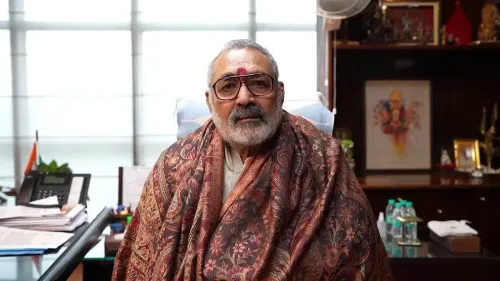
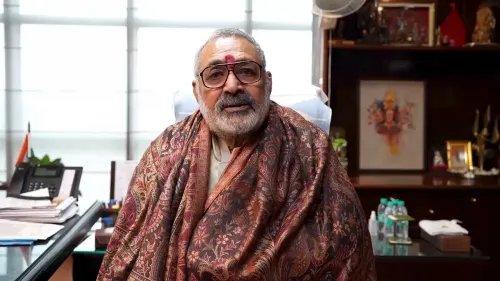
The phrase is contested: critics argue it is used to tar civil society voices and dissenters, while proponents contend that dismantling ideological infrastructure is a legitimate and necessary pillar of counter-insurgency. Shekhawat's post, accompanied by a video, plants his flag firmly in the latter camp.
The SAMADHAN doctrine and India's LWE record
The statement lands against a well-established policy backdrop. Since 2017, successive central governments have pursued the SAMADHAN doctrine — a multi-pronged framework combining kinetic security operations, developmental outreach in affected districts, and rehabilitation programmes for surrendering cadres. The Ministry of Home Affairs has reported a steady decline in Left Wing Extremism-related violence and geographic spread since 2014, with the number of LWE-affected districts shrinking significantly over the past decade.
That declining violence curve has often been cited by the BJP as validation of a strategy that pairs boots-on-ground operations with an aggressive critique of what it calls the ideological ecosystem that sustains armed movements. Shekhawat's framing fits squarely within that narrative.
A culture minister on a security front
It is notable that the voice here belongs to the Culture and Tourism Ministry, not the Home Ministry. That choice is itself a signal: the argument being advanced is that the battle against 'intellectual Naxalism' is a cultural and ideological contest, not merely an administrative or policing one. Senior BJP leaders have consistently held that the state must contest the narrative space — universities, literature, public discourse — with the same seriousness it brings to forest operations in Chhattisgarh or Jharkhand.
No specific trigger or preceding event for Sunday's post is on record, and the research background flags no immediate provocation. The statement reads as a principled declaration — sharp, deliberate, and aimed at a wide audience.
The next hard numbers on this front will come from the Ministry of Home Affairs annual report on Left Wing Extremism, and from any parliamentary debate on internal security allocations. Until then, Shekhawat has made certain that the ideological argument stays loudly on the table.
Point of View
The government signals that security gains in LWE-affected states are considered incomplete without also contesting the narrative infrastructure it believes sustains those movements. The choice of a Culture Minister, rather than a Home Ministry spokesperson, to make this argument is itself a strategic signal about which ministry owns the ideological flank. Critics will continue to argue the label is elastic enough to sweep in legitimate dissent, making the definitional contest as politically live as the security one.
NationPress
8 Nov 2026
Frequently Asked Questions
Who are 'intellectual Naxals' or 'urban Naxals' according to the BJP?
In BJP usage since around 2018, 'intellectual Naxals' or 'urban Naxals' refers to individuals accused of providing ideological support, legal cover, or urban networking to Left Wing Extremist movements without engaging in direct armed violence. Critics dispute the label, arguing it is applied too broadly to activists and dissenters.
What is India's SAMADHAN doctrine for countering Naxalism?
SAMADHAN is a counter-Left Wing Extremism framework adopted by the Government of India in 2017. It combines security operations against armed cadres, developmental initiatives in affected districts, and rehabilitation schemes for surrendering militants — moving beyond purely kinetic approaches.
What has been the trend in Naxal violence in India in recent years?
Official data has shown a steady decline in LWE-related violence, deaths, and the geographic spread of Naxal influence since 2014, with the number of affected districts shrinking considerably over the past decade.
Why did a Culture Minister comment on Naxal ideology?
The BJP's framing treats the battle against 'intellectual Naxalism' as a cultural and ideological contest, not just a policing matter. A Culture Minister weighing in signals that the government views narrative spaces — education, public discourse, literature — as fronts in the same struggle as forest operations in affected states.
What triggered Shekhawat's post on 8 November 2026?
No specific triggering event for the statement is on public record. The post appears to be a principled declaration reflecting the BJP's longstanding ideological position on internal security rather than a response to a particular incident.