Shekhawat Greets Pilgrims as Amarnath Yatra 2026 Begins
Synopsis
Union Culture and Tourism Minister Gajendra Singh Shekhawat greeted pilgrims on 3 July 2026 as the Amarnath Yatra 2026 began. He invoked Lord Shiva's blessings for all devotees undertaking the high-altitude pilgrimage to the Baba Barfani shrine in Jammu and Kashmir.
Key Takeaways
Union Culture and Tourism Minister Gajendra Singh Shekhawat announced the commencement of the Amarnath Yatra 2026 on 3 July 2026 .
The pilgrimage is to the Amarnath cave shrine in Anantnag district, Jammu and Kashmir , situated at approximately 3,888 metres altitude.
The yatra is managed by the Shri Amarnathji Shrine Board with coordination from central government ministries and security agencies.
Two primary pilgrimage routes — Pahalgam (Anantnag) and Baltal (Ganderbal) — serve the annual influx of devotees.
Religious tourism, including the Amarnath Yatra, has been positioned as a key economic driver for Jammu and Kashmir since the Union Territory's reorganisation in 2019 .
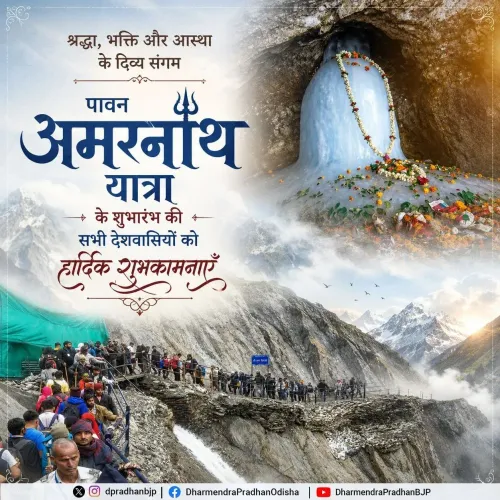
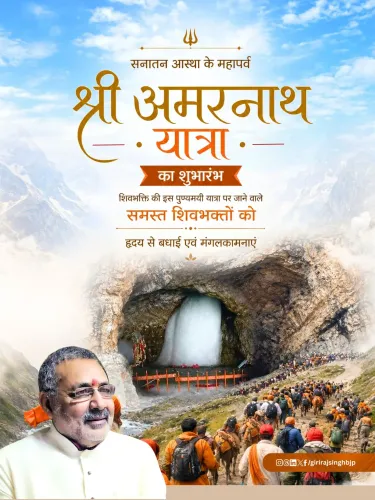
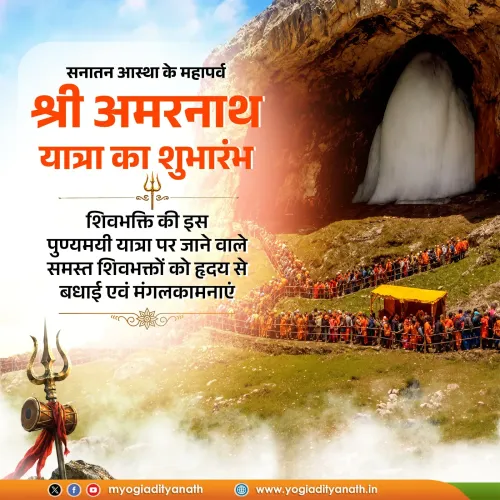
Union Culture and Tourism Minister Gajendra Singh Shekhawat on Friday, 3 July 2026 greeted pilgrims as the Amarnath Yatra 2026 commenced, marking the start of one of India's most significant annual Hindu pilgrimages to the sacred ice lingam shrine in the Anantnag district of Jammu and Kashmir.
Context
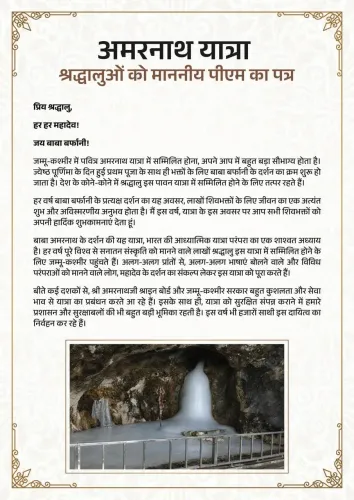
Shekhawat took to X to convey his greetings, writing: 'बाबा बर्फानी के भक्त आज से उनके दिव्य दर्शन को प्रस्थान करेंगे। आज से अमरनाथ यात्रा प्रारंभ हो गई है।' ('Devotees of Baba Barfani will depart today for his divine darshan. The Amarnath Yatra has commenced from today.'). He extended greetings and blessings to all pilgrims, invoking the phrase 'ॐ नमः शिवाय' — the sacred Shaivite salutation — and expressed that 'the grace of Shivji will always remain upon the pilgrims.'
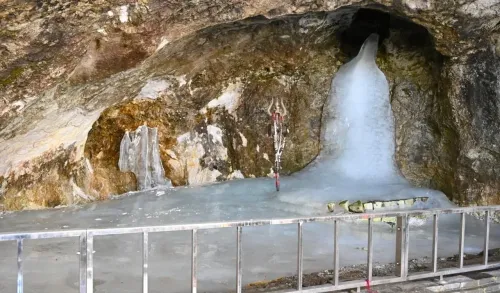
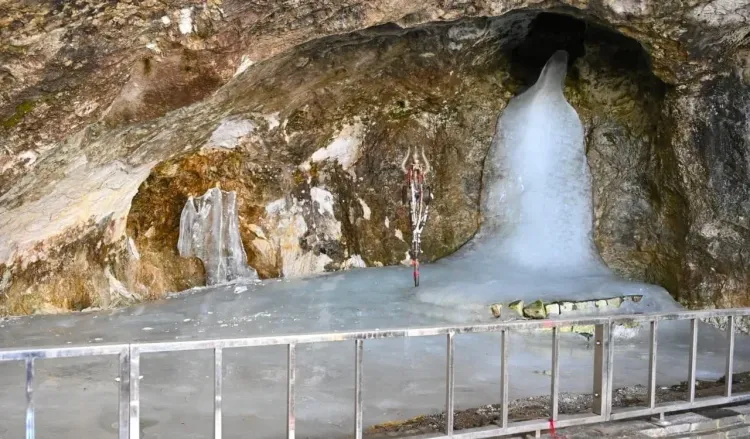
The Amarnath cave shrine, situated at an altitude of approximately 3,888 metres in the Himalayas, is revered by Hindus as the abode of Lord Shiva. The naturally formed ice lingam, popularly known as Baba Barfani, draws hundreds of thousands of devotees each summer season.
Policy Backdrop
The yatra is conducted under the administrative oversight of the Shri Amarnathji Shrine Board, a statutory body that coordinates pilgrim facilities, route management, and safety protocols in close coordination with central government ministries and security agencies. The Ministry of Culture and Tourism plays a complementary role in promoting religious tourism circuits of which the Amarnath Yatra is a flagship component.
Since the reorganisation of Jammu and Kashmir into a Union Territory in 2019, successive administrations have positioned religious tourism as a vehicle for economic activity and infrastructure development in the region. Pilgrim infrastructure — including helipads, medical camps, and route facilities — has seen sustained investment over recent yatra seasons.
Stakeholders and Impact
The pilgrimage has significant economic implications for the Jammu and Kashmir tourism sector, with local traders, transporters, pony operators, and hospitality providers depending on the seasonal influx of devotees. The yatra typically draws pilgrims from across India and from the Indian diaspora abroad.
Security coordination between the Central Reserve Police Force, Army, and local administration remains a critical element of yatra management, given the high-altitude terrain and the logistical complexity of managing large pilgrim volumes across two primary routes — the Pahalgam route in Anantnag and the Baltal route in Ganderbal district.
What's Next
The Shri Amarnathji Shrine Board is expected to release official figures on registered pilgrims and daily movement caps as the season progresses. Any announcements regarding fresh tourism infrastructure, PRASAD scheme allocations, or digital registration enhancements from the Ministry of Culture and Tourism during the yatra season will be closely watched by stakeholders in the religious tourism sector.
As the custodian of India's cultural and tourism portfolio, Shekhawat's public engagement with the yatra's commencement signals the central government's continued emphasis on religious tourism as a pillar of both cultural identity and economic development in Jammu and Kashmir.
Point of View
ॐ नमः शिवाय — underscores how senior ministers increasingly use social media to reinforce their party's Hindutva cultural positioning alongside their administrative roles. For the Ministry of Culture and Tourism, the yatra also represents a high-visibility test of pilgrim infrastructure investments made in recent seasons. Continued central attention to the Amarnath circuit reflects a deliberate effort to normalise and elevate Jammu and Kashmir's profile as a religious and adventure tourism destination post-reorganisation.
NationPress
3 Jul 2026
Frequently Asked Questions
When did Amarnath Yatra 2026 start?
The Amarnath Yatra 2026 commenced on 3 July 2026 , as announced by Union Culture and Tourism Minister Gajendra Singh Shekhawat.
Who manages the Amarnath Yatra?
The yatra is managed by the Shri Amarnathji Shrine Board , a statutory body that coordinates pilgrim facilities, route management, and safety in collaboration with central government agencies.
What are the two routes for the Amarnath Yatra?
Pilgrims can undertake the yatra via the Pahalgam route in Anantnag district or the Baltal route in Ganderbal district, both in Jammu and Kashmir.
Where is the Amarnath cave shrine located?
The Amarnath cave shrine is located in the Anantnag district of Jammu and Kashmir , at an altitude of approximately 3,888 metres in the Himalayas.
What is the significance of Baba Barfani in the Amarnath Yatra?
Baba Barfani refers to the naturally formed ice lingam inside the Amarnath cave, revered by Hindu devotees as a manifestation of Lord Shiva and the central object of veneration during the annual pilgrimage.