Shekhawat hails 125-ft Mukherjee statue foundation in Bengal
Synopsis
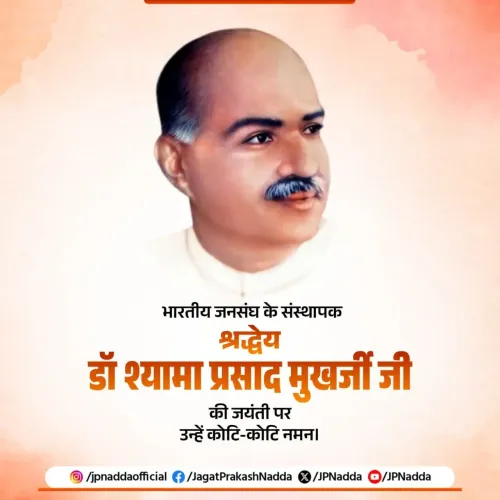
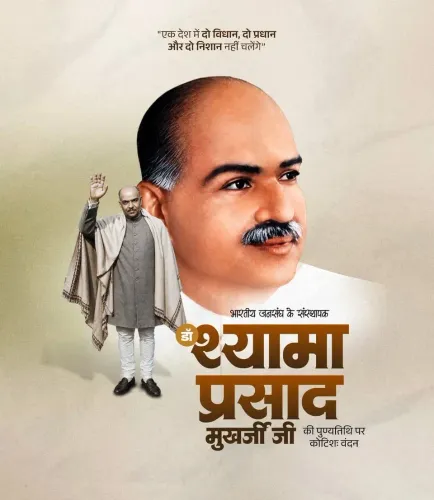
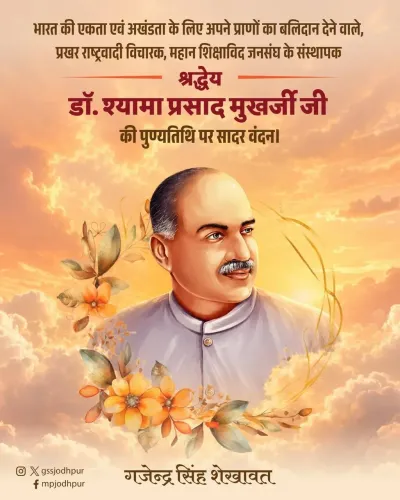
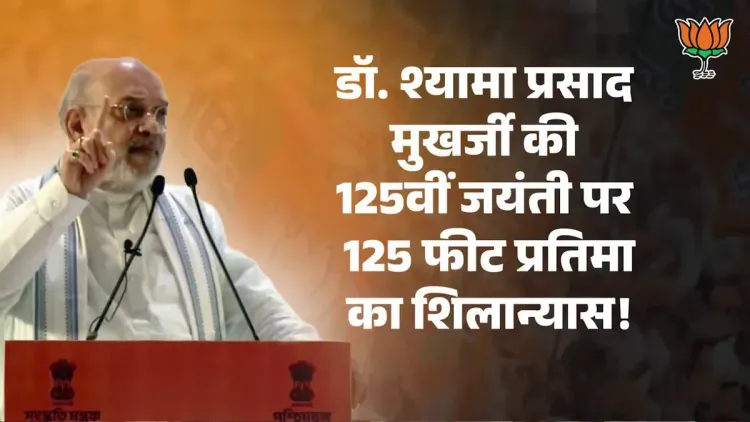
Union Minister Gajendra Singh Shekhawat shared Home Minister Amit Shah's tribute to Dr. Shyama Prasad Mukherjee on his 125th birth anniversary, marking the foundation stone of a 125-foot statue in West Bengal and recalling Mukherjee's cabinet resignation over the Nehru-Liaquat Pact and his sacrifice for Kashmir's integration.
Key Takeaways
Union Culture and Tourism Minister Gajendra Singh Shekhawat shared a tribute by Amit Shah on 6 July 2026 for Dr.
Shyama Prasad Mukherjee's 125th birth anniversary .
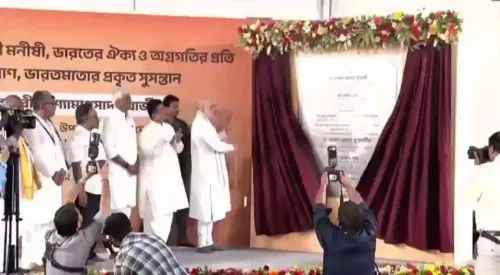
The foundation stone of a 125-foot statue of Mukherjee was laid in West Bengal on the occasion.
Mukherjee resigned from India's first cabinet in 1950 in protest against the Nehru-Liaquat Pact .
He died in 1953 — 73 years ago — while campaigning for the full constitutional integration of Jammu and Kashmir with India.
Mukherjee founded the Bharatiya Jana Sangh in 1951 , the political precursor to the BJP .
The abrogation of Article 370 in 2019 fulfilled a key demand long associated with Mukherjee's legacy.
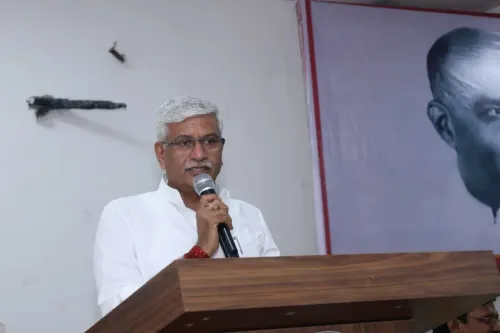
Union Culture and Tourism Minister Gajendra Singh Shekhawat on Monday, 6 July 2026 shared a statement by Union Home Minister Amit Shah marking the foundation-stone laying of a 125-foot statue of Dr. Shyama Prasad Mukherjee in West Bengal, coinciding with the leader's 125th birth anniversary.
Context
Shekhawat's post, written in Hindi, carries a quote attributed to Amit Shah and opens with the line 'आज मेरे जैसे कई लोगों के लिए भावुक होने का दिन है' — 'Today is an emotional day for many people like me.' The post recalls that Dr. Mukherjee sacrificed his life for the cause of integrating Kashmir with India and resigned from the country's first cabinet over the Nehru-Liaquat Pact.
The Nehru-Liaquat Pact, also known as the Delhi Agreement of 1950, was signed between Prime Minister Jawaharlal Nehru and Pakistani Prime Minister Liaquat Ali Khan to address the treatment of minorities and cross-border migration following Partition. Mukherjee disagreed with the agreement's approach and stepped down from the Union Cabinet in protest.
Policy Backdrop
Dr. Shyama Prasad Mukherjee founded the Bharatiya Jana Sangh in 1951 — the political precursor to the BJP — on the principle that India's governance must be rooted in its own cultural ethos, a sentiment the post captures with the phrase 'भारत की नीतियों का सृजन भारत की ही मिट्टी की सुगंध से हो' — 'India's policies should be born from the fragrance of India's own soil.'
Mukherjee's most defining campaign was his push for the full constitutional integration of Jammu and Kashmir with India, which he pursued by crossing into the state in defiance of permit restrictions. He died in detention in 1953, 73 years before this anniversary. The abrogation of Article 370 in 2019 fulfilled a central demand long associated with his legacy.
Stakeholders and Impact
The foundation-stone ceremony in West Bengal — Mukherjee's home state — carries particular symbolic weight given the state's complex political landscape. Bengali citizens, nationalist organisations, and BJP cadres across the country regard the 125th birth anniversary as a milestone moment for reclaiming Mukherjee's place in mainstream national memory.
Successive BJP-led governments have prioritised large-scale memorials and anniversary events for leaders such as Mukherjee and Sardar Vallabhbhai Patel as part of a sustained effort to highlight an indigenous-nationalist strand in India's political history, contrasting it with earlier Congress-era commemorations.
What's Next
Attention will now turn to the completion and formal unveiling of the 125-foot statue and any accompanying state or national commemorations planned during the remainder of the 125th anniversary year. The scale of the proposed statue — taller than many of India's existing political memorials — signals that the project is intended as a lasting landmark in West Bengal.
As the BJP continues to expand its footprint in the state, events centred on Mukherjee's legacy are likely to remain a key part of its cultural and political messaging in the months ahead.
Point of View
Shekhawat reinforces the party's narrative that the full integration of Jammu and Kashmir in 2019 was the fulfilment of a promise made in blood by the Jana Sangh's founder. The scale of the proposed statue and the choice of West Bengal as its location together signal an intent to reshape the state's political memory. This fits a broader BJP pattern of using monumental public art — from the Statue of Unity onward — to anchor nationalist historiography in physical, permanent form.
NationPress
6 Jul 2026
Frequently Asked Questions
Who was Dr. Shyama Prasad Mukherjee?
Dr. Shyama Prasad Mukherjee was the founder of the Bharatiya Jana Sangh in 1951 , the political precursor to the BJP. He served in India's first Union Cabinet before resigning in 1950 over the Nehru-Liaquat Pact and died in 1953 while campaigning for the full constitutional integration of Jammu and Kashmir with India.
Why did Shyama Prasad Mukherjee resign from Nehru's cabinet?
Mukherjee resigned from Prime Minister Jawaharlal Nehru's first cabinet in 1950 in protest against the Nehru-Liaquat Pact , a bilateral agreement with Pakistan on minority rights and migration that he believed did not adequately protect India's interests.
What is the 125-foot Mukherjee statue in West Bengal?
On Mukherjee's 125th birth anniversary in July 2026 , the foundation stone of a 125-foot statue in his honour was laid in West Bengal , his home state. The project was marked by a tribute from Union Home Minister Amit Shah .
What is the connection between Shyama Prasad Mukherjee and Article 370?
Mukherjee campaigned throughout his life for the full constitutional integration of Jammu and Kashmir with India, opposing the special status conferred by Article 370 . The abrogation of Article 370 in August 2019 by the BJP-led government is widely described as the fulfilment of his long-standing demand.
What is the Nehru-Liaquat Pact?
The Nehru-Liaquat Pact , also called the Delhi Agreement of 1950 , was signed between Indian Prime Minister Jawaharlal Nehru and Pakistani Prime Minister Liaquat Ali Khan to address the rights of minorities and cross-border migration in the aftermath of Partition. Mukherjee's disagreement with the pact led directly to his cabinet resignation.